Parcel Post
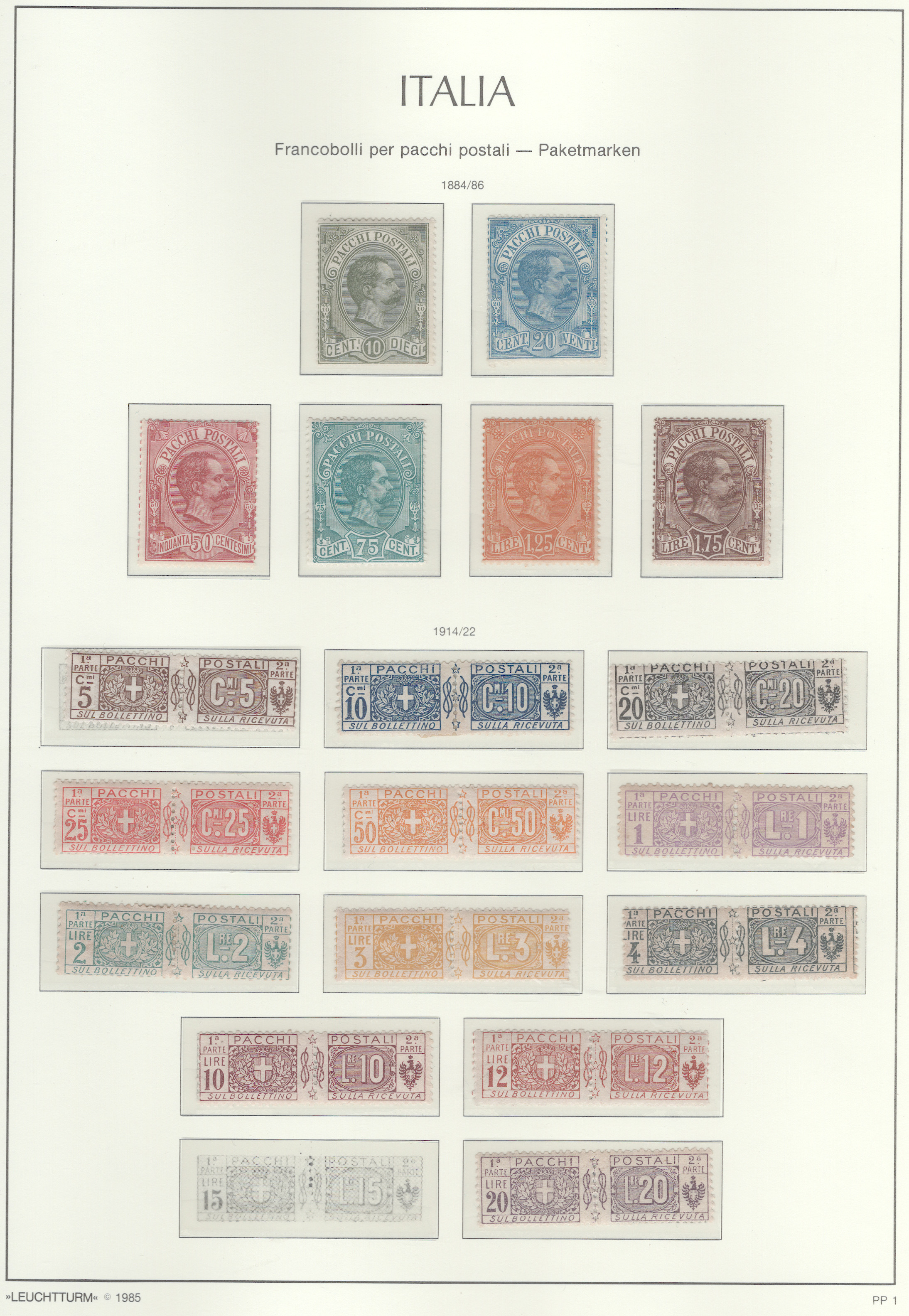
On October 9, 1874, in Bern, Switzerland, several nations, including Italy, signed the Treaty of Bern. That treaty established the General Postal Union, which became known later as the Congress of the Universal Postal Union. This established an agreement and convention regarding the handling of the mail between countries. Four years later, the Congress agreed that post offices, if they weren’t already, would provide package delivery services, parcel post. It took some countries quite a few years to offer parcel post services. The U.S. didn’t officially start until 1913.
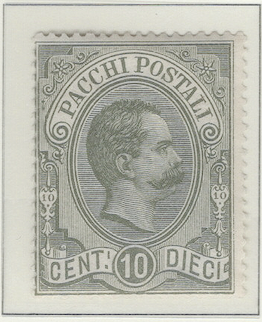
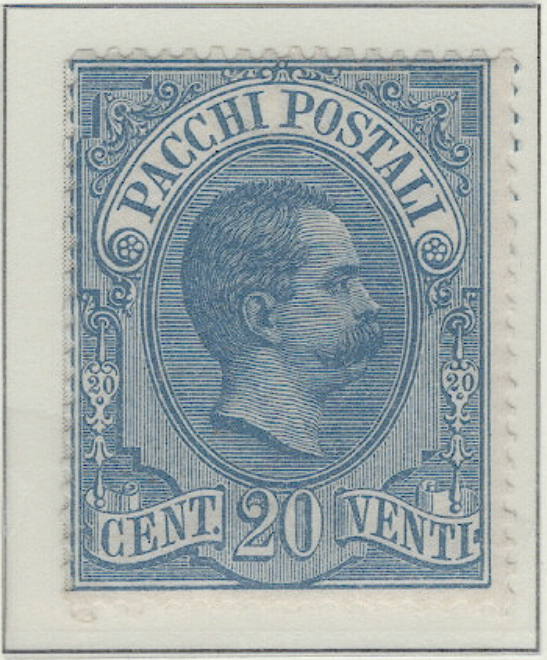
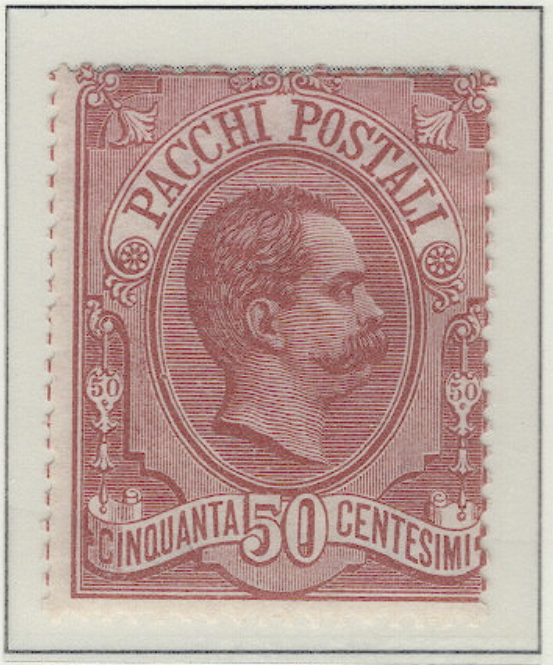
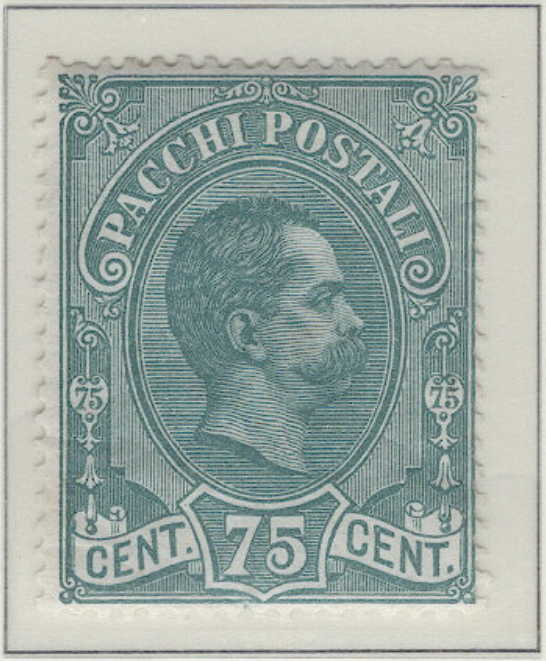
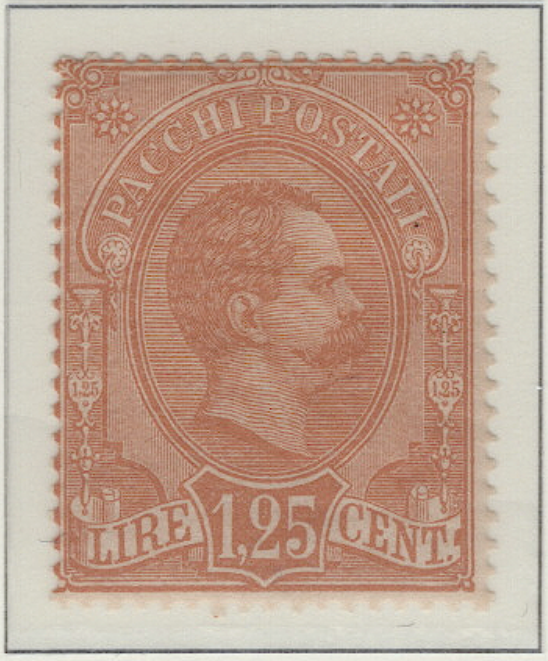
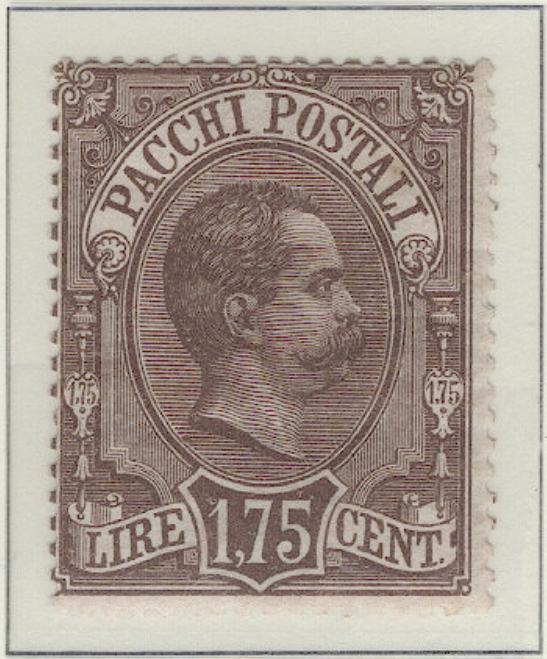
Italy began offering parcel post service in 1890 with the issuance of the stamps shown on this page. The first set of stamps, the top two rows are of the king of the time, Umberto I. They were designed and engraved by Lodovico Bigola. I think these are the only stamps he designed. However, it is unusual for the artist who designs a stamp to also engrave the metal dies for printing the stamps.
Parcel Post Pairs
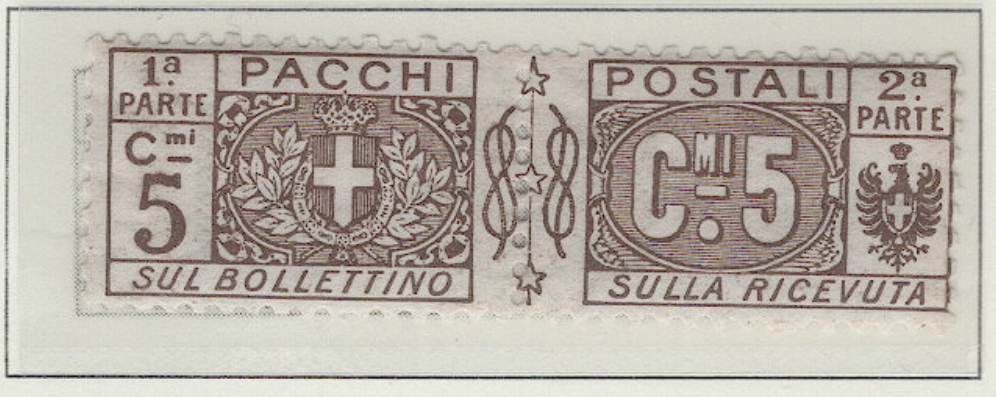
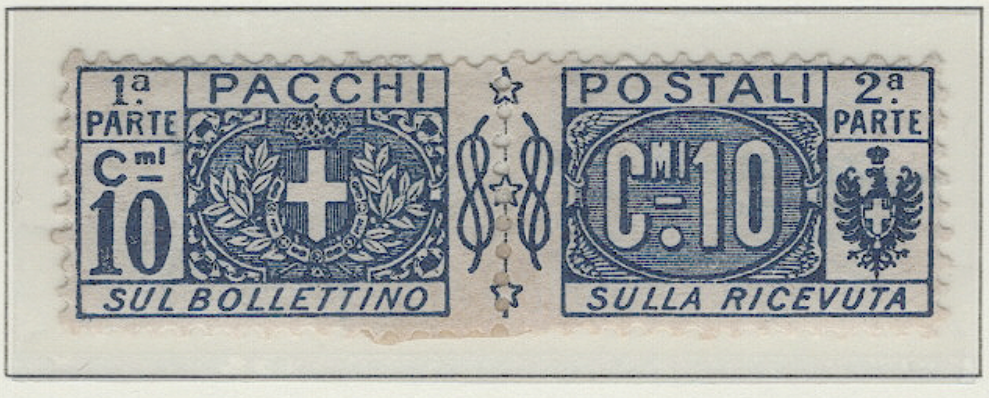
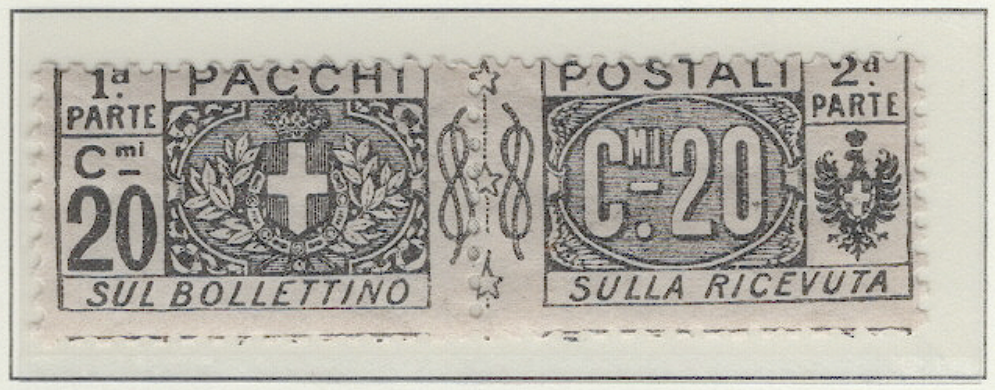
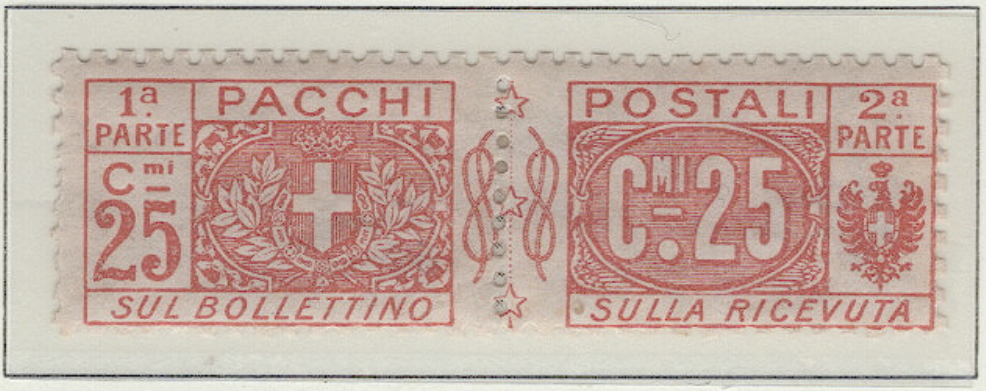
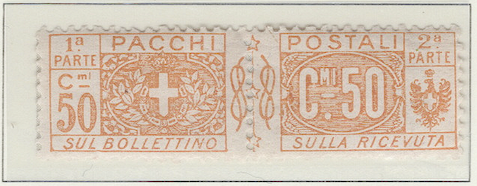
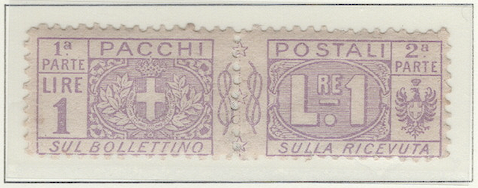
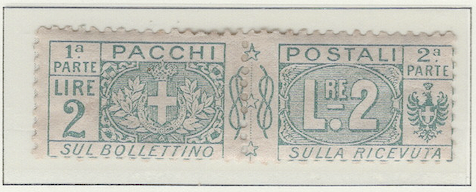
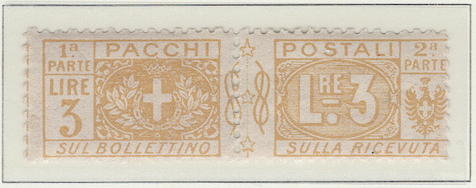
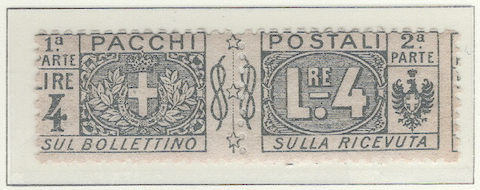
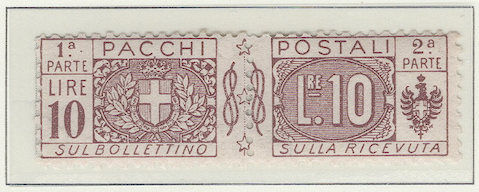
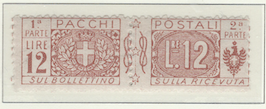
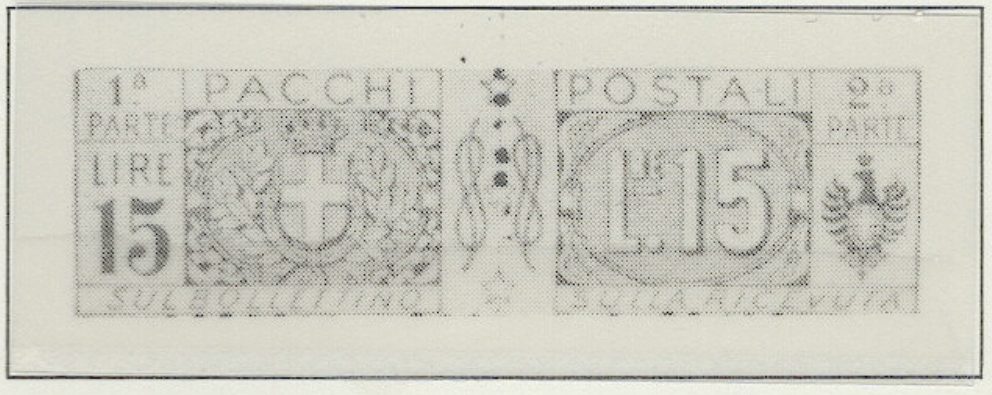
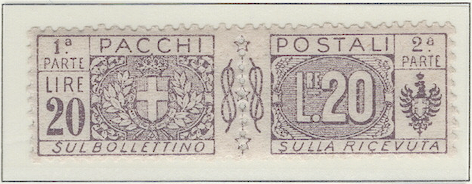
The second set of stamps, rows three through seven, are use an interesting, practical design. They were sold in pairs as you see here. If you click on the image of the album page you’ll see a larger version of it. You can see the text written on them. The left one of each says at the bottom, Sul Bolletino (i.e., On the Shipping Bill). The right ones say at the bottom, Sulla Ricevuta (i.e., On the Receipt). Basically, when someone would buy one of these pairs, they would pull them apart and put the left one on shipping bill or label to show the post office they paid for the shipment. The right half is attached to the receipt. I’m not sure, though, if that receipt is immediate given to the sender, or if it’s attached to a post card that acts as the receipt and will be mailed back to the sender after the recipient receives it.
Note
Maybe because it’s enjoyable to get a package in the mail that I like parcel post stamps. Maybe it’s also because there’s something about the design of the first set of stamps here, in addition to their purpose, as well as the size and shape of the large second set of stamps on this album page that I like them.
These stamps are not absurdly expensive, but they cost a good bit for each. Being so far back in my stamp album, and given that I still have a few more pages in the main part of the album I can easily complete, I’m not rushing to get them.
At this point, I almost have the first set of stamps. It will take a while for me to get the top one: it’s a little pricey and hard to find it sold separately, not in a set. Much more expensive are the parcel post pairs on this page. I bought the first few recently. The other ones cost a good bit more. I can maybe afford to get them one at a time, over a long period.
Contains 19 spots: own 18 – 18 unused, 0 used.
Album or Web Page Last changed Sep 28, 2023
Stamp Details
The table below lists information about the stamps shown on this page of Lighthouse’s stamp album. For more details about a particular stamp, click on its description. That will take you to the related web page of Colnect.
spot |
own |
catalog |
subject |
description |
comment |
Lodovico Bigola Design
✓ |
PP1 |
10c (may 1886) |
|||
✓ |
PP2 |
20c (may 1886) |
|||
✓ |
PP3 |
50c (jul 1884) |
|||
✓ |
PP4 |
75c (jul 1884) |
|||
✓ |
PP5 |
1.25₤ (jul 1884) |
|||
✓ |
PP6 |
1.75₤ (jul 1884) |
Parcel Post Pairs
✓ |
PP7 |
2 x 5c (jul 1914) |
|||
✓ |
PP8 |
2 x 10c (jul 1914) |
|||
✓ |
PP9 |
2 x 20c (jul 1917) |
|||
✓ |
PP10 |
2 x 25c (jul 1914) |
|||
✓ |
PP11 |
2 x 50c (jul 1914) |
|||
✓ |
PP12 |
2 x 1₤ (jul 1914) |
|||
✓ |
PP13 |
2 x 2₤ (jul 1914) |
|||
✓ |
PP14 |
2 x 3₤ (jul 1914) |
|||
✓ |
PP15 |
2 x 4₤ (jul 1914) |
|||
✓ |
PP16 |
2 x 10₤ (dec 1921) |
|||
✓ |
PP17 |
2 x 12₤ (oct 1922) |
|||
PP18 |
2 x 15₤ (dec 1922) |
d.c. editore (€ 90) |
|||
✓ |
PP19 |
2 x 20₤ (oct 1922) |
Footnotes
Spot refers to the postion of the stamp on the album page (e.g., 3.2 indicates row 3, position 2).
Amt. is an abbreviation for the face amount of the stamp.
Own indicates the stamp status: ✓ for unused; ✗ for used or canceled; ⭑ signifies I ordered one; ; ✨ indicates it was bought recently; ✠ means an auction bid is pending; and ◎ is used, and it costs too much for unused.
To search by catalog number, go to the search box and enter it in the catalog number box. However, it’s a bit broken; I need to fix it.


















