Colonial Imperialism
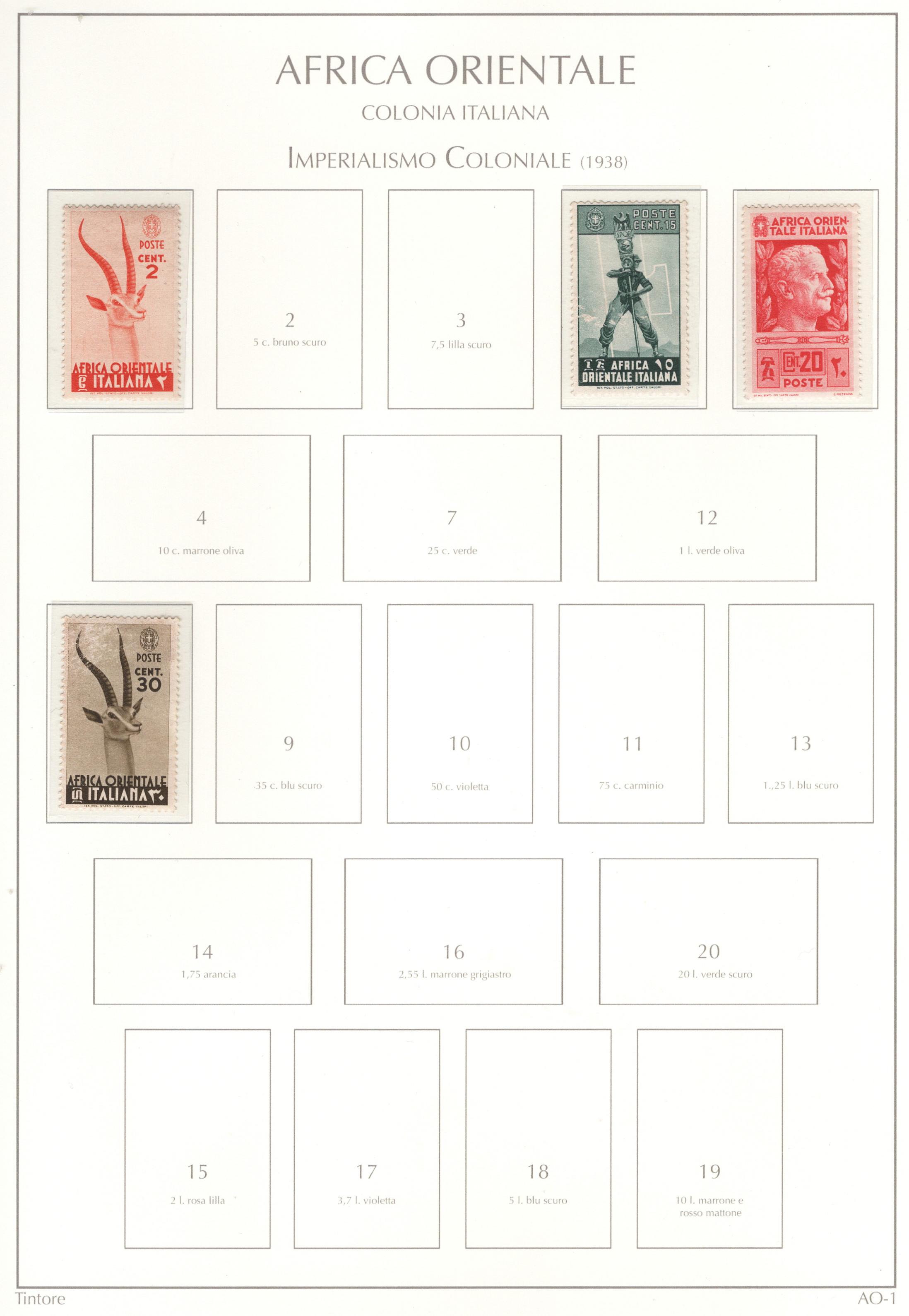
Italy only became a nation in the late 19th century, so it arrived late to the colonial race. As the least of the Great Powers, it also depended on Britain, France and Germany to accept its empire-building. The Italian Empire began with the purchase of Assab Bay on the Red Sea in 1869 by an Italian navigation company, which wanted a coaling station as the Suez Canal opened. The government took it over in 1882. Italy annexed the port of Massawa in 1885, and the colony of Eritrea was officially founded in 1890. Italy also gained territory in Somalia through a series of protection treaties. Its attempt to take Ethiopia failed in the First Italo-Ethiopian War of 1895–1896.
In 1911, Italy declared war on the Ottoman Empire in the Italo-Turkish War and gained Tripolitania and Cyrenaica, which were later unified as Libya. It also gained the Dodecanese Islands off the coast of Turkey. Outside Africa, Italy had a small concession in Tianjin in China after the Boxer War of 1900. Taking Libya was not easy, though. Because of the resistance of the Libyan people, Italy did not take full control until the early 1930s.
Mussolini came to power in 1922 and wanted a bigger empire. After the second invasion of Ethiopia in 1935–36, Italy joined its new conquest to Eritrea and Somalia as Italian East Africa. On May 9, 1936, Mussolini proclaimed the empire, with King Victor Emmanuel III as Emperor of Ethiopia. By 1939, about 165,000 Italian settlers lived in East Africa and 120,000–150,000 in Libya. Italy invaded Albania that same year. As you can see, the empire was at its largest just before the Second World War, and then it fell quickly. The Allies took its African colonies by 1943, Italy gave up all claims in the 1947 peace treaty, and Somalia’s independence in 1960 ended the story.
Note
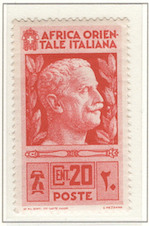
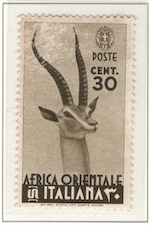
As you can see, I have only a few of these stamps. I don’t remember when I acquired them. It must have been in the late 1980s and in the U.S., where Italian stamp collecting isn’t very popular. I’ll fill in this page one day, now that I’m more focused on Italian stamps.
Contains 20 spots: own 4 – 4 unused, 0 used.
Stamp Details
The table below lists information about the stamps shown on this page of Lighthouse’s stamp album. For more details about a particular stamp, click on its description. That will take you to the related web page of Colnect.
spot |
own |
catalog |
subject |
description |
comment |
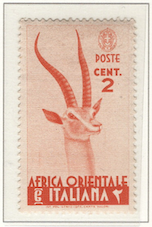
Colonial Definitives
✓ |
1 |
2c (02 1938) |
|||
2 |
5c (02 1938) |
||||
3 |
7.5c (02 1938) |
||||
✓ |
5 |
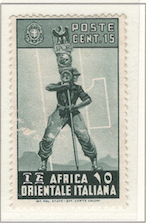
15c (02 1938) |
|||
✓ |
6 |
20c (02 1938) |
|||
4 |
10c (02 1938) |
||||
7 |
25c (02 1938) |
||||
12 |
1₤ (02 1938) |
||||
✓ |
8 |
30c (02 1938) |
|||
9 |
35c (02 1938) |
||||
10 |
50c (02 1938) |
||||
11 |
75c (02 1938) |
||||
13 |
1.25₤ (02 1938) |
||||
14 |
1.75₤ (02 1938) |
||||
16 |
2.55₤ (02 1938) |
||||
20 |
20₤ (02 1938) |
||||
15 |
2₤ (02 1938) |
||||
17 |
3.70₤ (02 1938) |
||||
18 |
5₤ (02 1938) |
||||
19 |
10₤ (02 1938) |
Footnotes
Spot refers to the postion of the stamp on the album page (e.g., 3.2 indicates row 3, position 2).
Amt. is an abbreviation for the face amount of the stamp.
Own indicates the stamp status: ✓ for unused; ✗ for used or canceled; ⭑ signifies I ordered one; ; ✨ indicates it was bought recently; ✠ means an auction bid is pending; and ◎ is used, and it costs too much for unused.
To search by catalog number, go to the search box and enter it in the catalog number box. However, it’s a bit broken; I need to fix it.



















