Air Mail Radio
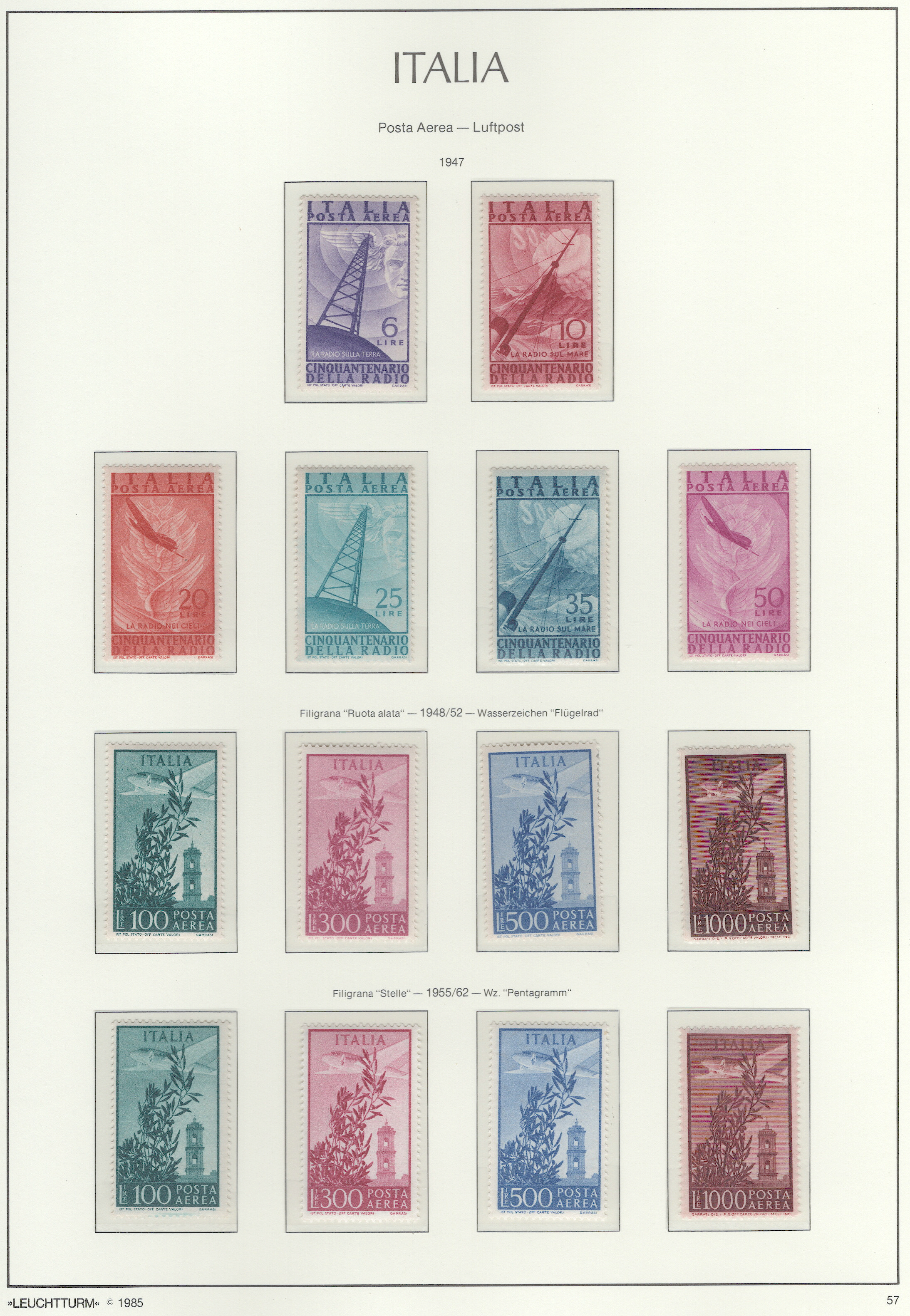
Guglielmo Marconi was born in Bologna on April 25, 1874, to an Italian father and an Irish mother. He had no formal schooling and was taught at home by private tutors. Around age 20, he built wireless equipment at his family’s Villa Griffone estate in Pontecchio, near Bologna. In 1896 he took his equipment to London and filed his first British patent, and in 1897 he founded the Wireless Telegraph & Signal Company. In December 1901 he reported receiving a signal in Newfoundland that had been sent from Cornwall, though historians still debate whether it was reliable. He shared the Nobel Prize in Physics in 1909 with Ferdinand Braun, and he died in Rome on July 20, 1937. He had also joined the National Fascist Party in 1923 and publicly supported its policies, including the 1935 invasion of Ethiopia.
The invention of radio did not start with Marconi. Between 1861 and 1865, James Clerk Maxwell predicted that electromagnetic waves existed, and between 1886 and 1888 Heinrich Hertz produced and detected them. However, Hertz saw no practical use for the waves and died in 1894. Others then worked toward wireless communication, e.g., Oliver Lodge, who improved a metal-filings detector into the “coherer,” and Alexander Popov, who built a coherer receiver in 1895 to detect lightning. Marconi adapted Hertz’s apparatus into a communications system with a grounded vertical antenna and a coherer receiver, and in 1895 he reached about 2.4 km.
Early spark-gap transmitters limited both range and clarity, so Braun’s tuned circuit, which transmitted more efficiently, was a big improvement. Voice came next, when Reginald Fessenden transmitted speech in December 1900 and made a public broadcast on Christmas Eve in 1906. Vacuum tubes (the diode in 1904 and the Audion in 1906) improved detection and amplification as well. Basically, many people contributed, and Popov, Tesla, Bose, Lodge and Marconi each have supporters who claim priority. The word “radio” wasn’t in common use until about 1910, when these systems came to be called that.
Note
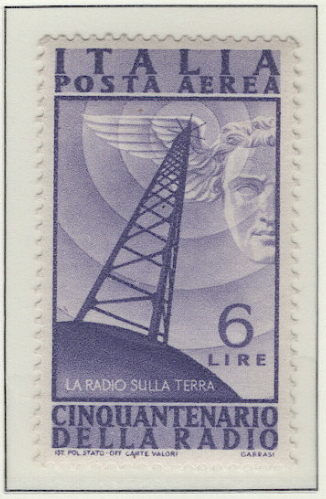
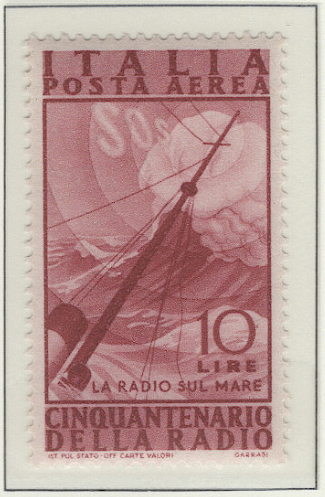
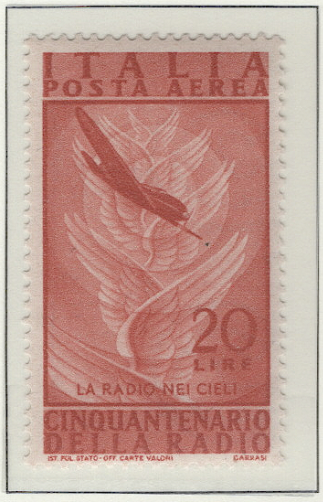
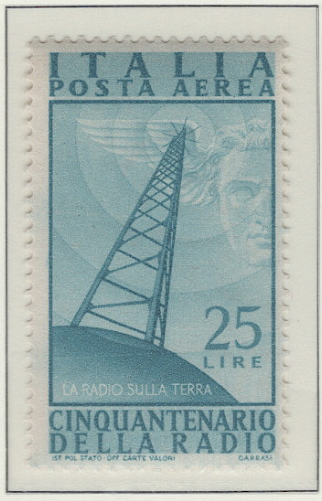
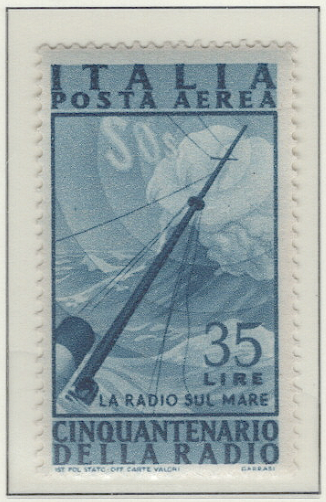
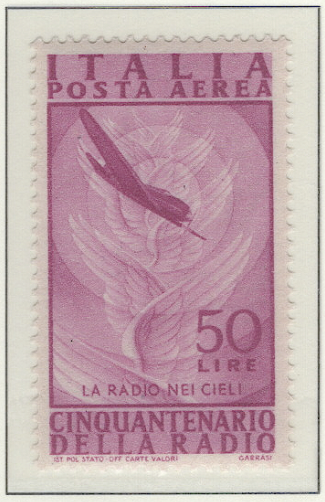
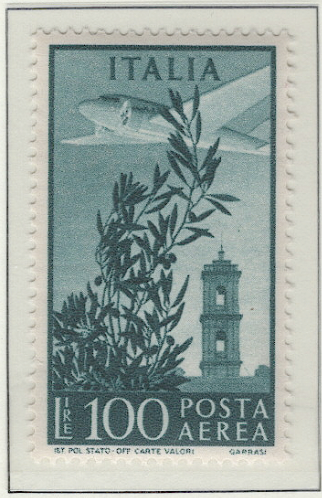
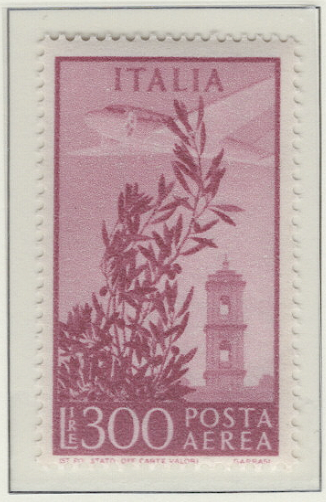
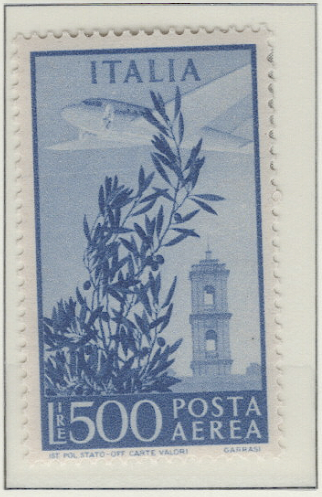
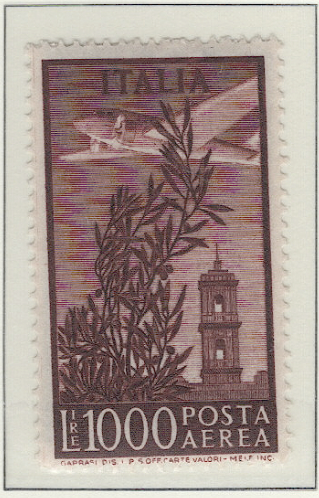
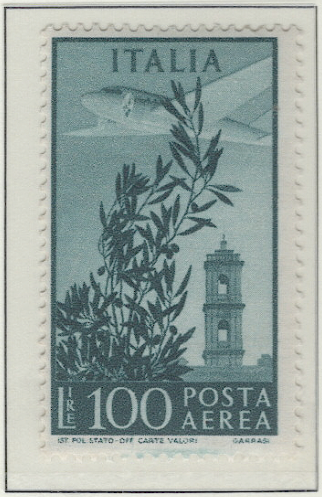
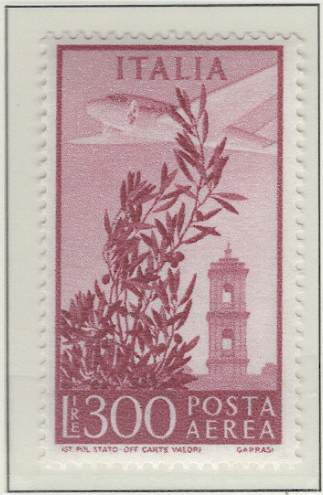
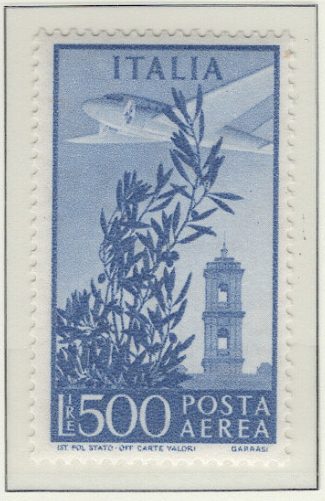
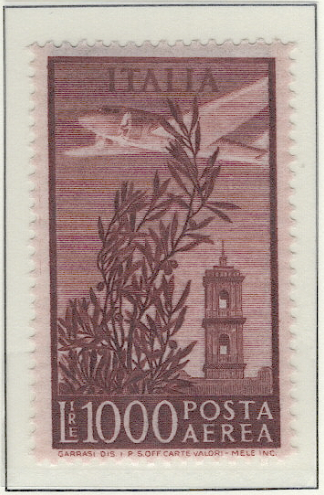
The top two rows of stamps were meant to commemorate the fiftieth anniversary of the invention of the radio, which Italians attribute primarily to Marconi. The others are general air mail stamps. Incidentally, I probably should rescan the album page: the image of the stamp at the end of the third row is blurry. It may be a glitch in the scanner or the result of the color patterns. When I have time, I’ll try again.
Contains 14 spots: own 14 – 14 unused, 0 used.
Page is finished.
Album or Web Page Last changed Jan 5, 2023
Stamp Details
The table below lists information about the stamps shown on this page of Lighthouse’s stamp album. For more details about a particular stamp, click on its description. That will take you to the related web page of Colnect.
spot |
own |
catalog |
subject |
description |
comment |
50 Years of Radio
✓ |
A136 |
6₤ (aug 1947) |
|||
✓ |
A137 |
10₤ (aug 1947) |
|||
✓ |
A138 |
20₤ (aug 1947) |
|||
✓ |
A139 |
25₤ (aug 1947) |
|||
✓ |
A140 |
35₤ (aug 1947) |
|||
✓ |
A141 |
50₤ (aug 1947) |
Air Mail
✓ |
A142 |
100₤ (feb 1948) |
|||
✓ |
A143 |
300₤ (feb 1948) |
|||
✓ |
A144 |
500₤ (feb 1948) |
|||
✓ |
A145 |
1000₤ (sep 1948) |
|||
✓ |
A148 |
100₤ (jul 1955) |
|||
✓ |
A149 |
300₤ (jul 1955) |
|||
✓ |
A150 |
500₤ (jul 1955) |
|||
✓ |
A151 |
1000₤ (jul 1959) |
Footnotes
Spot refers to the postion of the stamp on the album page (e.g., 3.2 indicates row 3, position 2).
Amt. is an abbreviation for the face amount of the stamp.
Own indicates the stamp status: ✓ for unused; ✗ for used or canceled; ⭑ signifies I ordered one; ; ✨ indicates it was bought recently; ✠ means an auction bid is pending; and ◎ is used, and it costs too much for unused.
To search by catalog number, go to the search box and enter it in the catalog number box. However, it’s a bit broken; I need to fix it.













