Robert Kennedy
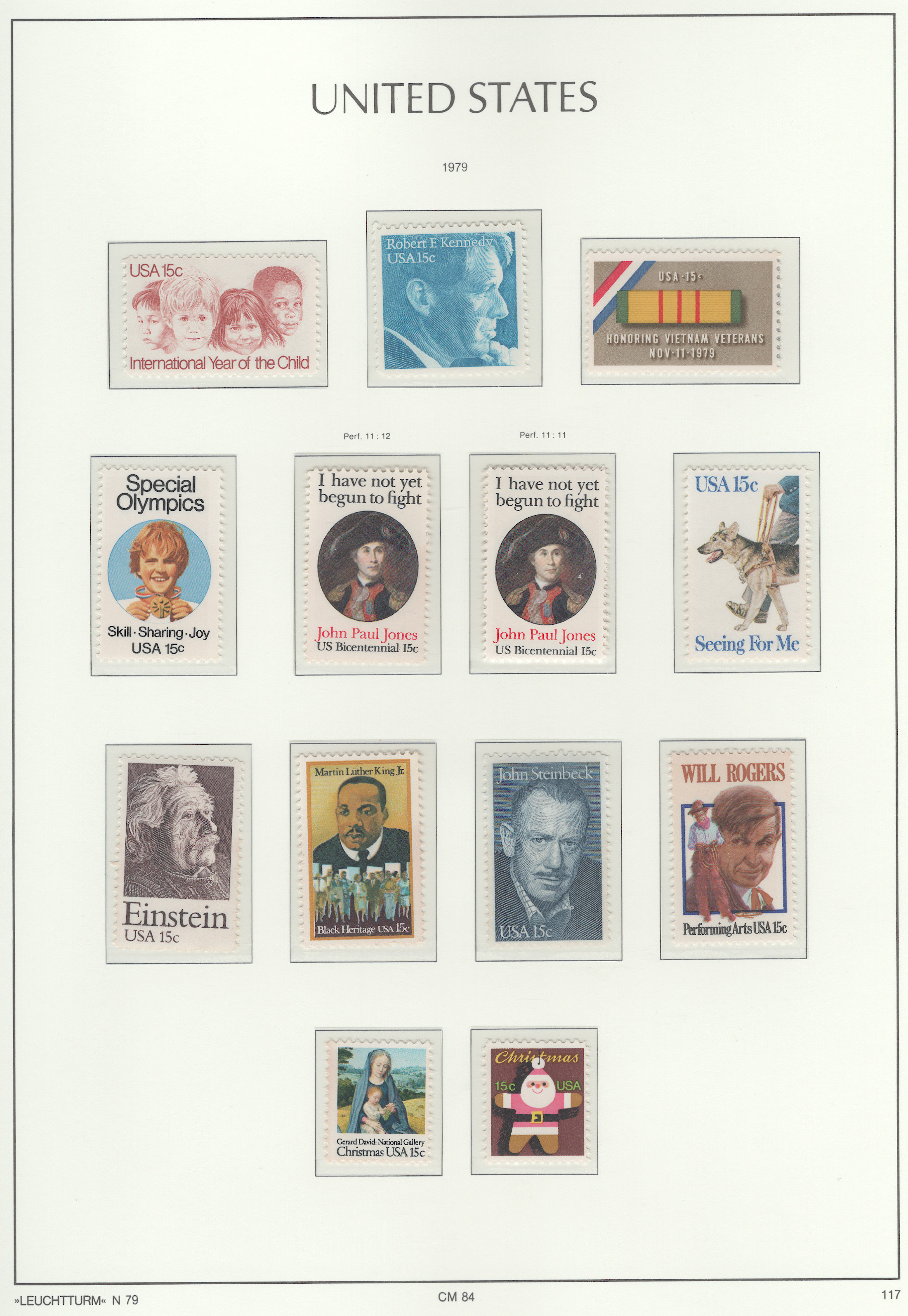
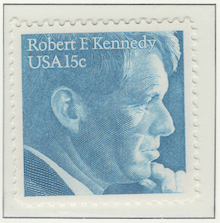
Robert Kennedy was U.S. Attorney General while his brother John Kennedy was President of the U.S. After the president was assassinated and Lyndon Johnson became president, he remained as Attorney General until the end of his brother’s original term. In 1964, he became a U.S. Senator for the state of New York. He saw it as a means to stay in politics at the national level so that he may run for president in 1972, after Johnson would leave office.
President Johnson had the support of Congress and the public when he took office after the assasination, serving out the remaining two years of President Kennedy’s term. Because of his successes in office, he was elected for a full term in 1964. However, his popularity began to decline leading into the 1968 election. Although he had done plenty for the poor, some felt he wasn’t doing enough to address their changing concerns. There was also rising protests against the war in Viet Nam, for which Johnson was slow to respond. Kennedy was known for fighting organized crime, for civil rights, against the Soviets involvement in Cuba, for the U.S. leaving Viet Nam, and many of progressive concerns.
Although Robert Kennedy had planned to wait until 1972 to run for president, he saw an opportunity to defeat Johnson. Johnson didn’t win the New Hampshire primary in March, and the polls were showing him down. Four days later, Kennedy announced his candidacy for president. About two weeks after that, Johnson withdrew from the race, making Kennedy the favorite. In April, Vice President Hubert Humphrey entered the race for president, but he was too late to register for the primaries and would try to win with votes from delegates at the Democratic National Convention in August.
In early June, Kennedy won the California primary, giving him a total of 393 delegates. Humphrey, though, had obtained pledges from 561 delegates. Kennedy was still the popular favorite and it looked like he might win at the convention. After giving a speech to his supporters in California at a hotel, as he was leaving by way of the kitchen, a Palestian American shot him three times, killing him an hour and a half later. At that time, the Secret Service did not provide protection for presidential candidates. After that incident, they changed their policy.
Note
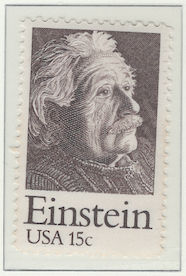
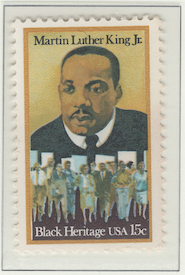
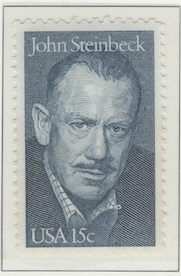
My favorite looking stamps on this page are those of Robert Kennedy, Albert Einstein, and John Steinbeck. Although they’re not multi-colored, I can’t get enough of that style. I despise the one of Martin Luther King. Although it may be unintentional, I think it’s belittling of him and his importance in U.S. history.
Contains 13 spots: own 13 – 13 unused, 0 used.
Page is finished.
Album or Web Page Last changed May 12, 2025
Stamp Details
The table below lists information about the stamps shown on this page of Lighthouse’s stamp album. For more details about a particular stamp, click on its description. That will take you to the related web page of Colnect.
spot |
own |
catalog |
subject |
description |
comment |
|---|---|---|---|---|---|
✓ |
1772 |
15c (feb 1979) |
|||
✓ |
1770 |
15c (jan 1979) |
|||
✓ |
1802 |
15c (nov 1979) |
|||
✓ |
1788 |
15c (aug 1979) |
U.S. Revolution Heroes
✓ |
1789 |
15c (sep 1979) |
|||
✓ |
1789A |
15c (sep 1979) |
Other
✓ |
1787 |
15c (jun 1979) |
Famous Americans
✓ |
1774 |
15c (mar 1979) |
|||
✓ |
1771 |
15c (jan 1979) |
|||
✓ |
1773 |
15c (feb 1979) |
|||
✓ |
1801 |
15c (nov 1979) |
Christmas & Holidays
✓ |
1799 |
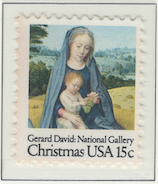
Virgin & Child |
15c (oct 1979) |
||
✓ |
1800 |
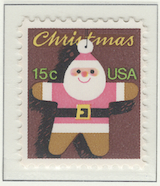
Santa Claus Ornament |
15c (oct 1979) |
Footnotes
Spot refers to the postion of the stamp on the album page (e.g., 3.2 indicates row 3, position 2).
Amt. is an abbreviation for the face amount of the stamp.
Own indicates the stamp status: ✓ for unused; ✗ for used or canceled; ⭑ signifies I ordered one; ; ✨ indicates it was bought recently; ✠ means an auction bid is pending; and ◎ is used, and it costs too much for unused.
To search by catalog number, go to the search box and enter it in the catalog number box. However, it’s a bit broken; I need to fix it.












