Simple Holidays
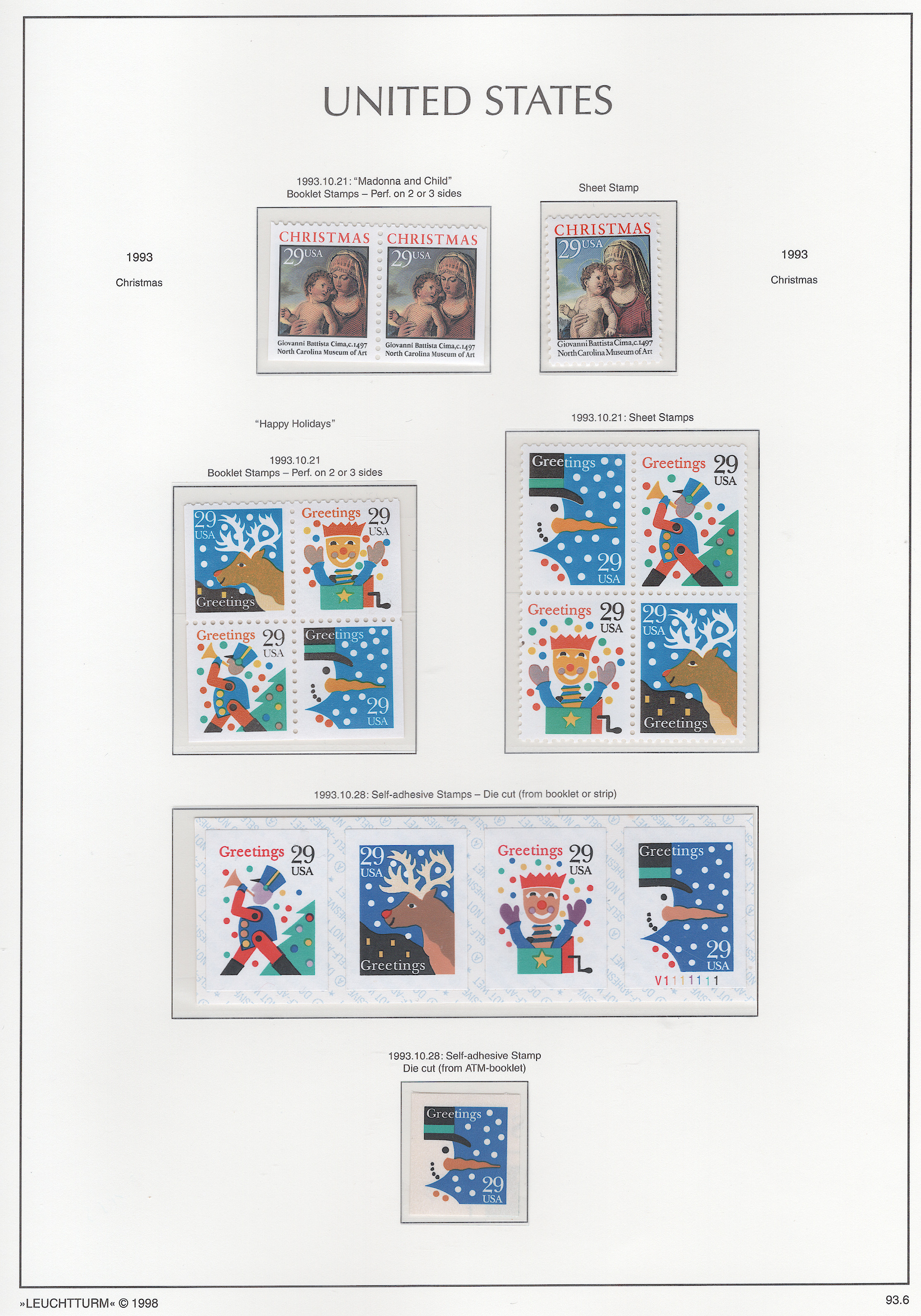
By the early 1960s, the U.S. Post Office was receiving about a thousand letters a year asking for a Christmas stamp to use on holiday mail. The idea was approved, and the first one was issued on November 1, 1962. It showed a wreath and candles and was very popular. The Post Office printed 350 million, the largest run for a special stamp up to that time, but they sold out fast and the total passed 860 million by the end of the year.
Not everyone was happy about these new stamps. Some people didn’t like the idea of a government stamp honoring a religious holiday, while others wanted the stamps to be more religious. Over the next few years the designs included the National Christmas Tree, seasonal plants and an angel in 1965 – angels were seen as less controversial since they appear in many religions. In 1966, the Post Office tried classic paintings instead, starting with Hans Memling’s Madonna and Child with Angels, issued in Christmas, Michigan. The argument was that a famous painting celebrated culture and not a church.
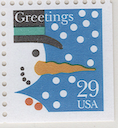
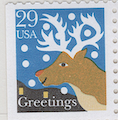
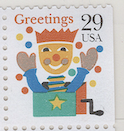
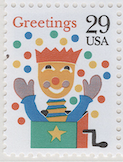
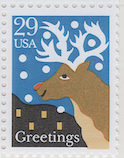
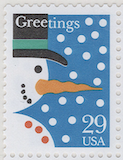
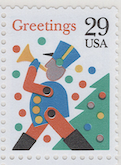
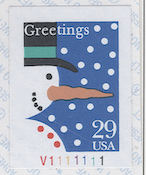
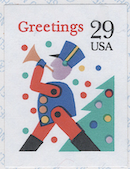
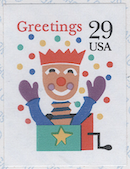
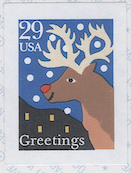
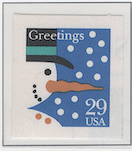
In 1970, they settled on a compromise: one traditional stamp (i.e., a Nativity painting) plus a block of four showing Christmas toys. That was moderately well received. They’ve continued issuing both types since. As you can see, the 1993 set of four with the snowman, toy soldier, reindeer and jack-in-the-box are for the contemporary style of stamps.
Note
Although holiday stamps are meant to commemorate Christmas and holidays around in December, to me they are a type of definitive stamp. So I included them in the album pages containing definitives.
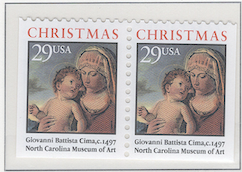
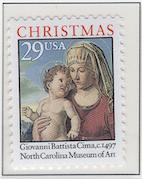
The Madonna and Child stamps, the ones showing a painting of Mary and Jesus, are beautiful. For a Christian, you can’t go wrong with a close-up of a famous Renaissance painting. Since I enjoyed Christmas as a kid, I do enjoy stamps of Santa Claus, toys, and other playful images. I even like these designs which are meant to look like children painted them.
Contains 15 spots: own 15 – 15 unused, 0 used.
Page is finished.
Album or Web Page Last changed Mar 7, 2025
Stamp Details
The table below lists information about the stamps shown on this page of Lighthouse’s stamp album. For more details about a particular stamp, click on its description. That will take you to the related web page of Colnect.
spot |
own |
catalog |
subject |
description |
comment |
Christmas & Holidays
✓ |
2790 |
29c (oct 1993) |
|||
✓ |
2789 |
29c (oct 1993) |
|||
✓ |
2795 |
29c (oct 1993) |
|||
✓ |
2796 |
29c (oct 1993) |
|||
✓ |
2797 |
29c (oct 1993) |
|||
✓ |
2798 |
29c (oct 1993) |
|||
✓ |
2791 |
29c (oct 1993) |
|||
✓ |
2792 |
29c (oct 1993) |
|||
✓ |
2793 |
29c (oct 1993) |
|||
✓ |
2794 |
29c (oct 1993) |
|||
✓ |
2799 |
29c (oct 1993) |
|||
✓ |
2800 |
29c (oct 1993) |
|||
✓ |
2801 |
29c (oct 1993) |
|||
✓ |
2802 |
29c (oct 1993) |
|||
✓ |
2803 |
29c (oct 1993) |
Footnotes
Spot refers to the postion of the stamp on the album page (e.g., 3.2 indicates row 3, position 2).
Amt. is an abbreviation for the face amount of the stamp.
Own indicates the stamp status: ✓ for unused; ✗ for used or canceled; ⭑ signifies I ordered one; ; ✨ indicates it was bought recently; ✠ means an auction bid is pending; and ◎ is used, and it costs too much for unused.
To search by catalog number, go to the search box and enter it in the catalog number box. However, it’s a bit broken; I need to fix it.














