First Designs
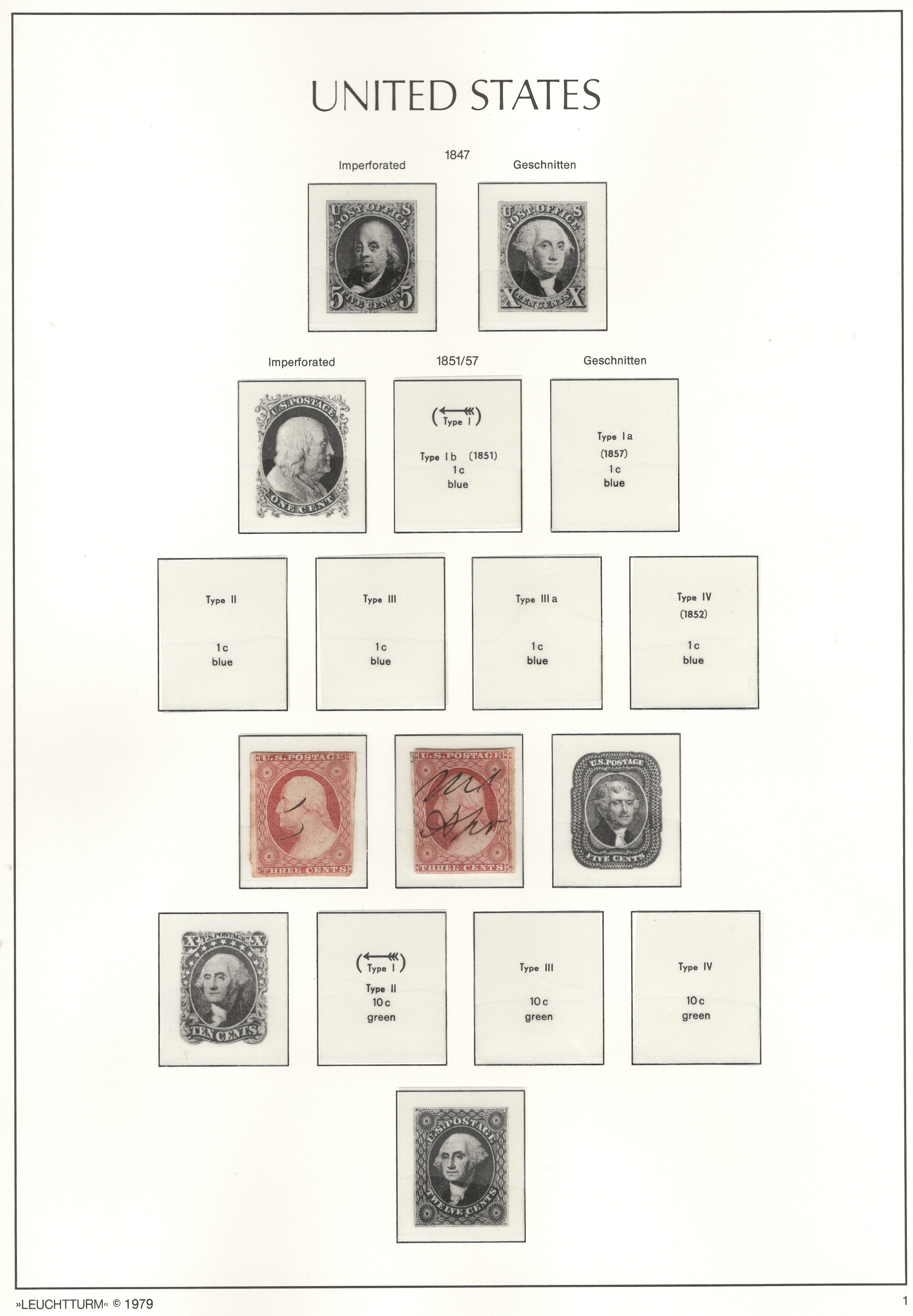
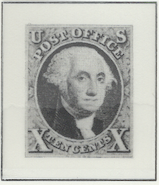
In 1847, the U.S. Congress authorized postage stamps for use in the U.S. to mail letters. Four months later, the first stamps were sold in New York city. When selling them at the post office, they would use scissors to cut the stamps apart.
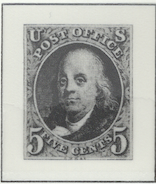
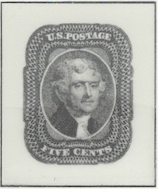
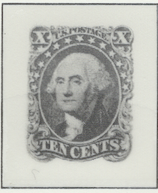
The U.S. Post Office did’t issue another stamp for four years, perhaps because it took time for the system of stamps to be implemented throughout the country. They printed 3.6 million of the first one, the one of Benjamin Franklin for five cents. It was used for letters that weighed no more than a half ounce, with destinations no more than three hundred miles away. For anything heavier or farther away, they printed 863,800 of the second one, the ten-cent stamp depicting George Washington. No one else would be depicted on U.S. stamps until 1856, when they issued a stamp of Thomas Jefferson and not again until 1863 when they issued a stamp of Andrew Jackson.
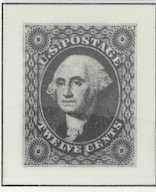
These stamps are meant to be placed on the top row of this album page. One day I’d like to get them: it will give me great pleasure after all these years, starting from when I was a boy collecting U.S. stamps. The first one of Franklin, unused would cost at least $ 3,000 and the second of Washington, since they printed less of them, starts at $ 8,200 – depending on the condition. Compare that to an unused first stamp from the Kingdom of Italy: it sells for about € 1000. It’s not that that stamp isn’t as rare – more were printed of the U.S. stamp – rather it’s that there are less collectors of Italian stamps: demand is high and supply is relatively low.
Note
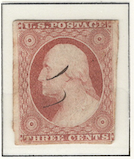
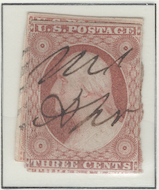
As you can see, I have only one stamp for this page – and not many for this period. They’re a bit expensive. I can afford many of them now, given my income. However, when I was previously actively collecting U.S. stamps – when I was in my teens and early twenties – I didn’t have much money. What little money I had to spare on stamps I spent on Twentieth Century issues: I could get a few dozen stamps from that period for the price of one on this page.
Contains 17 spots: own 2 – 0 unused, 2 used.
Album or Web Page Last changed Apr 10, 2024
Stamp Details
The table below lists information about the stamps shown on this page of Lighthouse’s stamp album. For more details about a particular stamp, click on its description. That will take you to the related web page of Colnect.
spot |
own |
catalog |
subject |
description |
comment |
|---|---|---|---|---|---|
1 |
5c (jul 1847) |
||||
2 |
10c (jul 1847) |
||||
5 |
Benjamin Franklin |
1c (jul 1851) |
|||
5A |
Benjamin Franklin |
1c (jul 1851) |
|||
6 |
Benjamin Franklin |
1c (jan 1857) |
|||
7 |
Benjamin Franklin |
1c (jul 1851) |
|||
8 |
Benjamin Franklin |
1c (jul 1851) |
|||
8A |
Benjamin Franklin |
1c (jul 1851) |
|||
9 |
Benjamin Franklin |
1c (jun 1852) |
|||
✗ |
10 |
3c (jul 1851) |
|||
✗ |
11 |
3c (mar 1855) |
|||
12 |
Thomas Jefferson |
5c (mar 1856) |
|||
13 |
George Washington |
10c (nov 1855) |
|||
14 |
George Washington |
10c (may 1855) |
|||
15 |
George Washington |
10c (may 1855) |
|||
16 |
George Washington |
10c (jun 1855) |
|||
17 |
12c (jul 1851) |
Footnotes
Spot refers to the postion of the stamp on the album page (e.g., 3.2 indicates row 3, position 2).
Amt. is an abbreviation for the face amount of the stamp.
Own indicates the stamp status: ✓ for unused; ✗ for used or canceled; ⭑ signifies I ordered one; ; ✨ indicates it was bought recently; ✠ means an auction bid is pending; and ◎ is used, and it costs too much for unused.
To search by catalog number, go to the search box and enter it in the catalog number box. However, it’s a bit broken; I need to fix it.
















