Tulips
Tulip is a type of flower: it grows from a bulb, shooting a few long wide leaves and a stem, blooming once a year in the Spring. The flowers have only few large petals and fall off after a few days or a couple of weeks. The greenery lasts for a while, but aren’t very attractive once the flower’s petals are gone. You can leave the bulbs in the ground if in land, not a pot. However, usually you have to dig up the bulbs, remove the dirt from them so they won’t rot or get moldy and store them in a dark moderately dry place until the Autumn. They you plant the bulbs and let them experience the cold so that the growth and blooming will be triggered with the warming of Spring.
It’s quite a bit of work and bizarre how it works. But it’s worth it. I loved growing tulips when I was a boy in the Boston area. We had a large circular garden in the middle of our side yard, with a fountain in the middle. We planted only tulips there. Before Summer I would dig up the bulbs and store them in our basement.
Note
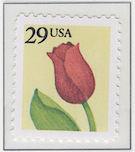
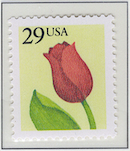
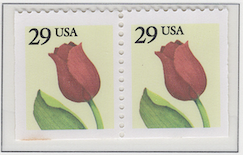
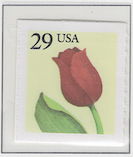
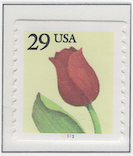
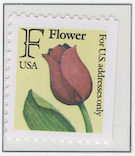
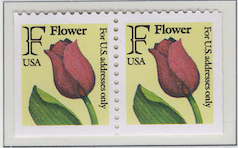
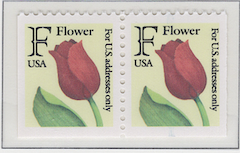
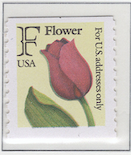
Despite my appreciation for tulips, the design of this stamp is not very good. It’s too simple for such a beautiful flower. There are minor deviations in the printing of the stamps – perforations, booklet, coil, sheet – but no deviation in the tulip image. There are so many tulip colors and shapes to their petals. It was a missed opportunity.
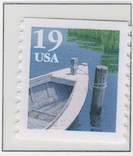
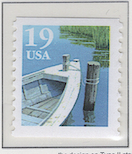
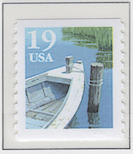
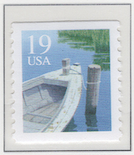
I do like the image of the boat bow on the water on the stamps on the fourth row. It’s similar to the design of the beach scene and the hot-air balloon stamps three pages back.
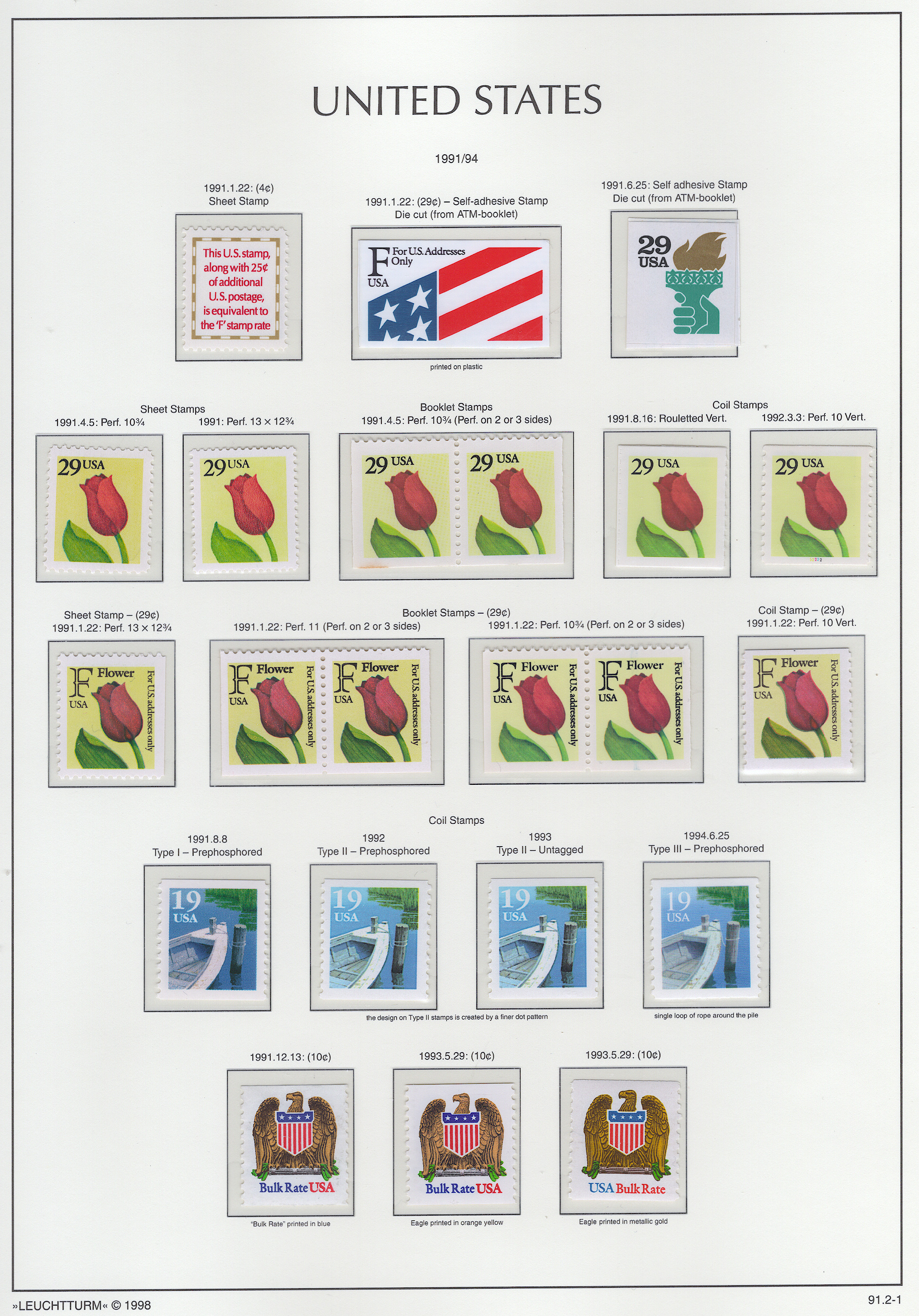
The first stamp on this page, the rate makeup stamp is embarassing. It’s basically a four-cent stamp to put with a twenty-five cent stamp to cover the new cost of mailing a letter. They couldn’t be bothered ot draw something, not even a stick figure.
Contains 19 spots: own 19 – 19 unused, 0 used.
Page is finished.
Album or Web Page Last changed Jul 22, 2025
Stamp Details
The table below lists information about the stamps shown on this page of Lighthouse’s stamp album. For more details about a particular stamp, click on its description. That will take you to the related web page of Colnect.
spot |
own |
catalog |
subject |
description |
comment |
|---|---|---|---|---|---|
✓ |
2521 |
|
|||
✓ |
2522 |
F (jan 1991) |
|||
✓ |
2531A |
29c (jun 1991) |
Flowers & Blossoms
✓ |
2524 |
29c (apr 1991) |
|||
✓ |
2524A |
29c (apr 1991) |
|||
✓ |
2527 |
29c (apr 1991) |
|||
✓ |
2525 |
29c (aug 1991) |
|||
✓ |
2526 |
29c (mar 1992) |
|||
✓ |
2517 |
F (jan 1991) |
|||
✓ |
2519 |
F (jan 1991) |
|||
✓ |
2520 |
F (jan 1991) |
|||
✓ |
2518 |
F (jan 1991) |
Boats & Ships
✓ |
2529 |
19c (aug 1991) |
|||
✓ |
2529A |
19c (jan 1992) |
|||
✓ |
2529a |
19c (jan 1993) |
|||
✓ |
2529C |
19c (jun 1994) |
Eagle Series
✓ |
2602 |
|
|||
✓ |
2603 |
|
|||
✓ |
2604 |
|
Footnotes
Spot refers to the postion of the stamp on the album page (e.g., 3.2 indicates row 3, position 2).
Amt. is an abbreviation for the face amount of the stamp.
Own indicates the stamp status: ✓ for unused; ✗ for used or canceled; ⭑ signifies I ordered one; ; ✨ indicates it was bought recently; ✠ means an auction bid is pending; and ◎ is used, and it costs too much for unused.
To search by catalog number, go to the search box and enter it in the catalog number box. However, it’s a bit broken; I need to fix it.


















