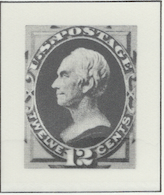
Henry Clay
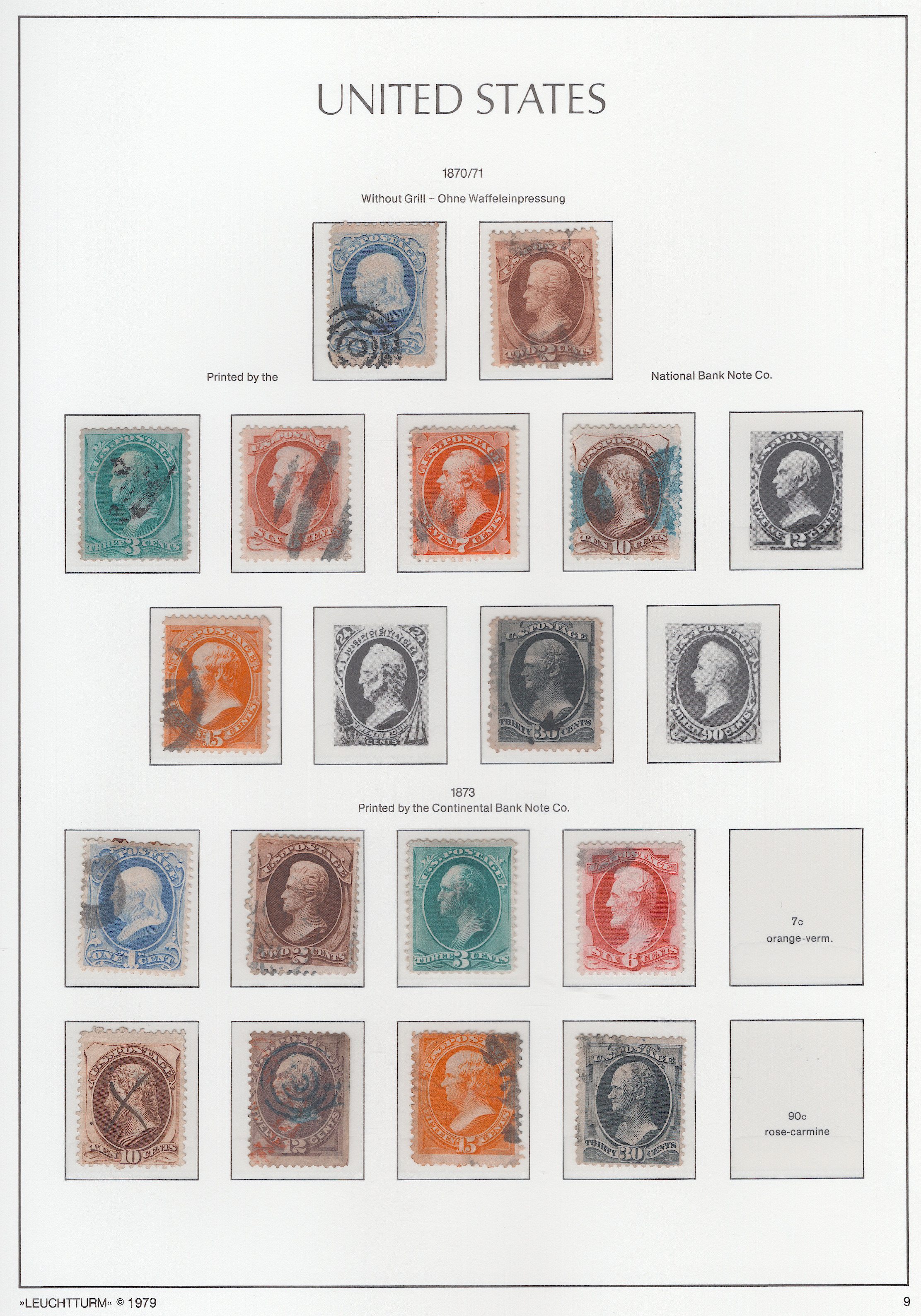
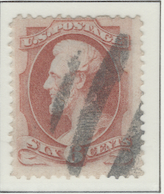
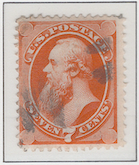
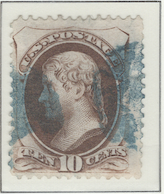
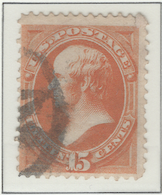
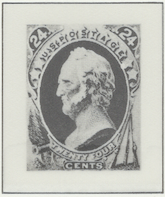
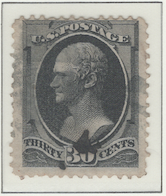
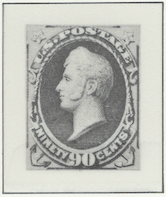
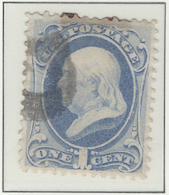
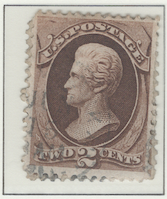
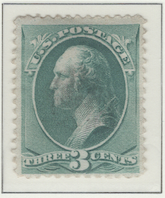
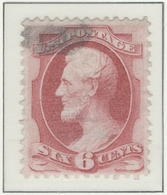
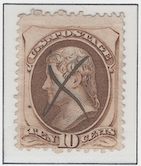
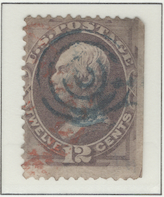
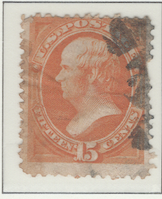
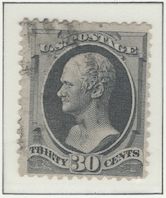
These stamps are pretty much the same as the previous page, but with slight deviations (no grill embossed on the backs). They include the usual suspects – Franklin, Washington, Jefferson, Jackson, and Lincoln – but also some of Lincoln’s near contemporaries: Winfield Scott, Edwin Stanton, Daniel Webster, and Henry Clay.
Henry Clay represented Kentucky in the U.S. House of Representative, although he was born in Virginia, and was the Speaker of the House. Later he became a U.S. Senator, also for Kentucky. He ran for president a few times, but was never successful. In 1825, President John Quincy Adams appointed Clay Secretary of State. Aftewards Adams left office, he became a Senator for Kentucky, again.
Incidentally, John Quincy Adams who also started in Congress, returned to the House of Representatives after leaving the presidency. He’s the only president to have done that. President Andrew Johnson, having lost the nomination for re-election, attempted to return to the House, but lost. Two years later, though, Johnson was elected to the Senate. Similar to both of them, President Howard Taft became Chief Justice of the Supreme Court after his presidency.
Note
Although all of these stamp that I have on this album page are used, it’s a little more respectable looking than the sparse and empty pages before this one. Plus, the post marks on all of these are either minimal or don’t obscure the stamps too much. I wish there was a way I could safely remove the cancelation ink without damaging the stamp or removing the stamp’s ink.
Contains 21 spots: own 16 – 0 unused, 16 used.
Album or Web Page Last changed Mar 22, 2025
Stamp Details
The table below lists information about the stamps shown on this page of Lighthouse’s stamp album. For more details about a particular stamp, click on its description. That will take you to the related web page of Colnect.
spot |
own |
catalog |
subject |
description |
comment |
|---|---|---|---|---|---|
✗ |
145 |
1c (may 1870) |
|||
✗ |
146 |
2c (may 1870) |
|||
✗ |
147 |
3c (mar 1870) |
|||
✗ |
148 |
6c (mar 1870) |
|||
✗ |
149 |
7c (mar 1871) |
|||
✗ |
150 |
10c (may 1870) |
|||
151 |
12c (jul 1870) |
||||
✗ |
152 |
15c (jun 1870) |
|||
153 |
24c (nov 1870) |
||||
✗ |
154 |
30c (jul 1870) |
|||
155 |
90c (sep 1872) |
||||
✗ |
156 |
1c (aug 1873) |
|||
✗ |
157 |
2c (jul 1873) |
|||
✗ |
158 |
3c (jul 1873) |
|||
✗ |
159 |
6c (jun 1873) |
|||
160 |
7c (sep 1873) |
||||
✗ |
161 |
10c (aug 1873) |
|||
✗ |
162 |
12c (jan 1874) |
|||
✗ |
163 |
15c (jul 1873) |
|||
✗ |
165 |
30c (oct 1874) |
|||
166 |
90c (jun 1875) |
Footnotes
Spot refers to the postion of the stamp on the album page (e.g., 3.2 indicates row 3, position 2).
Amt. is an abbreviation for the face amount of the stamp.
Own indicates the stamp status: ✓ for unused; ✗ for used or canceled; ⭑ signifies I ordered one; ; ✨ indicates it was bought recently; ✠ means an auction bid is pending; and ◎ is used, and it costs too much for unused.
To search by catalog number, go to the search box and enter it in the catalog number box. However, it’s a bit broken; I need to fix it.




















