Taft & Light Pairs
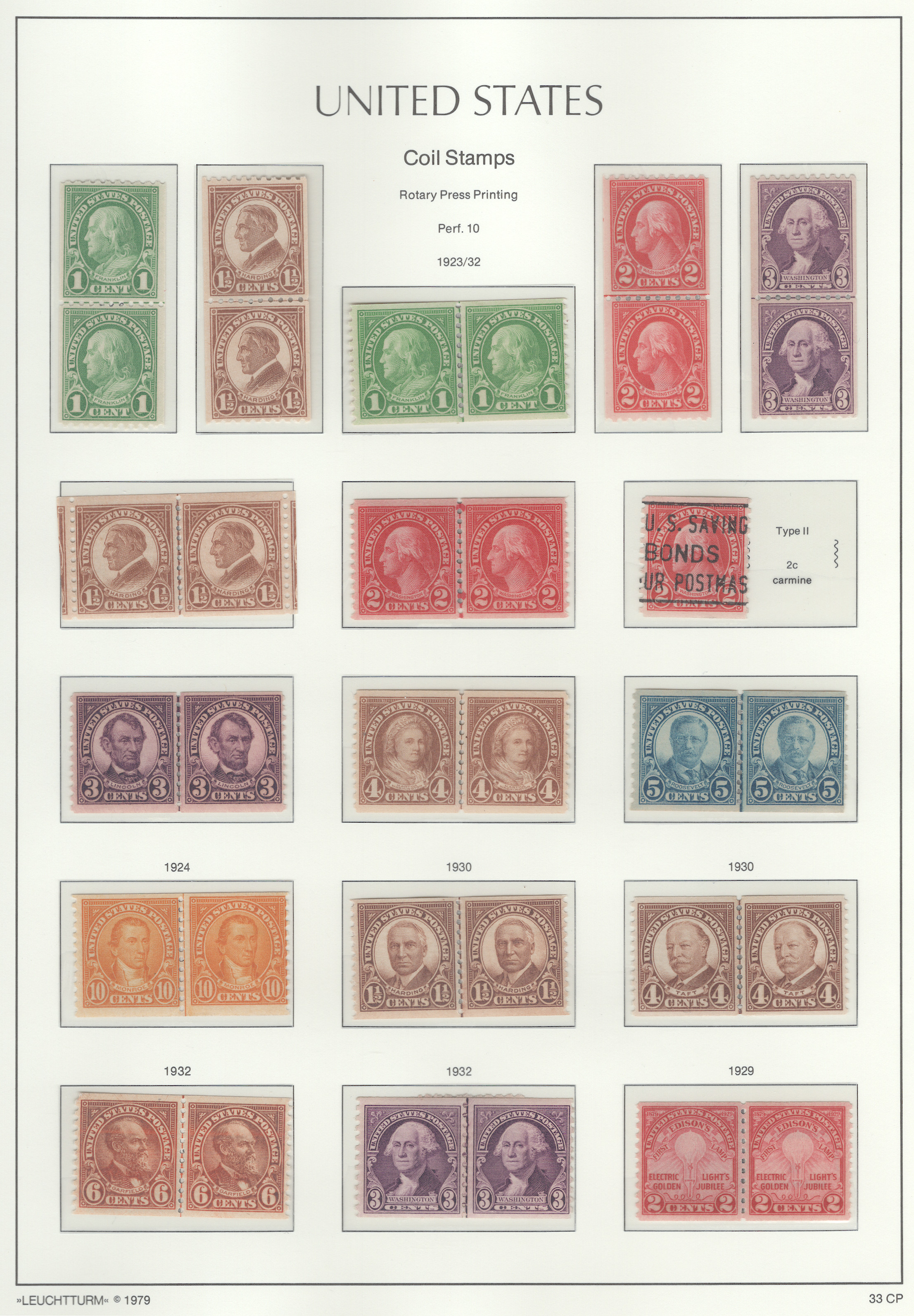
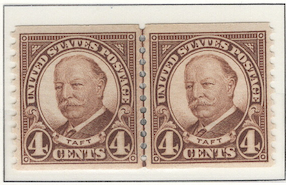
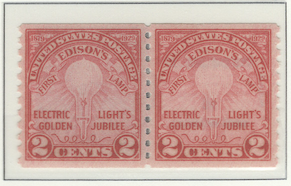
Since these stamps are the same as the previous pages, except that they’re coil pairs, I’ll focus on two of the stamps: President Taft; and the stamp for the electric light bulb.
William Howard Taft
Taft was born in 1857 in Cincinnati, Ohio. He went to Yale Law School and became a lawyer. In his twenties, he was appointed judge and continued as such for many years, rising in ranks to the appellate courts. He had long hoped to become a U.S. Supreme Court justice. However, in 1901, President William McKinley appointed him Governor of the Philippines, when it became a territory of the U.S. after the U.S. won the Spanish-American War.
In 1904, President Theodore Roosevelt appointed Taft the U.S. Secretary of War. With the support of Roosevelt, in 1908 he was elected the twenty-seventh president of the U.S. He was known for eliminating many tariffs imposed by President McKinley on foreign countries, and to passing anti-trust legislation to eliminate monopolies.
Taft served as president for only one term. When he ran for a second term, Roosevelt ran against him as a third-party candidate, causing them both to lose. Afterwards, Taft became a law professor at Yale, until President Warren Harding appointed him Chief Justice of the Supreme Court. He was the only person who had been a president and a member of the Supreme Court.
Electric Light Bulb
In 1800, Alessandro Volta in Italy created the first electric battery. He observed that current from his battery running through a copper wire would emit light. In 1802, the Russian scientist, Vasily Vladimirovich Petrov produced a persistent electric arc between two electrical wires so as to emit light.
In 1840, the Guernsey scientist, Warren de la Rue ran electricity through a platinum coil in a vacuum tube to create the first electric light bulb, albeit expensive given the materials used. Incidentally, his father was a printer and founded the British printing company, De La Rue. They printed the first postage stamps for Italy, as well as printed stamps for England and many other countries for over two-hundred years.
Building on de la Rue’s light bulb, William Greener in 1846 in England made a light bulb using a filament in a vaccuum tube, but it didn’t last very long or burn very bright.
In the 1870s, though, Joseph Swan in England and Thomas Edison in the U.S. designed better light bulbs, ones that burned brightly, lasted long, and cost very little to produce. The two eventually joined together into one company.
The stamp at the bottom right corner of this page is in celebration of the fiftieth anniversary of Edison’s light bulb. Edison certainly contributed to the development of the light bulb, but he wasn’t the inventor of it or alone in its development.
Note
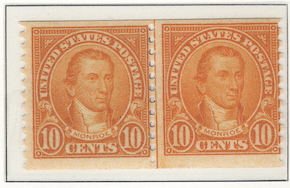
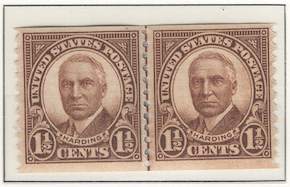
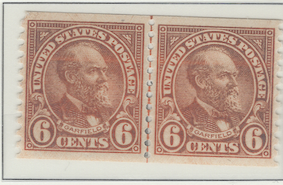
When I was much younger and bought U.S. coil stamps, I used stock books and bought singles of these stamps. In the past couple of years, I’ve been migrating my collection to Leuchtturm album pages. They’ve allocated space for pairs of coil stamps, which is preferred by some collectors. I could create my own album page with single coil stamps, but I’ve decided to switch to pairs.
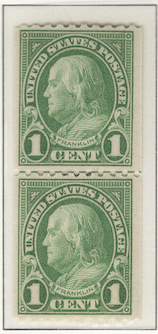
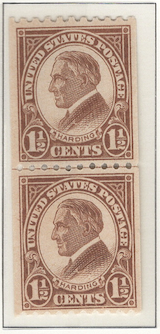
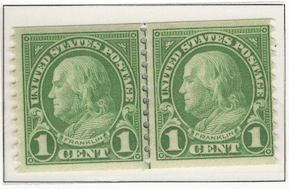
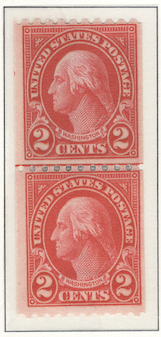
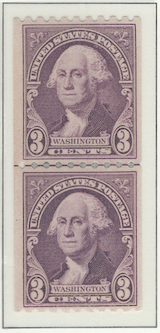
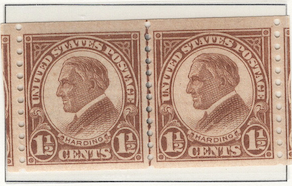
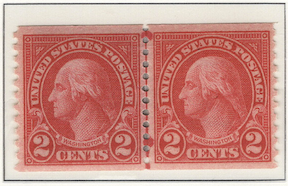
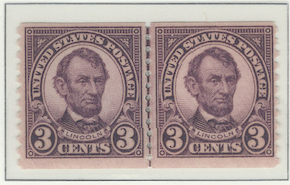
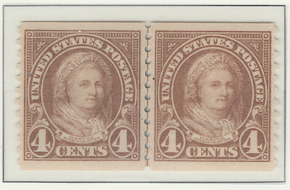
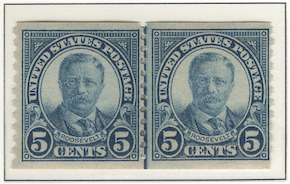
Look closely at these stamps and you’ll see there is a line between each pair of stamps. This is caused by the end of the circular plates meeting when printing a column or row of stamps on paper that’s longer or wider than the plates can print individually. I think that’s right. I may be off a little bit on my understanding of the physical process. Regardless, I’ve decided to collect line pairs for U.S. coil stamps.
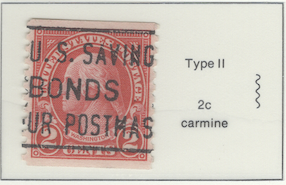
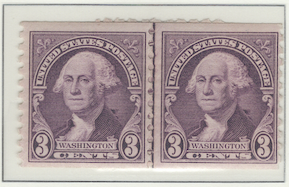
On this page you can see that I have almost all of them in pairs, except one, the Washington stamp at the end of the second row. I have just a single used copy of it. A pair of them unused costs about five-hundred dollars. A line pair would be over eight-hundred dollars. So it may be a while before I finish this page and when I buy the last pair, I probably won’t get a line pair.
Contains 17 spots: own 17 – 16 unused, 1 used.
Page is full, but not yet finished.
Album or Web Page Last changed Mar 21, 2025
Stamp Details
The table below lists information about the stamps shown on this page of Lighthouse’s stamp album. For more details about a particular stamp, click on its description. That will take you to the related web page of Colnect.
spot |
own |
catalog |
subject |
description |
comment |
|---|---|---|---|---|---|
✓ |
604 |
1c (jul 1924) |
|||
✓ |
605 |
1½c (may 1925) |
|||
✓ |
597 |
1c (jul 1923) |
|||
✓ |
606 |
2c (dec 1923) |
|||
✓ |
722 |
George Washington |
3c (oct 1932) |
||
✓ |
598 |
1½c (mar 1925) |
|||
✓ |
599 |
George Washington |
2c (jan 1923) |
||
✗ |
599A |
George Washington |
2c (mar 1929) |
Might Buy Soon |
|
✓ |
600 |
3c (may 1924) |
|||
✓ |
601 |
4c (aug 1923) |
|||
✓ |
602 |
5c (mar 1924) |
|||
✓ |
603 |
10c (dec 1924) |
|||
✓ |
686 |
1½c (dec 1930) |
|||
✓ |
687 |
4c (sep 1930) |
|||
✓ |
723 |
6c (aug 1932) |
|||
✓ |
721 |
George Washington |
3c (jun 1932) |
||
✓ |
656 |
Electric Light |
2c (jun 1929) |
Footnotes
Spot refers to the postion of the stamp on the album page (e.g., 3.2 indicates row 3, position 2).
Amt. is an abbreviation for the face amount of the stamp.
Own indicates the stamp status: ✓ for unused; ✗ for used or canceled; ⭑ signifies I ordered one; ; ✨ indicates it was bought recently; ✠ means an auction bid is pending; and ◎ is used, and it costs too much for unused.
To search by catalog number, go to the search box and enter it in the catalog number box. However, it’s a bit broken; I need to fix it.
















