Americana Pairs
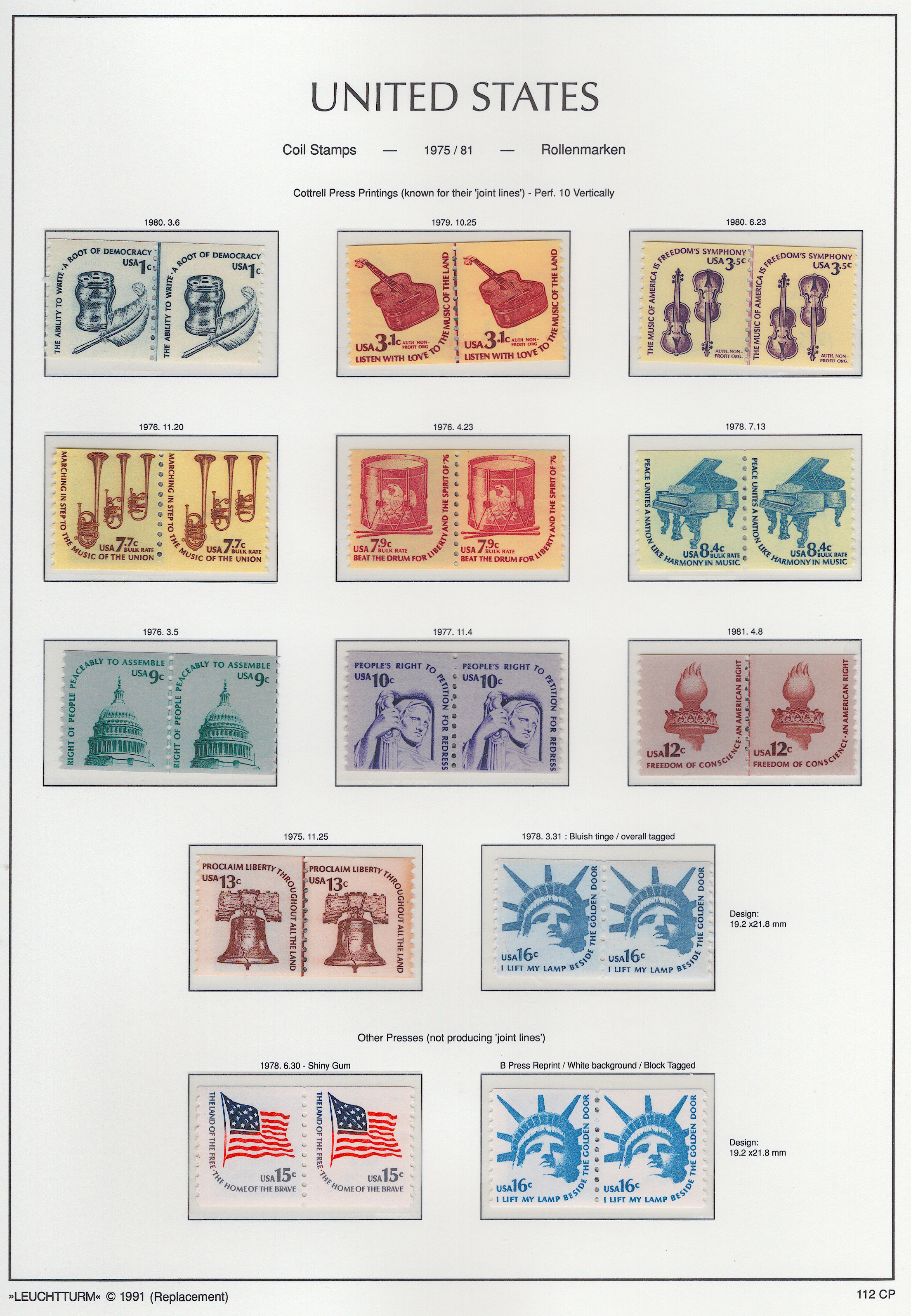
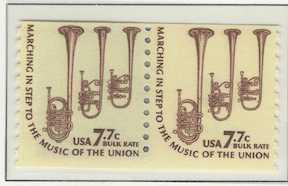
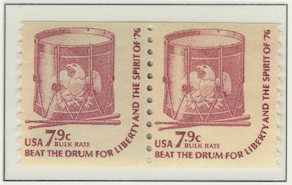
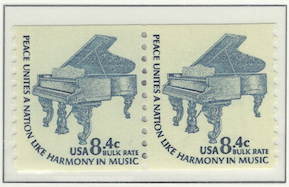
The group of definitives on the top three rows depict musical instruments. What’s odd is that they were issued only in coils, not in sheets or booklets. Of course, they’re fractional amounts which only businesses and charity organizations would use.
Saxhorns
On the second row, the first pair of stamps show three horns. These are saxhorns, a valved brass instrument created in the 1830s and 1840s by the Belgian musical instrument inventor, Adolphe Sax – who also invented the saxophone.
On most saxhorns, the mouth piece is located in the middle, near the values, projecting to one side with the bell where sound comes out, pointing upwards of direction the musician is facing. On these particular saxhorns, though, the bell face backwards, project behind and past the musician’s head. These were used during the American Civil War by muarching bands so that the troops marching behinid them could hear the music and thereby march to it.
Note
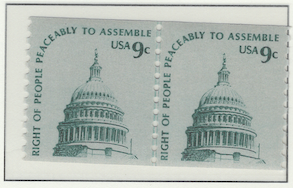
The first four rows of stamps were printed with presses that make lines at the end of each round of printing, known as joint lines (see the Line Pairs album page). If you look closely at the ones on the top four rows, you’ll see that almost all of them have joint lines – the left stamp of each pair is from a different printing than the right stamp. The stamps on the bottom row, though, were made with a different type of press that don’t make joint lines. This will be the way as you move forward in the definitive album pages – until none of them have joint lines, and Leuchtturm allocates space for only one coil stamp, instead of pairs.
Contains 13 spots: own 13 – 13 unused, 0 used.
Page is finished.
Album or Web Page Last changed May 17, 2025
Stamp Details
The table below lists information about the stamps shown on this page of Lighthouse’s stamp album. For more details about a particular stamp, click on its description. That will take you to the related web page of Colnect.
spot |
own |
catalog |
subject |
description |
comment |
Americana Definitives
✓ |
1811 |
1c (mar 1980) |
|||
✓ |
1613 |
3.10c (jan 1979) |
|||
✓ |
1813 |
3.50c (jun 1980) |
|||
✓ |
1614 |
7.70c (nov 1976) |
|||
✓ |
1615 |
7.90c (apr 1976) |
|||
✓ |
1615C |
8.40c (jul 1978) |
|||
✓ |
1616 |
9c (mar 1976) |
|||
✓ |
1617 |
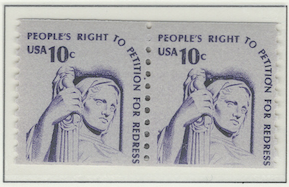
Contemplation of Justice |
10c (nov 1977) |
||
✓ |
1816 |
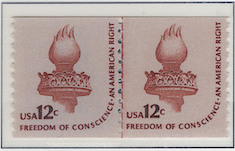
12c (apr 1981) |
|||
✓ |
1618 |
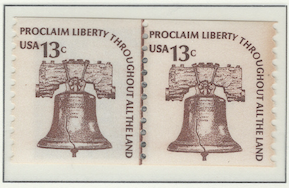
13c (nov 1975) |
|||
✓ |
1619 |
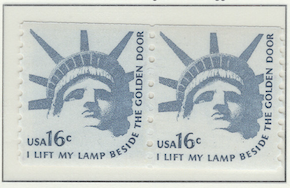
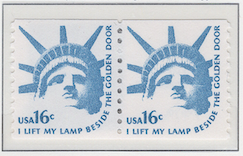
16c (mar 1978) |
|||
✓ |
1618C |
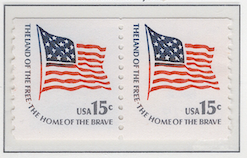
15c (jun 1978) |
|||
✓ |
1619a |
16c (mar 1978) |
Footnotes
Spot refers to the postion of the stamp on the album page (e.g., 3.2 indicates row 3, position 2).
Amt. is an abbreviation for the face amount of the stamp.
Own indicates the stamp status: ✓ for unused; ✗ for used or canceled; ⭑ signifies I ordered one; ; ✨ indicates it was bought recently; ✠ means an auction bid is pending; and ◎ is used, and it costs too much for unused.
To search by catalog number, go to the search box and enter it in the catalog number box. However, it’s a bit broken; I need to fix it.












