Valley Forge
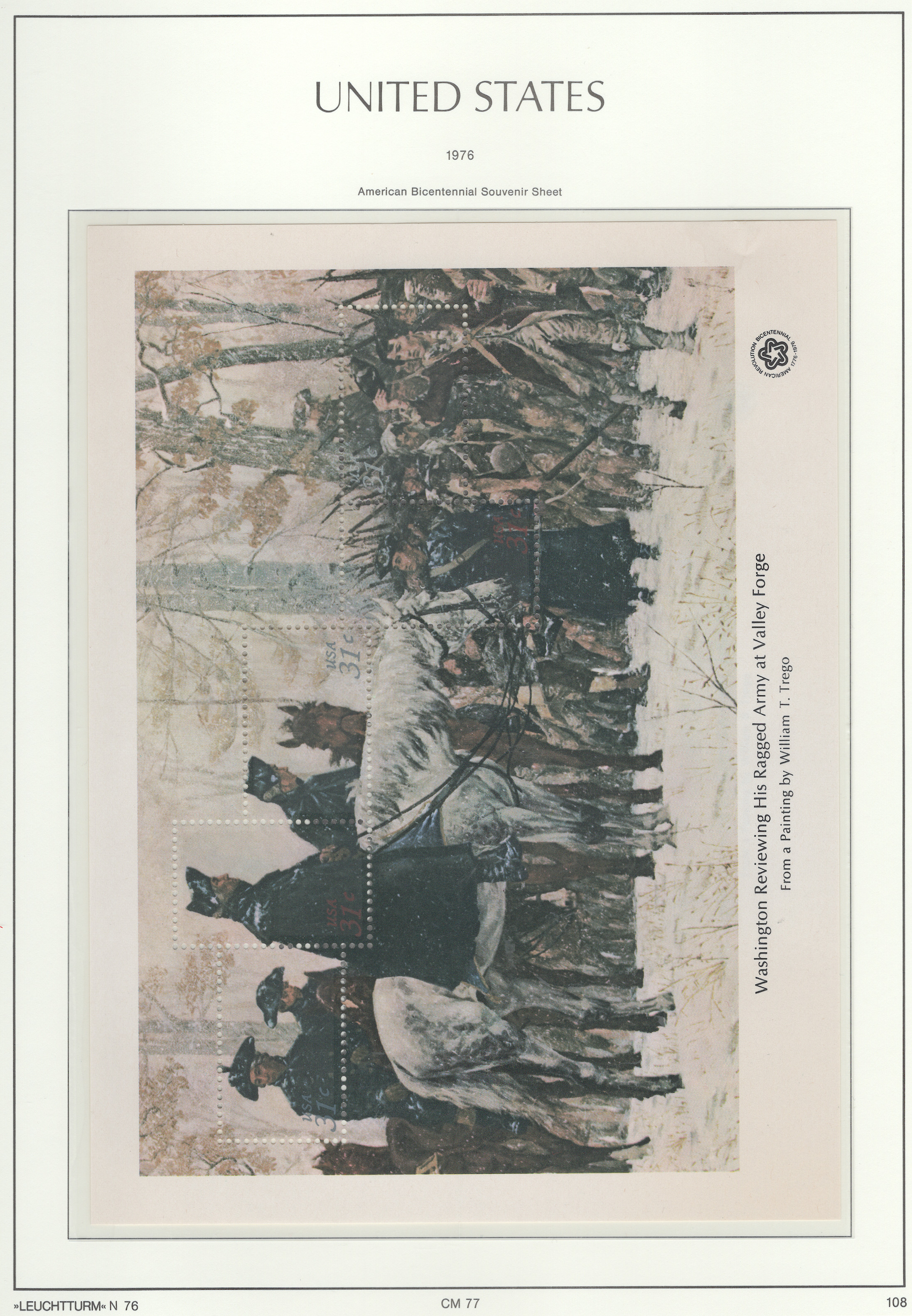
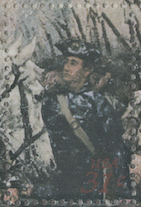
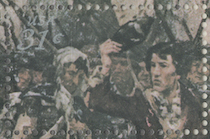
This souvenir sheet shows a painting of the Continental Army at Valley Forge in Pennsylvania – about eighteen miles northwest of Philadelphia. In the 18th Century, armies would not battle during the Winter. Washington and his troops were succesful in the Winter of 1776 at the Battle of Trenton, but that was at the start of the war when they had plenty of energy and thought they could win quickly. Since it was going to drag out for a few years – eight years in the end – they refrained from outright battles in the Winter months.
In the Winter of 1778, with about twelve-thousand troops, it was decided that the Continental Army would camp somewhere for the Winter. Washington chose a rural area, Valley Forge. It was hilly, making it difficult for the British to attack and had plenty of trees for firewood and for building shelters. It also had some open fields which could be used for training troops.
They cut down trees and built nearly two-thousand, small log huts. They were in Valley Force for almost six months. It was a cold and wet winter, and they were short of proper clothing and food. About two thousand men died of disease, some brought on by poor living conditions and malnutrition.
What’s interesting about Valley Forge is that nothing happened militarily. There was no great battle that they won – or lost, even. They just spent six months training and trying to survive in miserable conditions. Similarly, famous historical moments like the Battle of White Plains, and the Battle of Bunker Hill, is that Washington could hardly have claimed victory. All he could say is that they weren’t trounced and most of his soldiers managed to live to fight another day.
What’s sifnificant about Valley Forge and these battles with little or no success, was that they survived against Great Britain and its well trained and well funded military – as well as the Hessian mercenaries the King hired. Sometimes the best a small army can do is defend its home and survive until the oppressor relents.
Note
This painting of Valley Force is by William B. T. Trego. It was painted in 1883, so there are some inaccuracy or misrepresentations. From this painting, you get the impression that Washington and his troops were mostly outside and there was lots of snow. It didn’t snow that year and wasn’t as cold as previous years. It did rain plenty, which to me is worse: wet and cold is miserable.

Contains 5 spots: own 5 – 5 unused, 0 used.
Page is finished.
Album or Web Page Last changed May 6, 2025
Stamp Details
The table below lists information about the stamps shown on this page of Lighthouse’s stamp album. For more details about a particular stamp, click on its description. That will take you to the related web page of Colnect.
spot |
own |
catalog |
subject |
description |
comment |
Battles & Wars
✓ |
1689a |
31c (may 1976) |
|||
✓ |
1689b |
31c (may 1976) |
|||
✓ |
1689c |
31c (may 1976) |
|||
✓ |
1689d |
31c (may 1976) |
|||
✓ |
1689e |
31c (may 1976) |
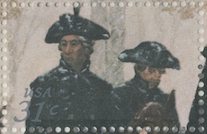
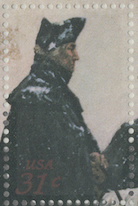
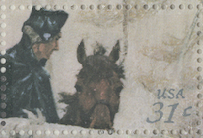
Footnotes
Spot refers to the postion of the stamp on the album page (e.g., 3.2 indicates row 3, position 2).
Amt. is an abbreviation for the face amount of the stamp.
Own indicates the stamp status: ✓ for unused; ✗ for used or canceled; ⭑ signifies I ordered one; ; ✨ indicates it was bought recently; ✠ means an auction bid is pending; and ◎ is used, and it costs too much for unused.
To search by catalog number, go to the search box and enter it in the catalog number box. However, it’s a bit broken; I need to fix it.




