Arctic Explorers
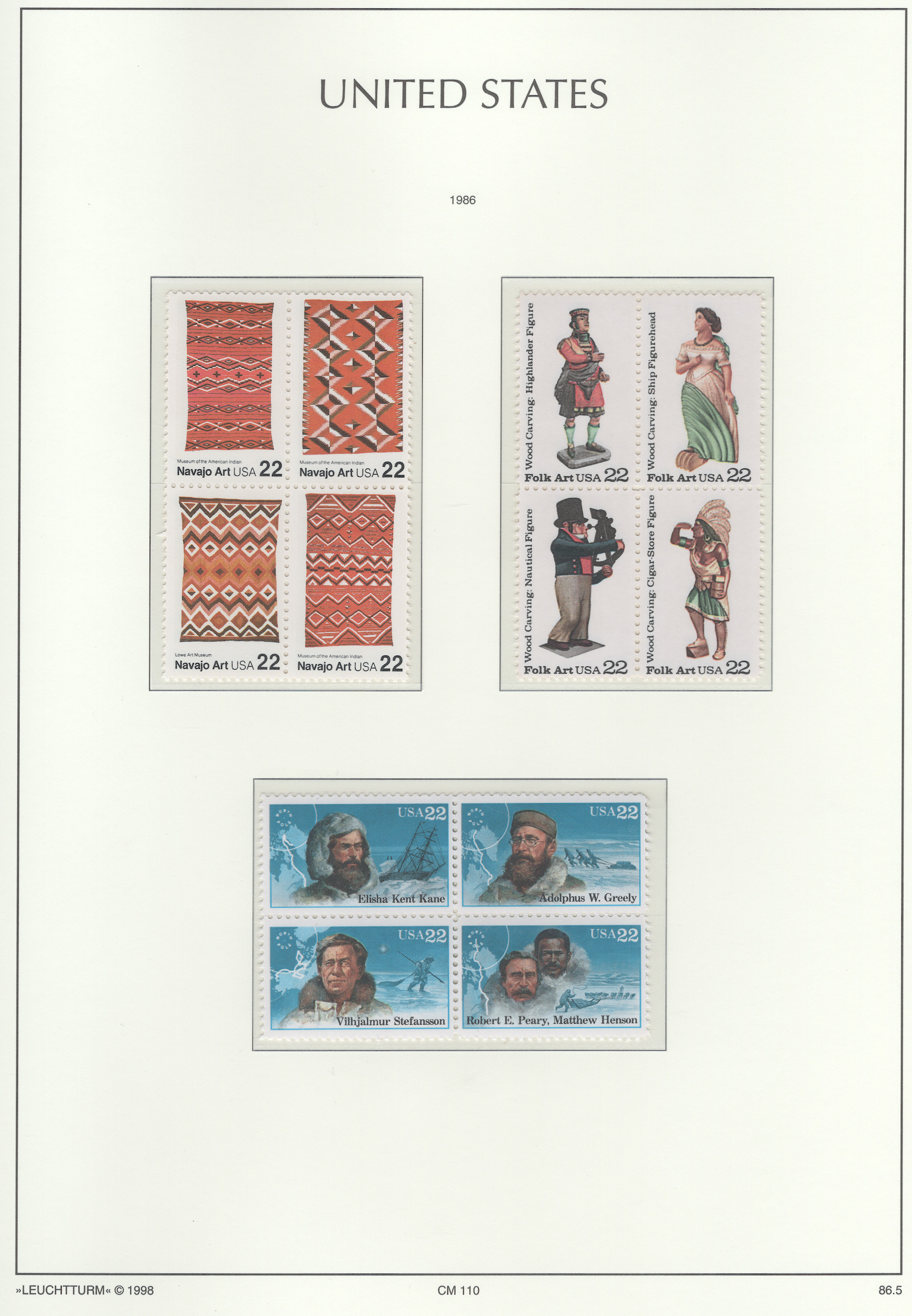
In the Nineteenth Century, there was an interest in exploring the Arctic Circle – to travel to the North Pole and to find a easy passage from the North Atlantic to the North Pacific Ocean. Since they didn’t have the technology we have today to survey the globe from above with satelites and other devices, it required traversing the region by ship and at times by sled and on foot. Owing to the extreme conditions and vastness of the Arctic, exploration of the area was difficult. It took many attempts by several explorers to map the region and discover passages. Five of them are depicted on the set of four stamps at the bottom of this album page.
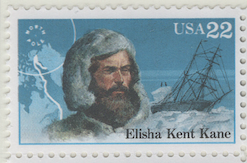
Elisha Kent Kane was an early Arctic explorer from the 19th Century. In the 1840s, he was a medical officer in the U.S. Navy, but managed to move into hydrographic surveying, participating in the charting of waterways in the warm waters of the coast of the southeaster part of the U.S. Later he was part of an expedition into the Arctic to determine what happened to a previous expedition and to make further headway into the Arctic. In 1853, he returned to the Arctic and chartered several islands north of Canada and Greenland, mapping new passages towards the North Pole.
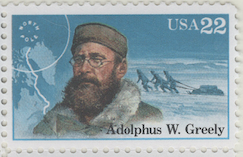
Adolphus Greely was a U.S. Army officer who fought in the U.S. Civil War. He rose in ranks after the war and was put in command of an expedition to the Artic in 1881, following the passages laid out by Kane, but to go farther. The expedition lasted nearly three years, with most of his crew dying before being rescued in 1884.
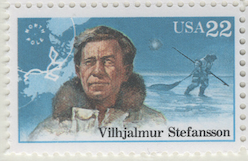
Vilhjalmur Stefansson was a Canadian Amereican of Icelandic descent. His interests were primarily in the people who lived in the Artic (e.g., the Inuit). He studied their culture and how they hunted and survived in the extreme cold – which was critical for later and longer expeditions by others. He also led some expeditions in the first two decades of the Twentieth Century to explore several major islands north of Canada, Alaska and Siberia. He had some spectacular failures, though, causing the deaths of many people who were part of his expeditions.
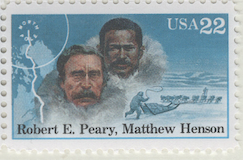
Robert Peary was a U.S. Navy officer who led several expeditions into the Arctic in the last two decades of the Nineteenth Century and the first two decades of the Twentieth. In 1887, he was assigned the duty of exploring the waterways of Nicaragua for the possibility of digging a canal to connect the Atlantic with the Pacific – the idea was abandoned in favor of a canal in Panama. While shopping for a hat for this Central American expedition, though, he met Matthew Henson, an African American working at a clothing store in Washgington. Since Henson had six years of experience as a cabin boy, Peary recruited him. They became friends and Hensen went with him on all of his expeditions, including those in the Arctic. The two of them were said to have been the first people to reach the North Pole. They’re featured together on the last stamp on this album page.
Note
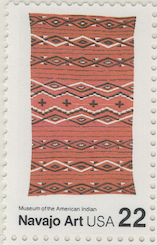
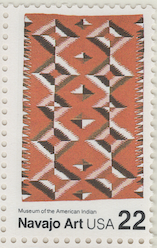
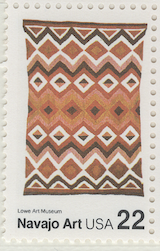
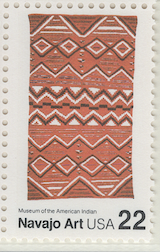
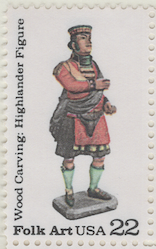
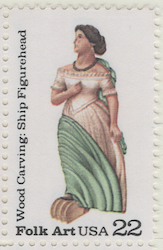
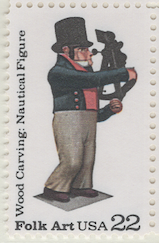
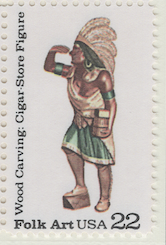
This page has two sets of stamps related to American art, and one to Arctic explorers. At this point, it’s becoming a trend to dedicate stamps to art and crafts, to build awareness of more basic aspects of the U.S. – and not always about historic people.
Regarding the King Days theme for this album, notice that an African American is one of the people depicted in the set of explorers. In previous years, Matthew Henson wouldn’t have been featured. He would have been looked at as a minor member of Peary’s crew, and not worthy of being part of such history – ignoring his role in the success of those expeditions.
Contains 12 spots: own 12 – 12 unused, 0 used.
Page is finished.
Album or Web Page Last changed Jul 19, 2025
Stamp Details
The table below lists information about the stamps shown on this page of Lighthouse’s stamp album. For more details about a particular stamp, click on its description. That will take you to the related web page of Colnect.
spot |
own |
catalog |
subject |
description |
comment |
Native American Art
✓ |
2235 |
22c (sep 1986) |
|||
✓ |
2236 |
22c (sep 1986) |
|||
✓ |
2237 |
22c (sep 1986) |
|||
✓ |
2238 |
22c (sep 1986) |
Folk Art
✓ |
2240 |
22c (oct 1986) |
|||
✓ |
2241 |
22c (oct 1986) |
|||
✓ |
2242 |
22c (oct 1986) |
|||
✓ |
2243 |
22c (oct 1986) |
Famous Explorers
✓ |
2220 |
22c (may 1986) |
|||
✓ |
2221 |
22c (may 1986) |
|||
✓ |
2223 |
22c (may 1986) |
|||
✓ |
2224 |
22c (may 1986) |
Footnotes
Spot refers to the postion of the stamp on the album page (e.g., 3.2 indicates row 3, position 2).
Amt. is an abbreviation for the face amount of the stamp.
Own indicates the stamp status: ✓ for unused; ✗ for used or canceled; ⭑ signifies I ordered one; ; ✨ indicates it was bought recently; ✠ means an auction bid is pending; and ◎ is used, and it costs too much for unused.
To search by catalog number, go to the search box and enter it in the catalog number box. However, it’s a bit broken; I need to fix it.











