Monroe & Wilson
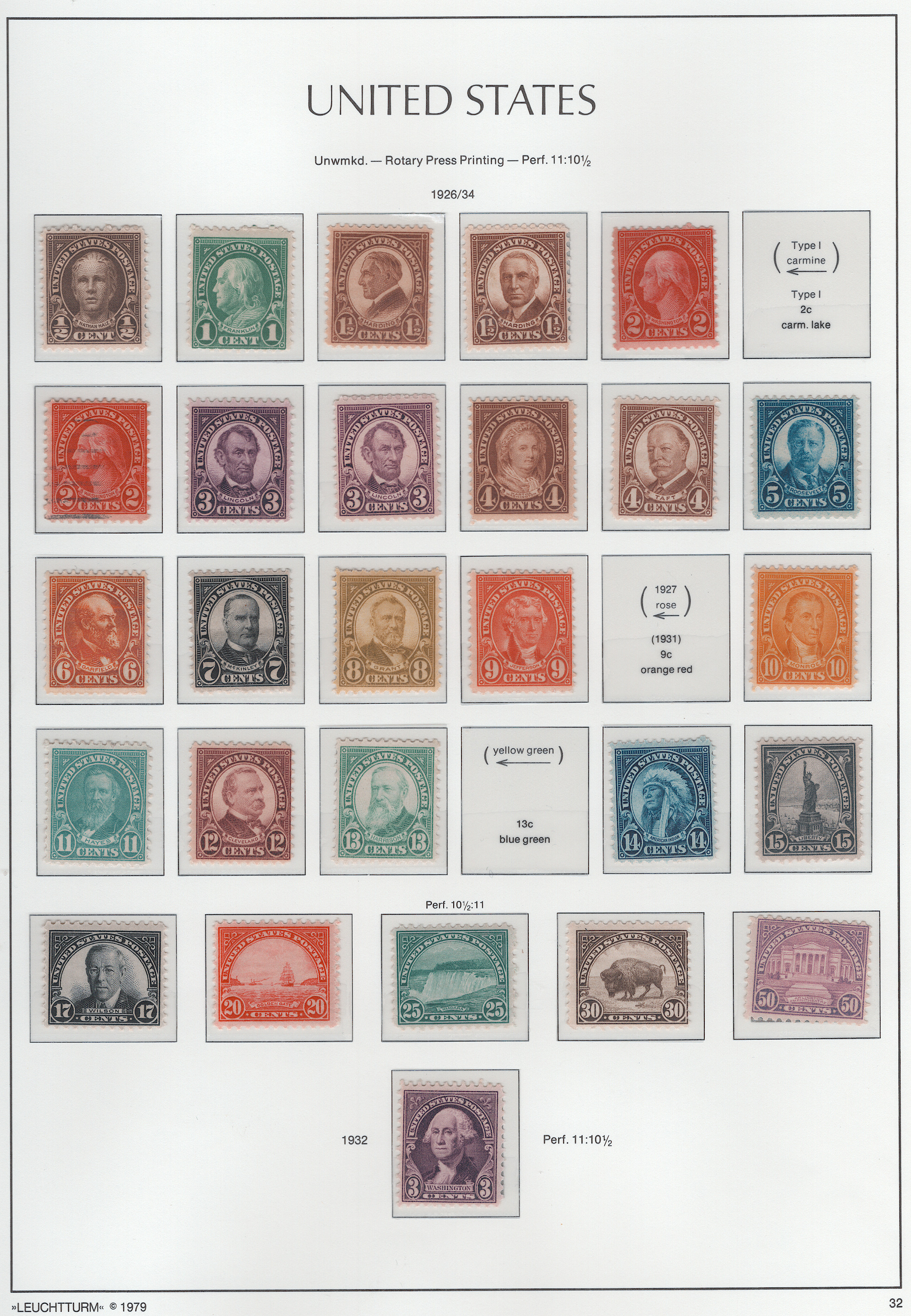
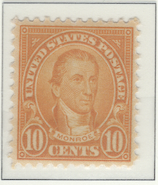
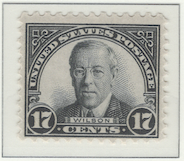
As I’ve mentioned on the page for the first issues of the stamps in this series, I like them very much – they’re so much better looking and more interesting than the Bland Definitives of the previous decade and a half. There are two stamps on this page that depicted two presidents that I’d like to highlight: James Monroe and Woodrow Wilson.
James Monroe
James Monrow was the fifth president of the U.S. Besides all of his work and contribution to the founding of the U.S. before becoming president, perhaps one of his most famous act with what was known as the Monroe Doctrine
It’s central tenant is that any intervention in the political affairs of the U.S., as well as the Americas in general, by foreign powers is considered a potential hostile act against the U.S. This position came into play many times over the two-hundred plus years that followed: various involvements of France, England, and other European countries medling in the affairs in Mexico and Canada; Theodore Roosevelt used it to justify U.S. actions in South and Central America, as well as the Caribbean; Kennedy invoked it when the Soviet Union tried to install troops and missles in Cuba. The result of the Monroe Doctrine from the U.S. perspective is that it has led to maintaining stability in the U.S. and surrounding regions.
Woodrow Wilson
Woodrow Wilson was the twenty-eighth president. He was president during World War I. After the war and a a result, Wilson was lead person to create the League of Nations, the predecessor to the United Nations. Because of his leadership the first world war ended quickly after the U.S. entered the war. Also, because of his vision for the League of Nations, resulting eventually in the U.N. great things have been achieved throughout the world among nations – including peace, stability, and world health.
Note
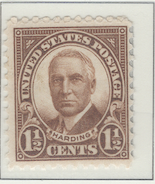
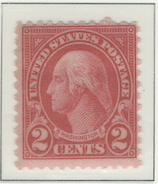
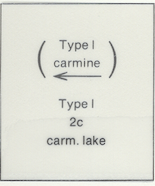
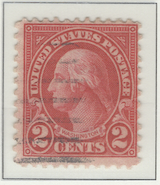
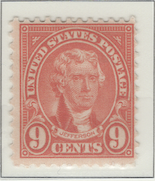
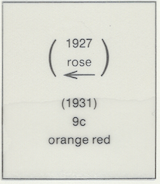
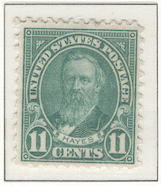
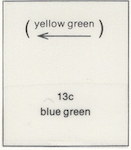
These stamps are the same as the previous two pages, but with different perforation. I have almost all of these unused – one used. The ones I’m missing, you’ll notice that Leuchtturm included in the empty spots arrows and color notations. What that basically means is that the stamp that goes there is the same as the stamp to which it’s pointing, but with color differences.
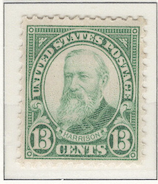
For one of those empty spots on this page, I think one is a duplicate. If you look on the previous page, on the fourth row, the second stamp is a blue-green stamp of President Benjamin Harrison (catalog number 622). On this page, the fourth row, the third stamp is the same stamp, but yellow-green (694). Notice in the space next to it here that Leuchtturm says that space is for the same stamp in blue-green. Looking at the catalogs, there was only two issues of this Benjamin Harrison stamp. I made an entry in my database for the empty spot with catalog number 694A, but I made up that catalog number. I’m thinking now that they meant for 622 to go on this page and mistakenly included 622 on the previous page. I’m not sure what to do about that. I might get another 622 stamp to fill in the spot here, and change the catalog number for that spot in my database.
Contains 30 spots: own 27 – 26 unused, 1 used.
Album or Web Page Last changed Mar 21, 2025
Stamp Details
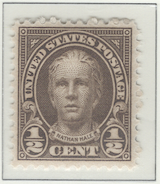
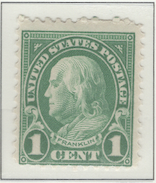
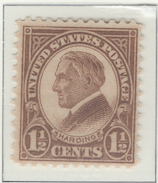
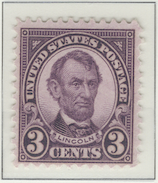
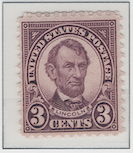
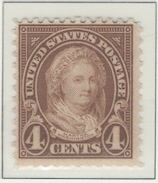
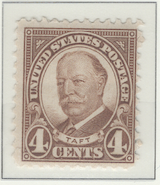
The table below lists information about the stamps shown on this page of Lighthouse’s stamp album. For more details about a particular stamp, click on its description. That will take you to the related web page of Colnect.
spot |
own |
catalog |
subject |
description |
comment |
|---|---|---|---|---|---|
✓ |
653 |
½c (may 1929) |
|||
✓ |
632 |
1c (jun 1927) |
|||
✓ |
633 |
1½c (may 1927) |
|||
✓ |
684 |
1½c (dec 1930) |
|||
✓ |
634 |
2c (dec 1926) |
|||
634b |
2c (dec 1926) |
||||
✗ |
634A |
George Washington |
2c (dec 1928) |
||
✓ |
635 |
3c (feb 1927) |
|||
✓ |
635a |
3c (feb 1934) |
|||
✓ |
636 |
4c (may 1927) |
|||
✓ |
685 |
4c (jun 1930) |
|||
✓ |
637 |
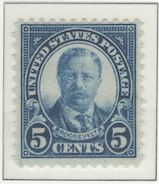
5c (mar 1927) |
|||
✓ |
638 |
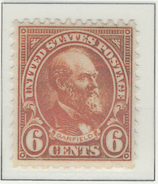
6c (jul 1927) |
|||
✓ |
639 |
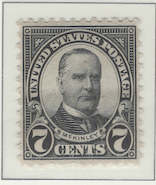
7c (mar 1927) |
|||
✓ |
640 |
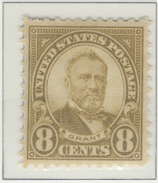
8c (jun 1927) |
|||
✓ |
641 |
9c (may 1927) |
|||
641a |
9c (may 1927) |
||||
✓ |
642 |
10c (feb 1927) |
|||
✓ |
692 |
11c (sep 1931) |
|||
✓ |
693 |
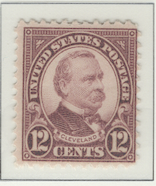
12c (aug 1931) |
|||
✓ |
694 |
13c (sep 1931) |
|||
694a |
13c (jan 1926) |
||||
✓ |
695 |
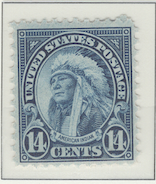
14c (sep 1931) |
|||
✓ |
696 |
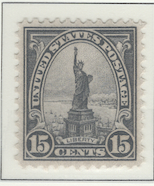
15c (aug 1931) |
|||
✓ |
697 |
17c (jul 1931) |
|||
✓ |
698 |
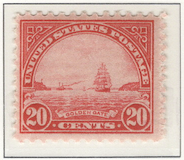
20c (sep 1931) |
|||
✓ |
699 |
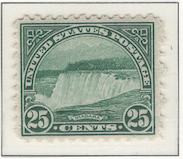
25c (jul 1931) |
|||
✓ |
700 |
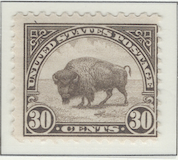
30c (sep 1931) |
|||
✓ |
701 |
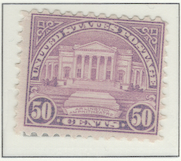
50c (sep 1931) |
|||
✓ |
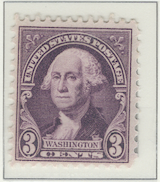
720 |
George Washington |
3c (jun 1932) |
Footnotes
Spot refers to the postion of the stamp on the album page (e.g., 3.2 indicates row 3, position 2).
Amt. is an abbreviation for the face amount of the stamp.
Own indicates the stamp status: ✓ for unused; ✗ for used or canceled; ⭑ signifies I ordered one; ; ✨ indicates it was bought recently; ✠ means an auction bid is pending; and ◎ is used, and it costs too much for unused.
To search by catalog number, go to the search box and enter it in the catalog number box. However, it’s a bit broken; I need to fix it.





























