Indigenous Art
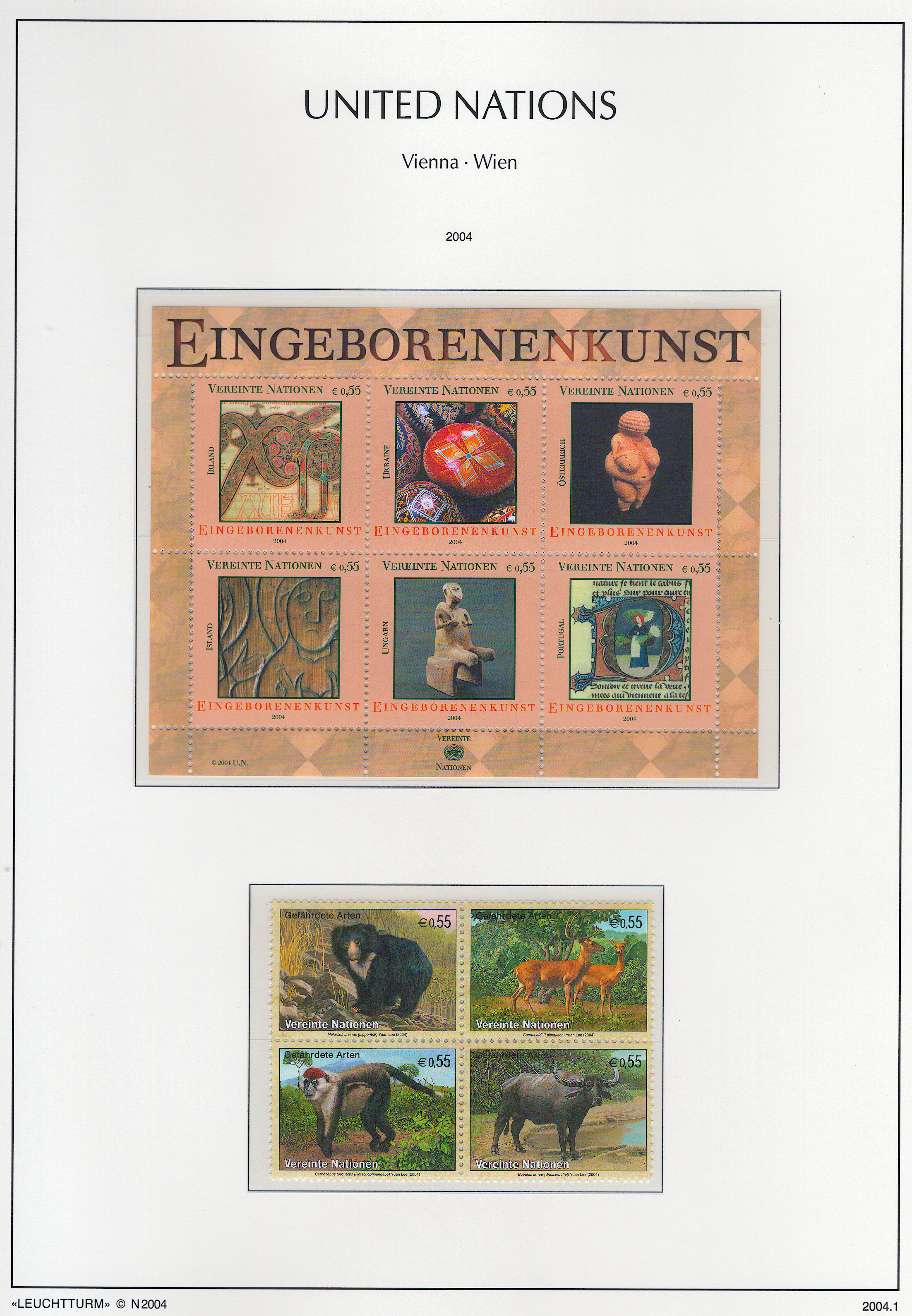
For this series of stamps of indigenous art, the three U.N. post office location issued sheets of six unique stamps each, for a total of eighteen stamps. They celebrate indigenous cultures, cultural heritage, and the rights of indigenous peoples. This set issued in 2004 is focused on cultural preservation, showcasing artifacts from different eras and regions of Europe, emphasizing rights to traditions, intellectual property, and spiritual sites.
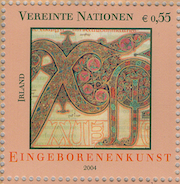
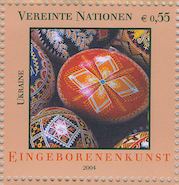
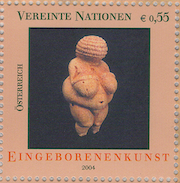
The first stamp on the sheet of six is detail from a page in the Lindisfarne Gospels, an illustrated manuscript of the Gospels – from the Christian Bible. It was made in a Celtic monastery at Lindisfarne, an island near Northumberland, England, from 715 to 720 c.e. The close-up is of a “chi rho” monogram (i.e., ☧) from the first page of the Gospel of Matthew. The second stamp on the top row is of Ukrainian Easter eggs, known as pysanky, meaning “written” because designs are inscribed using a wax-resist method, not painted. They make beeswax designs to eggs before dipping it in dyes. The third stamp is a statute from the Upper Palaeolithic, from the Neolithic period (about 30,000 years ago). It’s the Venus of Willendorf, Austria. It’s carved from an oolitic limestone and tinted with red ochre.
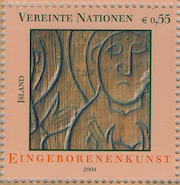
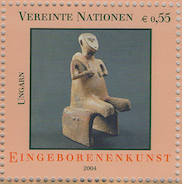
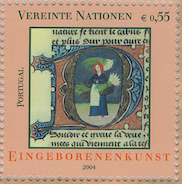
The first stamp on the second row is from a fragment of boards from Flatatunga in Iceland. It shows two people with halos, possibly Jesus and an apostle. The next one a terracotta statuette from 5000 b.c.e. of a man sitting on a stool, holding with a sickle from the Tisza culture in Hungary. The last stamp is meant to be of art from Portugal, but it seems to be from Italy. It shows an illustration of a woman carrying leeks. It’s from Aldebrando da Siena’s Treatise on Medicine from 1356 c.e. The page it’s from emphasizes the use of leeks for medicinal purposes.
For more of these stamps depicting indigenous art from Europe, see the New York (UNG-2004.1) and the Geneva (UNG-2004.1) albums. There are also stamps in this album of indigenous art from South America and North Africa.
Note
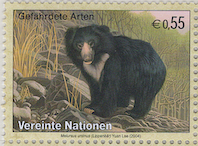
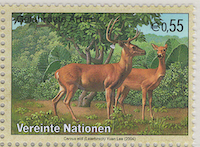
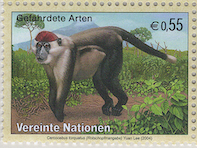
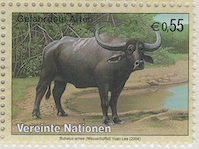
The indigenous art stamps are interesting, but I like the stamps of endangered species better – especially when they show pictures of birds. For the four here, there aren’t any bird stamps. But they’re so well done that I can’t complain. I particularly like the one of the Sloth Bear. It’s such a nice stamp.
Contains 10 spots: own 10 – 10 unused, 0 used.
Page is finished.
Album or Web Page Last changed Dec 17, 2025
Stamp Details
The table below lists information about the stamps shown on this page of Lighthouse’s stamp album. For more details about a particular stamp, click on its description. That will take you to the related web page of Colnect.
spot |
own |
catalog |
subject |
description |
comment |
Indigenous Art
✓ |
346a |
0.55 (mar 2004) |
|||
✓ |
346b |
0.55 (mar 2004) |
|||
✓ |
346c |
0.55 (mar 2004) |
|||
✓ |
346d |
0.55 (mar 2004) |
|||
✓ |
346e |
0.55 (mar 2004) |
|||
✓ |
346f |
0.55 (mar 2004) |
Endangered Species
✓ |
342 |
0.55 (jan 2004) |
|||
✓ |
343 |
0.55 (jan 2004) |
|||
✓ |
344 |
0.55 (jan 2004) |
|||
✓ |
345 |
0.55 (jan 2004) |
Footnotes
Spot refers to the postion of the stamp on the album page (e.g., 3.2 indicates row 3, position 2).
Amt. is an abbreviation for the face amount of the stamp.
Own indicates the stamp status: ✓ for unused; ✗ for used or canceled; ⭑ signifies I ordered one; ; ✨ indicates it was bought recently; ✠ means an auction bid is pending; and ◎ is used, and it costs too much for unused.
To search by catalog number, go to the search box and enter it in the catalog number box. However, it’s a bit broken; I need to fix it.










No Covers Found.