Fascism Arrives
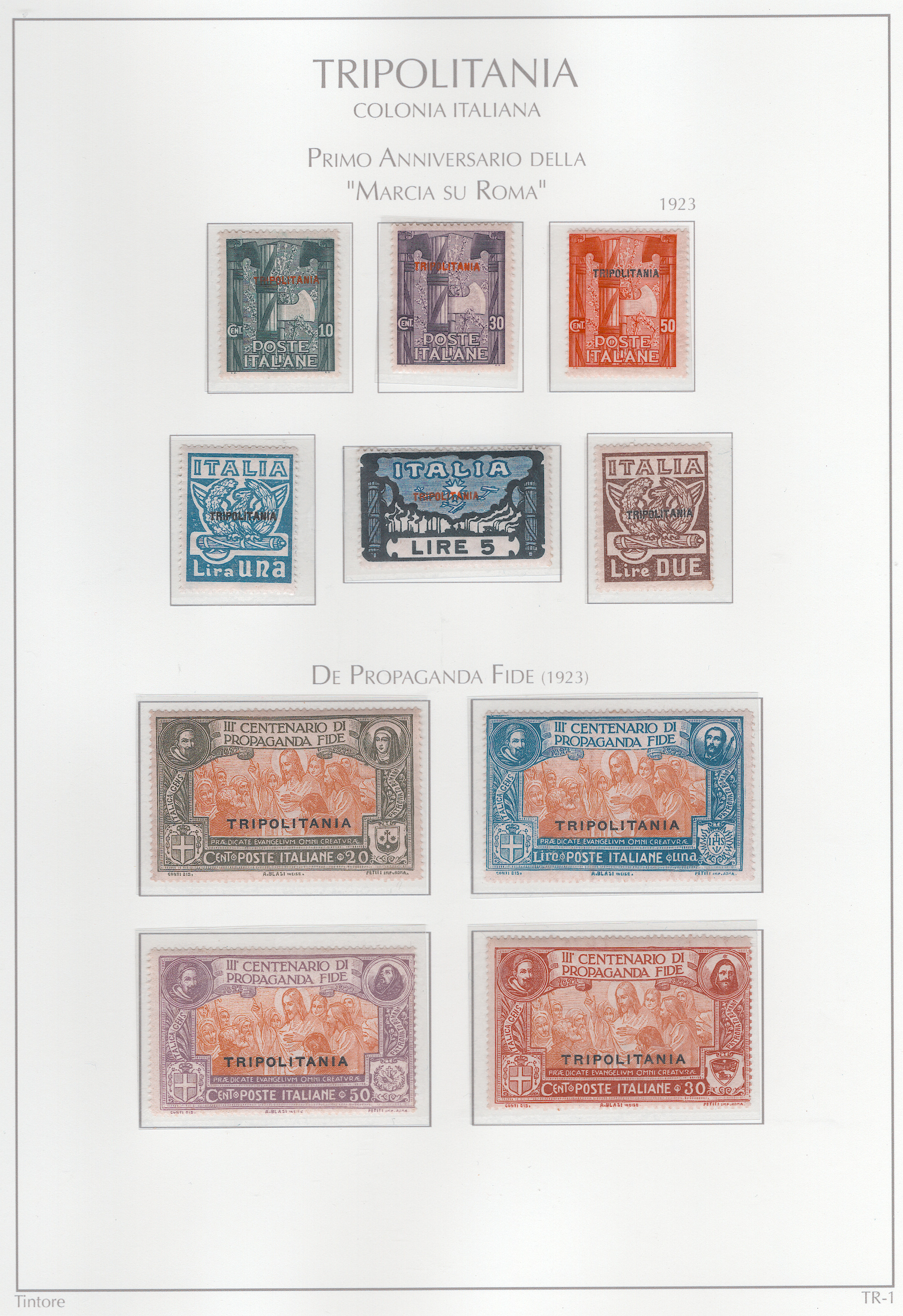
The words fascism and fascist bring to mind negative connotations, as well as Giuseppe Mussolini and his followers – which included his most famous admirer, Adolph Hitler.
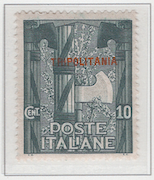
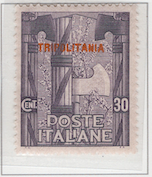
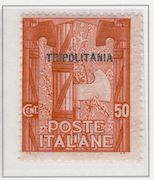
The origin of the term is the symbol of fascist movement: fasces. The word fasces comes from the Latin word meaning bundle. Back in the Roman times, they would take a bundle of wooden rods, insert in the middle a metal rod with an axe head, usually a double headed axe. They would tie these rods and axe together tightly with rope or leather straps. During battle, a large man would carry it by the staps, swinging it back in forth with great force. Such a warrior with a fasces weapon was devastating and a sign of power within a squad of Roman soldiers. Hence, it became the symbol of strength. This is why many governments use it and why Mussolini’s political party, known as the Black Shirts used it as their logo.
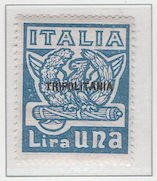
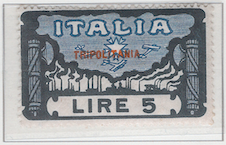
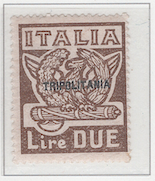
You can see examples of fasces on the stamps in the second set of stamps on this album oage. Notice the date of issuance is 1923, just two years after Mussolini founded the National Fascist Party and one year after his party took control of the Italian Parliament and he became prime minister. From this point forward in this stamp album, you’ll see plenty of stamps with the fasces symbol. They appear for the rest of the album because this album ends at the end of World War II when the Fascist party was ended and outlawed by the replacement government.
Preaching
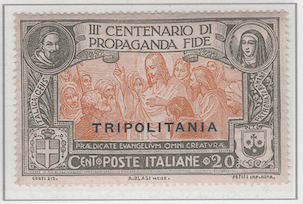
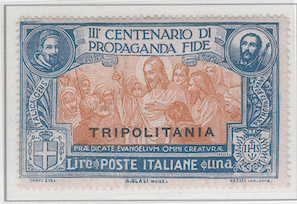
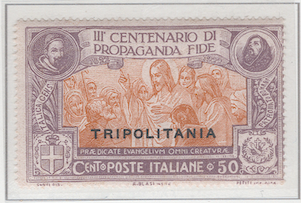
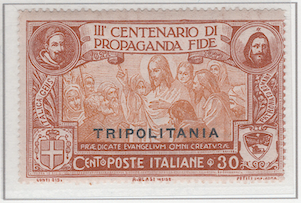
These stamps of Jesus amongst several people were issued in 1923 in Italy. You can see them on the Mazzini & Missions page – there’s an explanation of them there. They’re unusual stamps; I have mixed feelings about them. I don’t like large stamps and I don’t think stamps should depict Jesus, other than in navity scenes on Christmas stamps. They’re kind of nice looking in that they’re colorful and well designed, but the color combinations are disturbing.
Most of all, I don’t like that the Italian post office issued these to be used in Muslim colonies. It’s culturally insensitive. Did they expect these stamps to convert the colonists to Christianity and Catholicism? It’s pointless and probably did no good for Italy and its relations with the colonists. It was a bad idea.
Note
I don’t like these stamp showing Jesus preaching. The color combinations are disturbing and they’re too large – you can’t fit them easily on a letter or postcard. I also don’t like stamps that depict scenes from the Bible. I don’t mind scenes of saints since those can be taken as depicting role models, if not religious. This set of four stamps at the bottom are the first four stamps issued for the Tripolitania colony and therefore have catalog numbers that reflect that. However, I didn’t put them at the top of the page because I didn’t want to start an album with a religious theme.
Contains 10 spots: own 10 – 10 unused, 0 used.
Page is finished.
Album or Web Page Last changed Jul 10, 2025
Stamp Details
The table below lists information about the stamps shown on this page of Lighthouse’s stamp album. For more details about a particular stamp, click on its description. That will take you to the related web page of Colnect.
spot |
own |
catalog |
subject |
description |
comment |
Fascist March on Rome
✓ |
5 |
10c (oct 1923) |
|||
✓ |
6 |
30c (oct 1923) |
|||
✓ |
7 |
50c (oct 1923) |
|||
✓ |
8 |
1₤ (oct 1923) |
|||
✓ |
10 |
5₤ (oct 1923) |
|||
✓ |
9 |
2₤ (oct 1923) |
Missionary Office: 300 Years
✓ |
1 |
20c (oct 1923) |
|||
✓ |
2 |
30c (oct 1923) |
|||
✓ |
3 |
50c (oct 1923) |
|||
✓ |
4 |
1₤ (oct 1923) |
Footnotes
Spot refers to the postion of the stamp on the album page (e.g., 3.2 indicates row 3, position 2).
Amt. is an abbreviation for the face amount of the stamp.
Own indicates the stamp status: ✓ for unused; ✗ for used or canceled; ⭑ signifies I ordered one; ; ✨ indicates it was bought recently; ✠ means an auction bid is pending; and ◎ is used, and it costs too much for unused.
To search by catalog number, go to the search box and enter it in the catalog number box. However, it’s a bit broken; I need to fix it.









