Holy Year & Jubilee
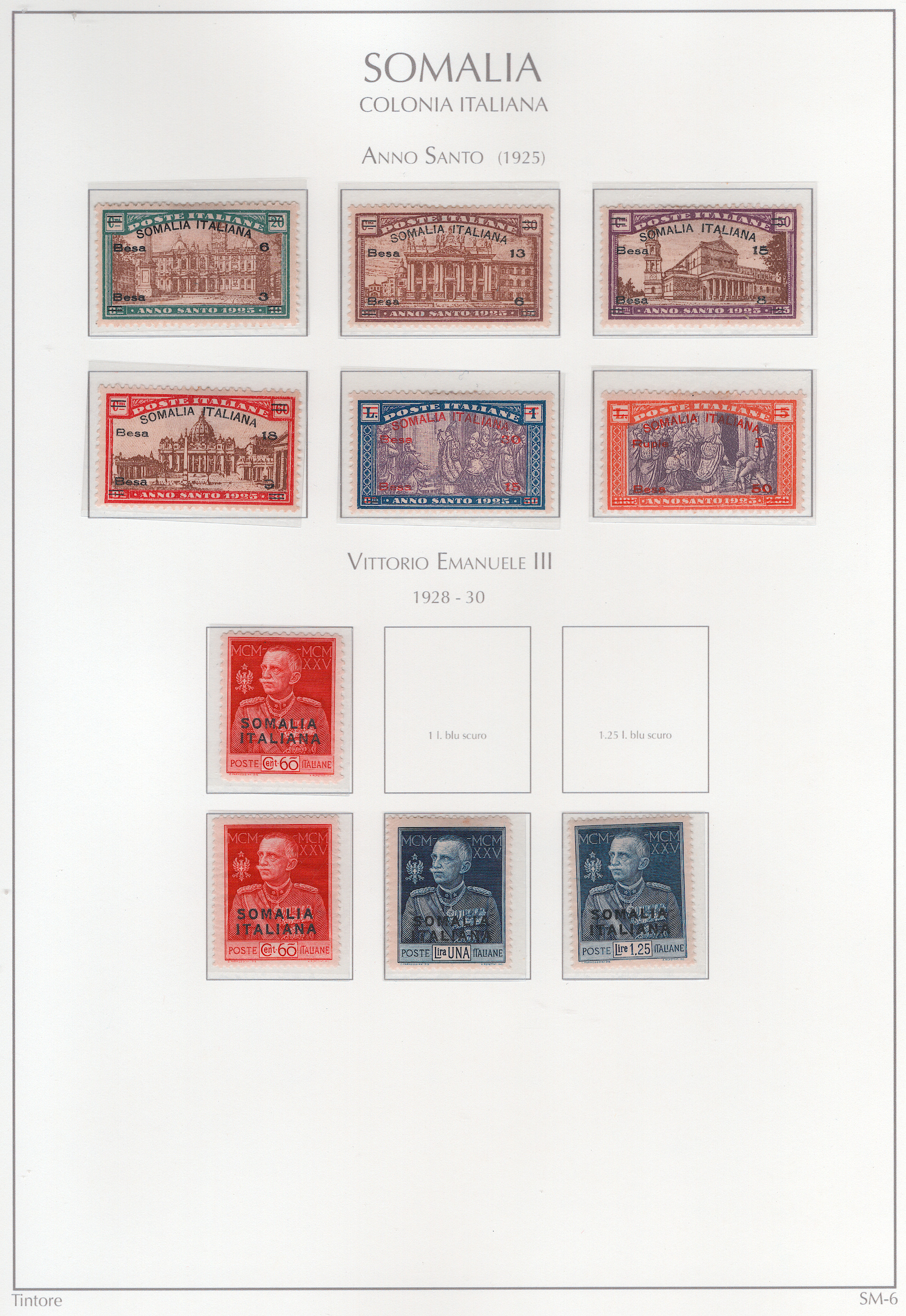
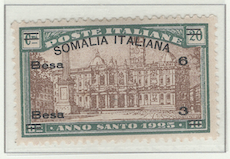
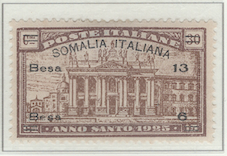
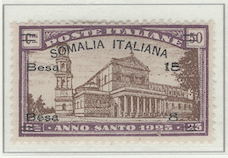
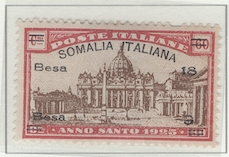
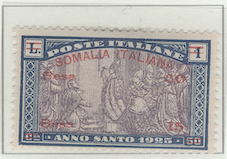
The first six stamps on this album page are in commemoration of the Holy Year, or Jubilee, of 1925 announced by Pope Pius XI. The stamps are of sites in Rome, the four papal basilicas: Basilica of Saint Mary Major; Archbasilica of Saint John Lateran; Basilica of Saint Paul Outside the Walls; and St. Peter’s Basilica. I’ve been to all four of these basilicas in Rome. In fact, I has a chapter of my new novel (i.e, The Pages of St. John) that is set inside Saint Paul Outside the Walls.
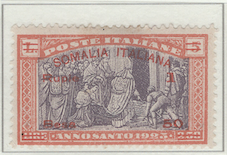
The last pair of stamps in this series relate to the Holy Door. Normally, these particular doors of St. Peter’s Basilica are cemented shut from the inside. They are openned at the start of a Jubilee and resealed at the end. It’s supposed to be symbolic of entering the gates of Heaven and being forgiven of sins (John 10:9 and Luke 11:9).
What’s ironic about these stamps, as well as the other Catholic stamps is that the people in the colonies where they’re used are mostly, almost completely Muslim. They must not have felt very good about using stamps with Christian images. It shows how culturally insensitive was the Italian adminstration.
Vittorio Emanuele III
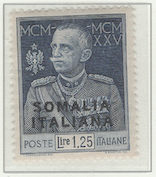
In the Summer of 1900, an Italian-American shot Umberto I four times, killing him in the city of Monza, south of Milan. He was buried in the Pantheon in Rome: I saw this tomb. Umberto I was succeeded by his son, Vittorio Emanuele III.
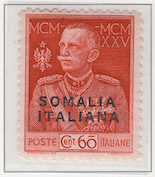
Vittorio Emanuele III would reign for forty-six years and lead his country, often successfully, in wars – including both world wars. In fact, their success at the Battle of Vittorio Veneto against Austria led to the end of World War I. As a result, the king ws sometimes called Il Re Soldato (i.e., the Soldier King). He was also called, Sciaboletta (i.e., Little Saber) due to his height: he was 153 centimeters high (i.e., 5 feet).
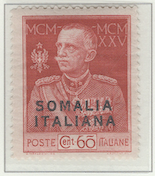
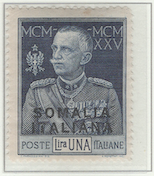
The second set of stamps on this page – with the design of the king wearing a military dress uniform, including several medals on his chest – were designed by Carlo Parmeggiani. This stamp design was in celebration of the Vittorio Emanuele III’s royal jubilee: twenty-five years as king of the Kingdom of Italy. That seems to be why he was in dress uniform for the portrait.
Note
I’m missing only one set of stamps from this page. They’re the same as the ones on the last row, except that the perforation size is different. The ones I’m missing are harder to find and are much more expensive. It may be a while before I get them.
Contains 12 spots: own 10 – 10 unused, 0 used.
Album or Web Page Last changed Feb 5, 2025
Stamp Details
The table below lists information about the stamps shown on this page of Lighthouse’s stamp album. For more details about a particular stamp, click on its description. That will take you to the related web page of Colnect.
spot |
own |
catalog |
subject |
description |
comment |
Alessandro Manzoni
✓ |
61 |
6+3b (jun 1925) |
|||
✓ |
62 |
13+6b (jun 1925) |
|||
✓ |
63 |
15+8b (jun 1925) |
|||
✓ |
64 |
18+9b (jun 1925) |
|||
✓ |
65 |
30+15b (jun 1925) |
|||
✓ |
66 |
1+50r (jun 1925) |
Royal Jubilee - Parmeggiani
✓ |
67 |
Vittorio Emanuele III |
60c (nov 1925) |
||
68 |
Vittorio Emanuele III |
1₤ (nov 1925) |
|||
69 |
Vittorio Emanuele III |
1.25₤ (jul 1926) |
|||
✓ |
70 |
Vittorio Emanuele III |
60c (nov 1925) |
||
✓ |
71 |
Vittorio Emanuele III |
1₤ (nov 1925) |
||
✓ |
72 |
Vittorio Emanuele III |
1.25₤ (jul 1926) |
Footnotes
Spot refers to the postion of the stamp on the album page (e.g., 3.2 indicates row 3, position 2).
Amt. is an abbreviation for the face amount of the stamp.
Own indicates the stamp status: ✓ for unused; ✗ for used or canceled; ⭑ signifies I ordered one; ; ✨ indicates it was bought recently; ✠ means an auction bid is pending; and ◎ is used, and it costs too much for unused.
To search by catalog number, go to the search box and enter it in the catalog number box. However, it’s a bit broken; I need to fix it.











