NATO
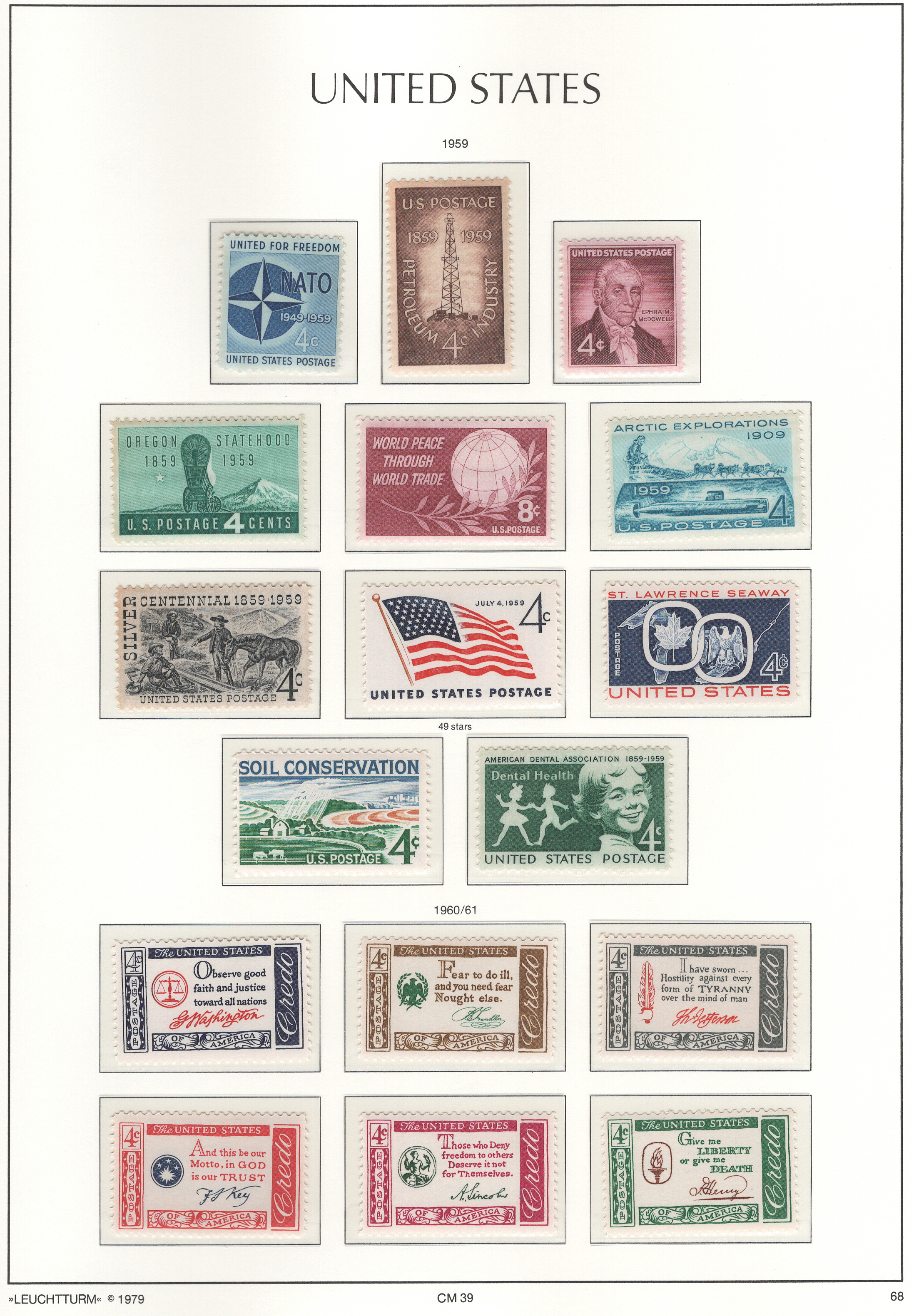
World War II was caused by German aggression, it’s attempt to conquer and merge sovereign nations into an empire it sought to build. It was decided that such behavior – the taking, controling, and colonizing of other countries – was no longer acceptable. Peoples and lands should be free of the domination and aggressions of others. The need for unity in opposition of this was made even more apparent when the Soviet Union annexed the eastern European countries it had taken from Germany.
Recognizing that this sentiment about the sanctity of nations was shared among western countries of Europe and North America, a treaty was composed and signed in April 1949: the North Atlantic Treaty. From this treaty, the North Atlantic Treaty Orgnaization (i.e., NATO) was formed.
NATO is a military alliance among signatory members with the primary intent to stand together against aggression and incursions from other countries toward any of its members. NATO troops have also fought together in other areas of the world not belonging to member states, standing against abuses against non-member states, as well as against injustices in non-member states – keeping to the spirit of their doctrine.
Note
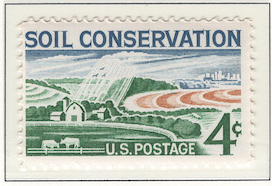
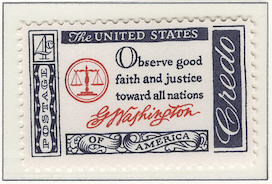
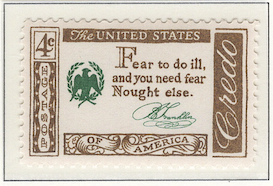
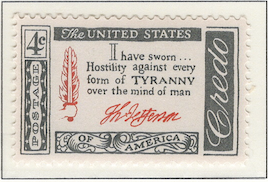
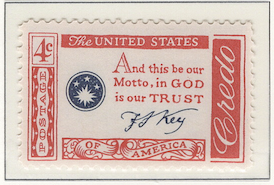
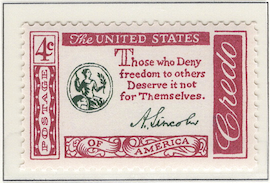
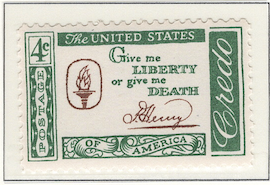
On this page, the stamp about soil conservation at the begining of the fourth row is the next in that series (i.e., it’s similar to the one on the previous page on forest conservation). It’s the next multi-color stamp: the trend is still beginning. The stamps on the last two rows are also multi-color, but they’re not a very good use of the new style. They’re boring text of famous sayings of early political leaders. It’ll be another year before multi-color printing becomes a norm.
Contains 17 spots: own 17 – 17 unused, 0 used.
Page is finished.
Album or Web Page Last changed Apr 24, 2025
Stamp Details
The table below lists information about the stamps shown on this page of Lighthouse’s stamp album. For more details about a particular stamp, click on its description. That will take you to the related web page of Colnect.
spot |
own |
catalog |
subject |
description |
comment |
|---|---|---|---|---|---|
✓ |
1127 |
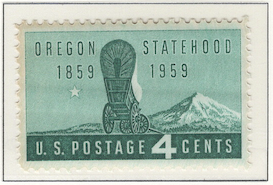
4c (apr 1959) |
Other
✓ |
1134 |
4c (aug 1959) |
|||
✓ |
1138 |
4c (dec 1959) |
|||
✓ |
1124 |
4c (feb 1959) |
|||
✓ |
1129 |
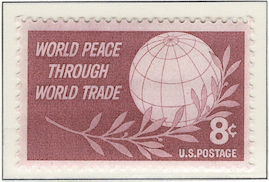
8c (apr 1959) |
|||
✓ |
1128 |
4c (apr 1959) |
|||
✓ |
1130 |
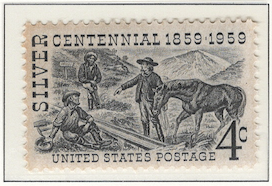
Henry Comstock |
4c (jun 1959) |
||
✓ |
1132 |
4c (jul 1959) |
|||
✓ |
1131 |
4c (jun 1959) |
|||
✓ |
1133 |
4c (aug 1959) |
|||
✓ |
1135 |
4c (sep 1959) |
American Creed
✓ |
1139 |
4c (jan 1960) |
|||
✓ |
1140 |
4c (mar 1960) |
|||
✓ |
1141 |
4c (may 1960) |
|||
✓ |
1142 |
4c (sep 1960) |
|||
✓ |
1143 |
4c (nov 1960) |
|||
✓ |
1144 |
4c (nov 1961) |
Footnotes
Spot refers to the postion of the stamp on the album page (e.g., 3.2 indicates row 3, position 2).
Amt. is an abbreviation for the face amount of the stamp.
Own indicates the stamp status: ✓ for unused; ✗ for used or canceled; ⭑ signifies I ordered one; ; ✨ indicates it was bought recently; ✠ means an auction bid is pending; and ◎ is used, and it costs too much for unused.
To search by catalog number, go to the search box and enter it in the catalog number box. However, it’s a bit broken; I need to fix it.
















