Rome to Mogadishu
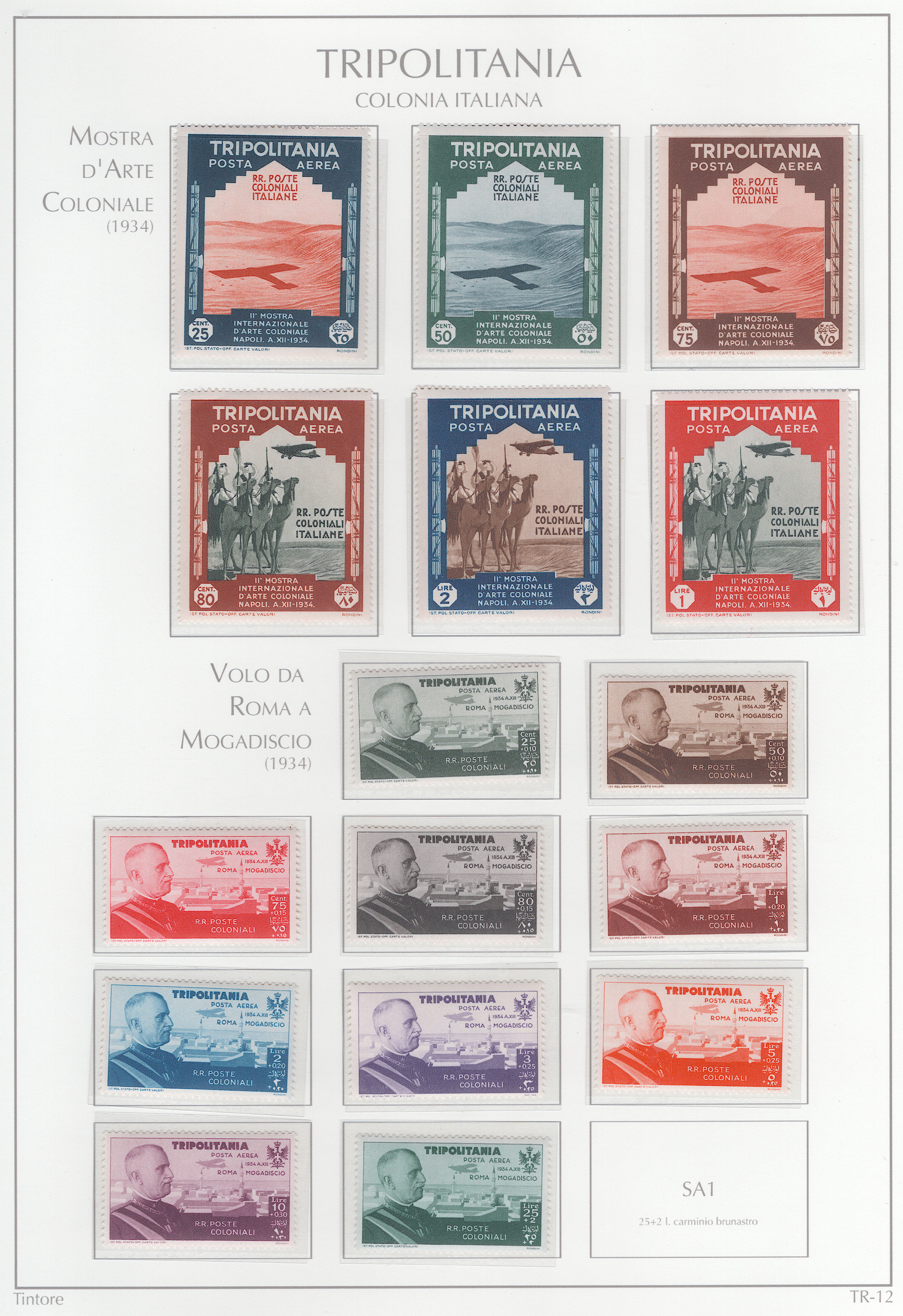
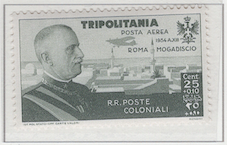
King Vittorio Emanuelle III and the Fascist Party sought to build an Italian empire to include many colonies. Italy focused on taking territories in northeast Africa: Somalia, Ethiopia, Eritrea, etc. As these colonies were established, sometimes by negotiations and sometimes by brutal military force, merchants and other businesses were needed to reap the benefits of the colonies. However, there were no easy and quick ways to get to these colonies. To fill this need and to promote Italian interests, the government formed from some smaller airlines, a new airline called, Ala Littoria (i.e., Winged Lictor). Incidentally, lictore was an ancient Roman word that meant to bind. The term lictor was used for a person who escorted the emperor and his magistrates wherever they went, acting as bodyguards.
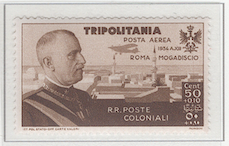
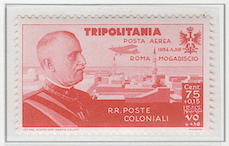
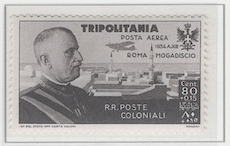
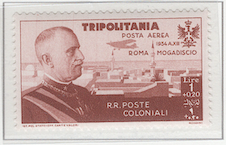
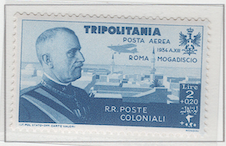
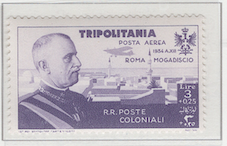
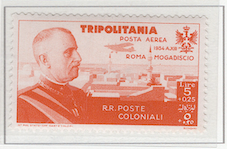
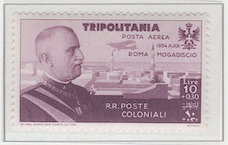
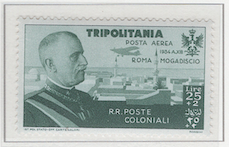
Flights to the colonies were called the Linea dell’Impero (i.e., Line of the Empire), also known as Linea Imperiale (i.e., Imperial Line). It flew from Rome to each major city in the empire: Benghazi in Libya, Asmara in Eritrea, Addis Abeba in Ethiopia and Mogadishu in Somalia. These air mail stamps show an image of the King with the text, Roma Mogadiscio (i.e., Rome Mogadishu) to commemorate the start of that route in November 1935. I’m not sure why they didn’t change that text for the Benghazi flight since these stamps were to be used in Libya. But I guess they felt that was close enough.
Art Show
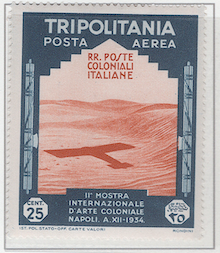
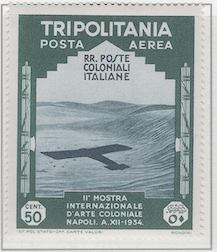
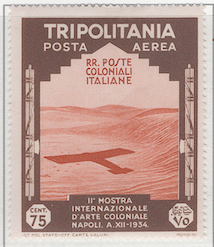
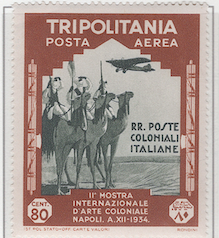
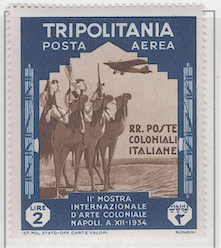
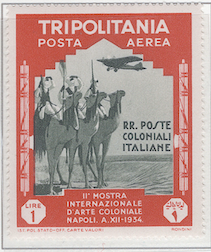
The set of large stamps commemorated the International Colonial Art Show that was held in Naples from October 1, 1934 to January 31, 1935. It was an art exhibition of art work showing the Italian colonization of Africa, which included Venetian paintings from the 15th Century. It’s purpose was to promote the idea that Italy having colonies in Africa has been around a long time and only natural.
The exhibition was held in Naples because the African Society of Italy (Società Africana d’Italia) was based in Naples and they sponsored it. Plus, the local government sought to promote Naples as the primary port for trade with the Italian colonies in Africa.
Note
I’m missing one stamp on this page. It looks similar to the others, with a minor difference in that it has ann overprint that reads, Servizio di Stato (i.e., State Service). These were to be used only for official business of the government. There weren’t many issued and of those there weren’t many that weren’t used and preserved for about ninety years. So they’re expensive. There’s a similar stamp for the same purpose and commemorating the Rome to Mogadishu flight on the State & Comune page. I don’t have that one either, for the same reason.
Contains 17 spots: own 16 – 16 unused, 0 used.
Album or Web Page Last changed Feb 5, 2025
Stamp Details
The table below lists information about the stamps shown on this page of Lighthouse’s stamp album. For more details about a particular stamp, click on its description. That will take you to the related web page of Colnect.
spot |
own |
catalog |
subject |
description |
comment |
Intertional Colonial Art Show
✓ |
A41 |
25c (oct 1934) |
|||
✓ |
A42 |
50c (oct 1934) |
|||
✓ |
A43 |
75c (oct 1934) |
|||
✓ |
A44 |
80c (oct 1934) |
|||
✓ |
A45 |
1₤ (oct 1934) |
|||
✓ |
A46 |
2₤ (oct 1934) |
Rome - Mogadishu Flight
✓ |
A47 |
25+10c (nov 1934) |
|||
✓ |
A48 |
50+10c (nov 1934) |
|||
✓ |
A49 |
75+15c (nov 1934) |
|||
✓ |
A50 |
80+15c (nov 1934) |
|||
✓ |
A51 |
1+0.20₤ (nov 1934) |
|||
✓ |
A52 |
2+0.20₤ (nov 1934) |
|||
✓ |
A53 |
3+0.25₤ (nov 1934) |
|||
✓ |
A54 |
5+0.25₤ (nov 1934) |
|||
✓ |
A55 |
10+0.30₤ (nov 1934) |
|||
✓ |
A56 |
25+2₤ (nov 1934) |
Official Mail (Servizio di Stato)
SA1 |
25+2₤ (nov 1934) |
Footnotes
Spot refers to the postion of the stamp on the album page (e.g., 3.2 indicates row 3, position 2).
Amt. is an abbreviation for the face amount of the stamp.
Own indicates the stamp status: ✓ for unused; ✗ for used or canceled; ⭑ signifies I ordered one; ; ✨ indicates it was bought recently; ✠ means an auction bid is pending; and ◎ is used, and it costs too much for unused.
To search by catalog number, go to the search box and enter it in the catalog number box. However, it’s a bit broken; I need to fix it.
















