Climate
The U.N. Environment Programme began in 1972 with the intent to coordinate agencies and others at the U.N. when environment problems arise. They are to determine solutions to problems such climate and specific ecosystem changes. They do this in many ways, including researching and publishing documents on the latest environmental science, working with member states to make environmentalal changes, and to work on environmental agreements among nations.
In 1992, the Earth Summit was held in Rio de Janeiro. That summit was meant to build cooperation among member states regarding environmental concerns such as pollution and toxic waste, climate changes, using alternative sources of energy, encouraging public transportation, availability of clean water, and protecting oceans from pollution and other abuses.
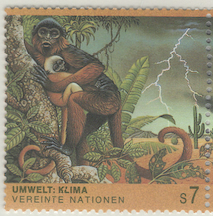
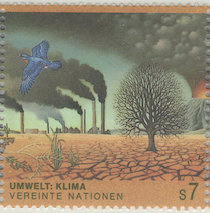
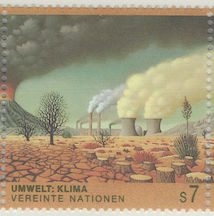
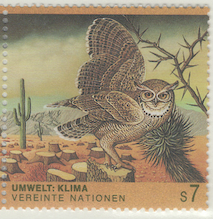
The set of stamps on the fourth row, and the similar ones from the other two U.N. post offices, are in response to the growing global concern for the planet. The U.N. has taken an ever increasing role in addressing environmental concerns. These stamps were issued in the hopes of raising public awareness of the situation and the importants of wild life, as well as pollution and natural disasters.
Note
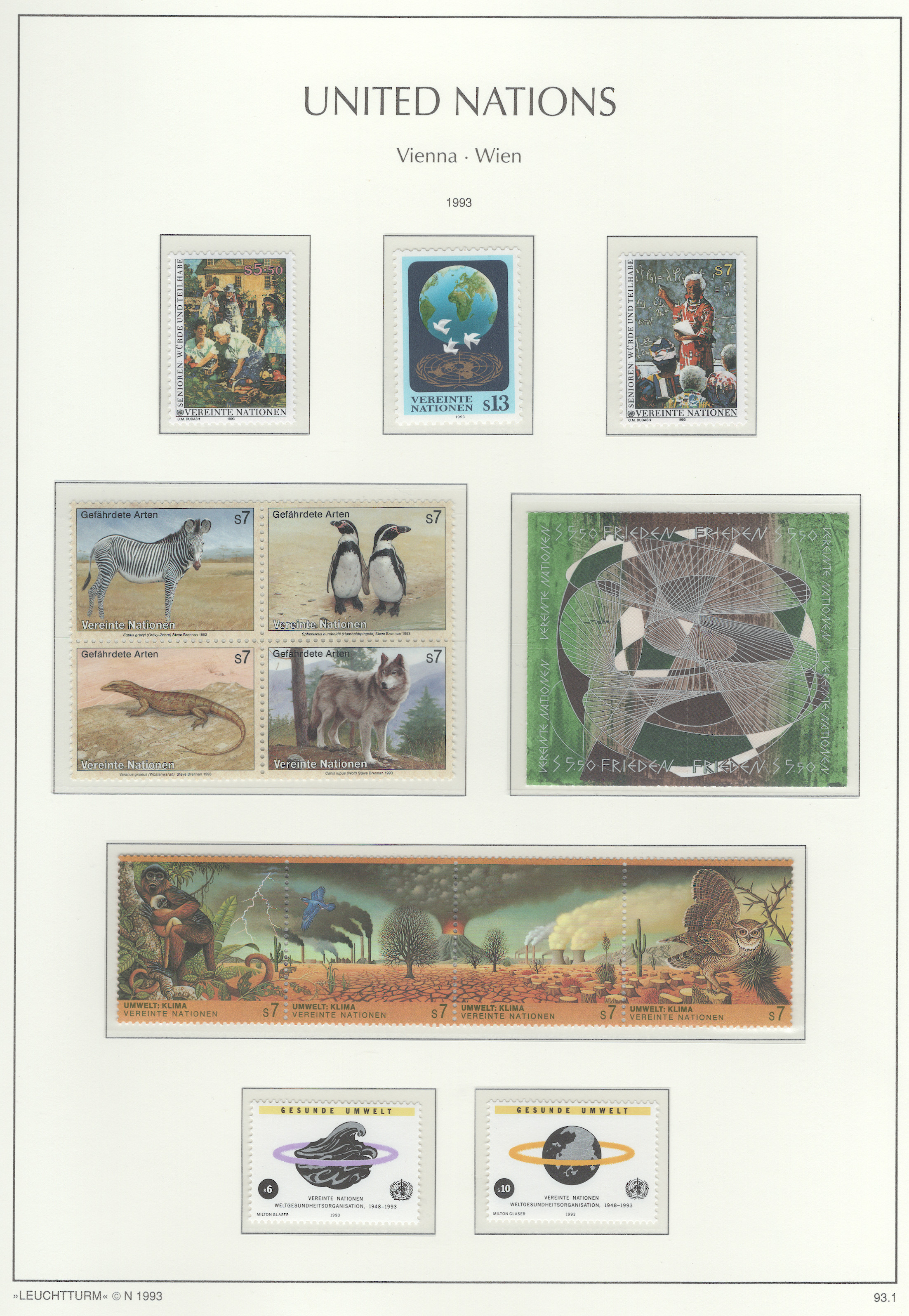
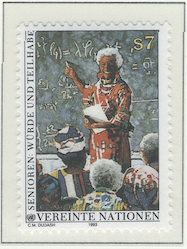
The stamps on each end of the first row are related to the U.N.’s International Plan on Ageing. See the Aging page in the New York album for more in that plan. On that same page is another set of these climate change stamps issued at the same time.
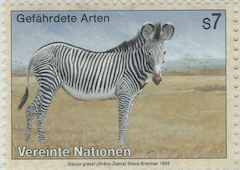
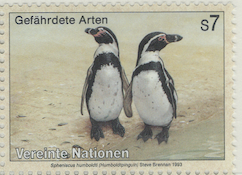
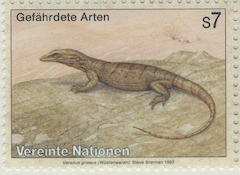
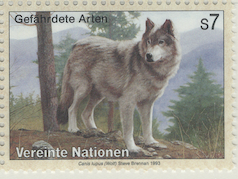
The set of four stamps depicting animals is related to the U.N. Convention on International Trade in Endangered Species of Wild Fauna and Flora. For more on that and to see other stamps in that set, see the Endangered Species page. On that same page is yet another set of climate change stamps.
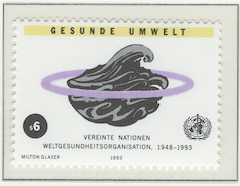
The two stamps at the bottom of the page are about the World Health Organization. See the World Health Organization page in the New York album for information on that.
Contains 17 spots: own 17 – 17 unused, 0 used.
Page is finished.
Album or Web Page Last changed Jun 21, 2025
Stamp Details
The table below lists information about the stamps shown on this page of Lighthouse’s stamp album. For more details about a particular stamp, click on its description. That will take you to the related web page of Colnect.
spot |
own |
catalog |
subject |
description |
comment |
|---|---|---|---|---|---|
✓ |
141 |
5.50s (feb 1993) |
|||
✓ |
149 |
13s (may 1993) |
|||
✓ |
142 |
7s (feb 1993) |
Endangered Species
✓ |
143 |
7s (mar 1993) |
|||
✓ |
144 |
Humboldt Penguin |
7s (mar 1993) |
||
✓ |
145 |
7s (mar 1993) |
|||
✓ |
146 |
7s (mar 1993) |
|||
✓ |
152 |
5.50s (sep 1993) |
|||
✓ |
153 |
5.50s (sep 1993) |
|||
✓ |
154 |
5.50s (sep 1993) |
|||
✓ |
155 |
5.50s (sep 1993) |
|||
✓ |
156 |
7s (oct 1993) |
|||
✓ |
157 |
7s (oct 1993) |
|||
✓ |
158 |
7s (oct 1993) |
|||
✓ |
159 |
Great Horned Owl |
7s (oct 1993) |
||
✓ |
147 |
6s (may 1993) |
|||
✓ |
148 |
10s (may 1993) |





Footnotes
Spot refers to the postion of the stamp on the album page (e.g., 3.2 indicates row 3, position 2).
Amt. is an abbreviation for the face amount of the stamp.
Own indicates the stamp status: ✓ for unused; ✗ for used or canceled; ⭑ signifies I ordered one; ; ✨ indicates it was bought recently; ✠ means an auction bid is pending; and ◎ is used, and it costs too much for unused.
To search by catalog number, go to the search box and enter it in the catalog number box. However, it’s a bit broken; I need to fix it.

















No Covers Found.