State Birds
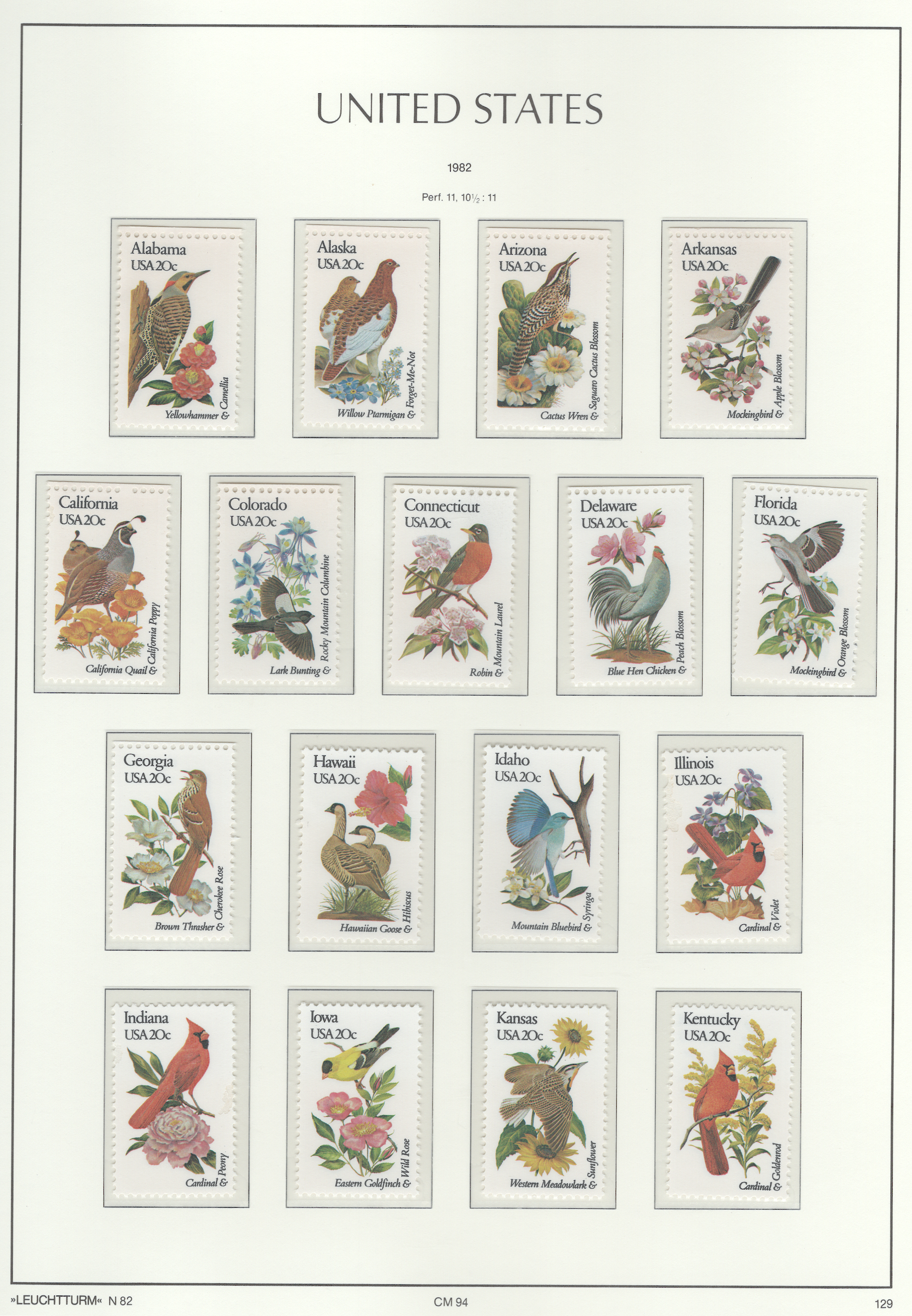
Each state has designated a bird as their state bird, supposedly their favorite bird or as a bird that represents the state in some way. I’m not sure why they need a state bird, but I am for anything that promotes and perhaps protects birds – I like birds. There are no rules for deciding on a state bird, at least not federally. Some states may have had some factors they considered, but some of them don’t seem to have thought through their choices and have made some poor choices. On birding sites, I’ve found some standards that should be followed – or by which bad choices may be judged.
Saying that a bird is a state bird suggests that it’s native and found in the wild within that state. Ideally, the bird should be found only in that state, but that’s unrealistic given migratory patterns of most birds and because birds don’t respect political boundaries. At a minimum, it should primarily be found in that state, not in most states, and not already taken by another state. Using this criteria, below is a list of which birds are contrary each criterion.
Bad Choices
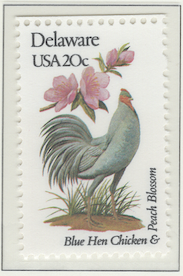
South Dakota’s state bird is the Ring-Necked Pheasant, which is not native to North America. It’s from China, but was introduced to North America in the 1880s. Delaware decided on the Blue Hen Chicken (see second row here, fourth stamp), but it’s not a wild bird. There is some history with the bird, though, from the time of the American Revolution in Delaware.
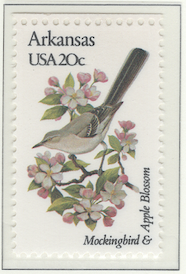
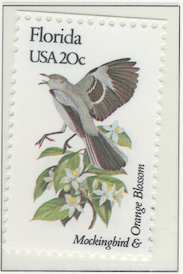
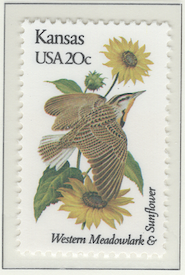
Whatever bird a state chooses, it shouldn’t already be chosen by another state. There are six states that have chosen the Western Meadowlark (see the last row, third stamp). The Northern Mockingbird (see end of first and second rows) was chosen by five states. For some birds, there are only two states that chose them. That’s not as bad, but unnecessary. There are thousands of species of birds, pick a unique one.
Good Choices
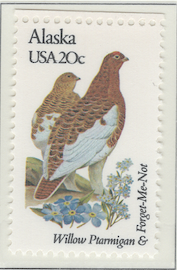
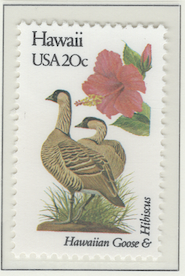
There are a few good choices shown on this album page. The Hawaiian Goose, also known as the Nene, is an excellent choice for Hawaii: it’s only found in Hawaii. I’d prefer a passerine (i.e., a perching bird), rather than a fowl. But a goose is good enough. Similarly, although the Willow Ptarmigan is found all over the globe, the only state in which it’s found is in Alaska.
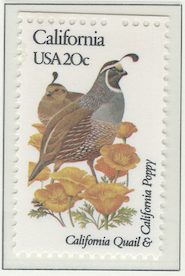
California’s state bird is the California Quail (second row, first stamp). Although it’s found in small numbers in Oregon, Washington, and western Canada, it’s primarily found in California. That makes it a good choice – unless you don’t think the state bird should be a game bird.
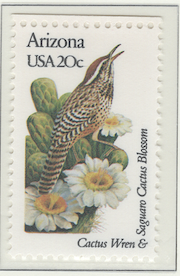
Arizona has a good choice for state bird, the Cactus Wren. Besides being a native bird and the only state to choose it, the state is known for deserts and the like: part of the Sonora Desert and the Grand Canyon are located in Arizona. So a bird with cactus in its name suits Arizona.
Note
The stamps on this album page, together with the ones on the next two pages were sold in one sheet containing all fifty stamps – one for each state. They include the bird for each state and their state flower. I chose not to write about the flowers. I’m more interested in the birds, being a bird lover.
Contains 17 spots: own 17 – 17 unused, 0 used.
Page is finished.
Album or Web Page Last changed May 21, 2025
Stamp Details
The table below lists information about the stamps shown on this page of Lighthouse’s stamp album. For more details about a particular stamp, click on its description. That will take you to the related web page of Colnect.
spot |
own |
catalog |
subject |
description |
comment |
Birds of North America
✓ |
1953 |
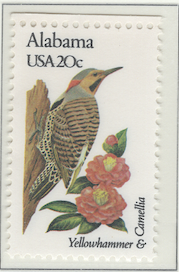
Yellowhammer, Del. |
20c (apr 1982) |
||
✓ |
1954 |
Willow Ptarmigan, Alsk. |
20c (apr 1982) |
||
✓ |
1955 |
Cactus Wren, Arz. |
20c (apr 1982) |
||
✓ |
1956 |
Northern Mockingbird, Ark. |
20c (apr 1982) |
||
✓ |
1957 |
California Quail, Cal. |
20c (apr 1982) |
||
✓ |
1958 |
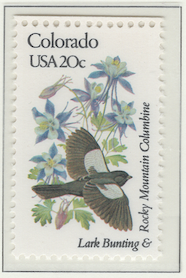
Lark Bunting, Col. |
20c (apr 1982) |
||
✓ |
1959 |
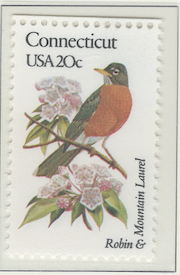
Am. Robin, Conn. |
20c (apr 1982) |
||
✓ |
1960 |
Blue Hen Chicken, Del. |
20c (apr 1982) |
||
✓ |
1961 |
Mockingbird, Fla. |
20c (apr 1982) |
||
✓ |
1962 |
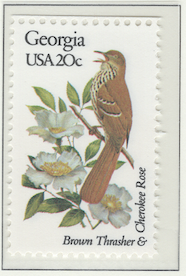
Brown Thrasher, Ga. |
20c (apr 1982) |
||
✓ |
1963 |
Hawaiian Goose, Hi. |
20c (apr 1982) |
||
✓ |
1964 |
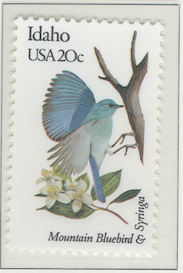
Mountain Bluebird, Ida. |
20c (apr 1982) |
||
✓ |
1965 |
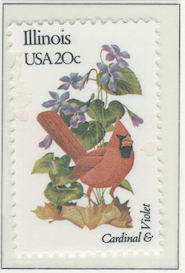
Cardinal, Ill. |
20c (apr 1982) |
||
✓ |
1966 |
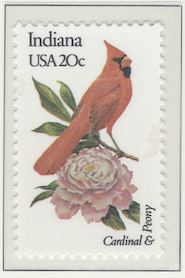
Cardinal, Ind. |
20c (apr 1982) |
||
✓ |
1967 |
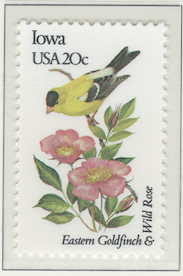
Eastern Goldfinch, Iowa |
20c (apr 1982) |
||
✓ |
1968 |
Western Meadowlark, Ks. |
20c (apr 1982) |
||
✓ |
1969 |
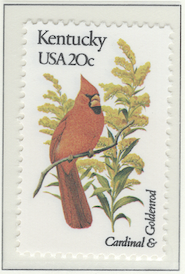
Cardinal, Ken. |
20c (apr 1982) |
Footnotes
Spot refers to the postion of the stamp on the album page (e.g., 3.2 indicates row 3, position 2).
Amt. is an abbreviation for the face amount of the stamp.
Own indicates the stamp status: ✓ for unused; ✗ for used or canceled; ⭑ signifies I ordered one; ; ✨ indicates it was bought recently; ✠ means an auction bid is pending; and ◎ is used, and it costs too much for unused.
To search by catalog number, go to the search box and enter it in the catalog number box. However, it’s a bit broken; I need to fix it.
















