Axis Powers
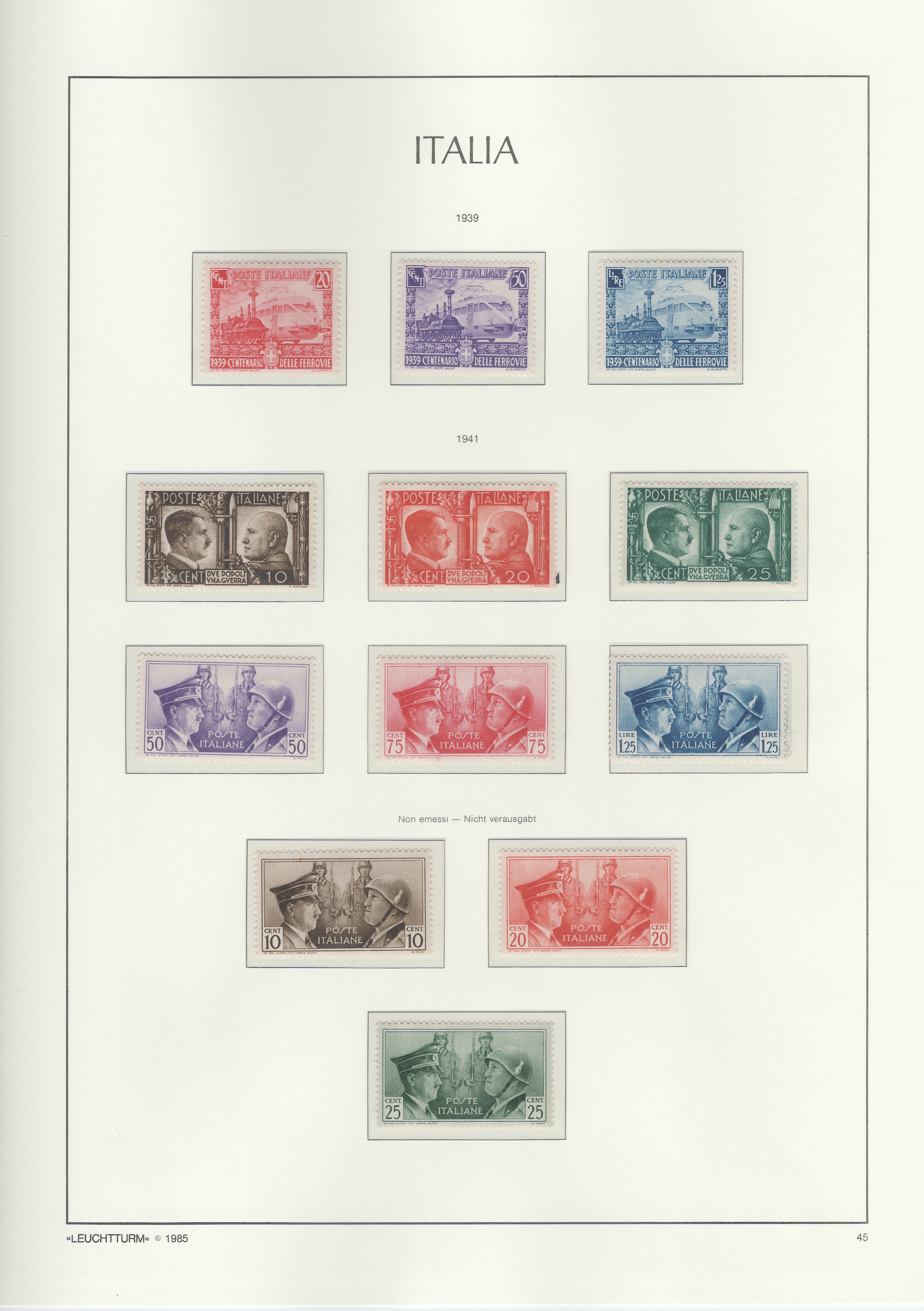
In mid-1930s, the leadership of Italy and Germany began to align in their expansionist interests. The Italian prime minister, Benito Mussolini gave it the name of Axis. Not long after in 1940, Japan joined their alliance and entered into the Tripatite Pact. In time, some smaller countries – Hungary, Romannia, Bulgaria, Croatia, Slovakia – joined the Axis Powers. The stamps in this sub-album were issued during the time of the Axis.
Italian-German Brotherhood
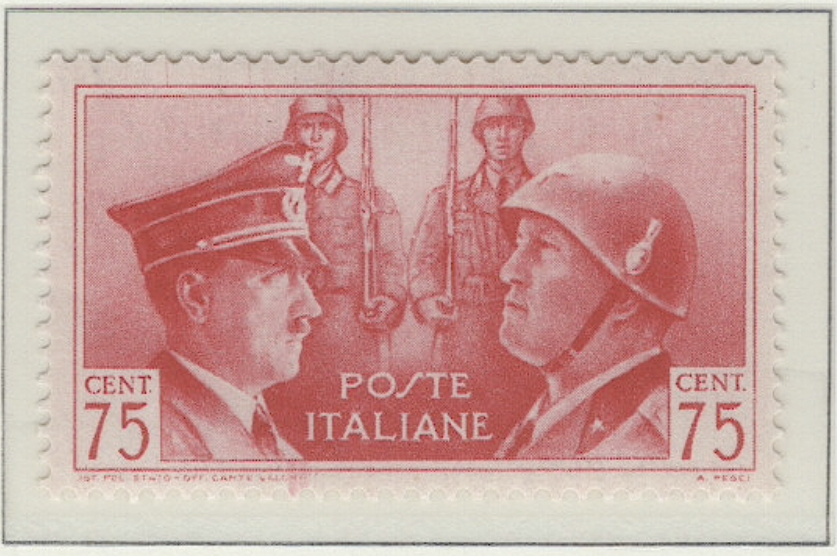
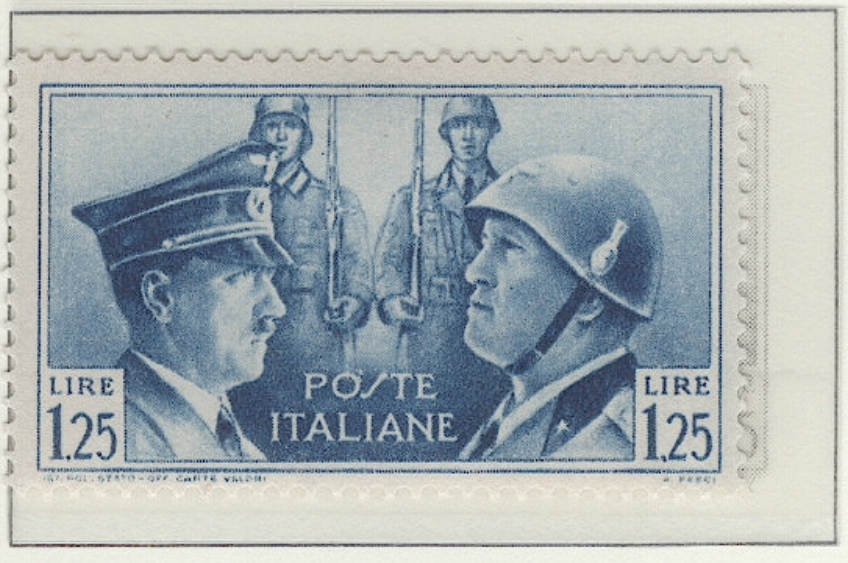
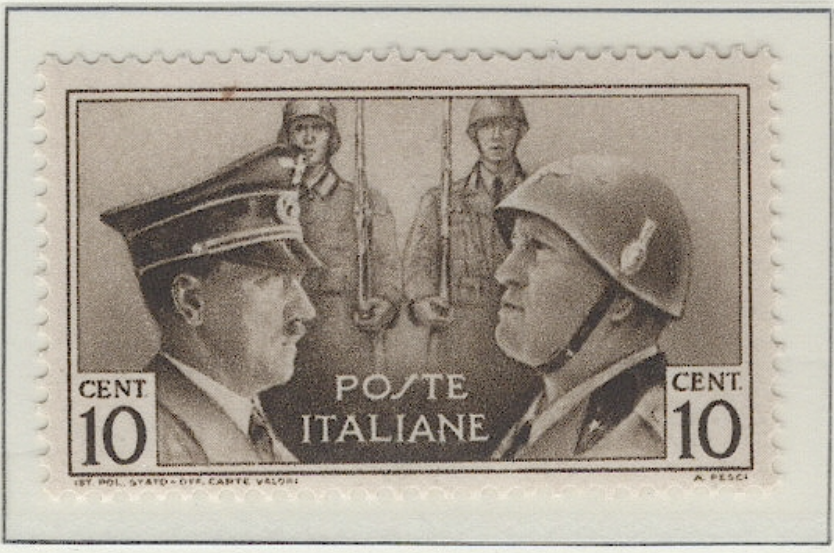
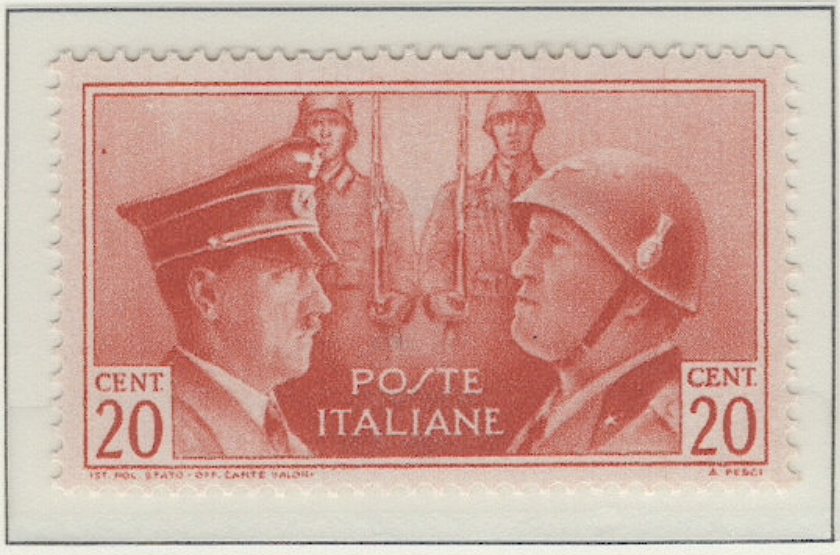
As strange as it may seem, Adolph Hitler was inspired by Benito Mussolini. Mussolini was a journalist and had written much about his ideals related to nationalism, pride and strength within one’s country. In the midst of the misery of the Great Depression, it was an attractive banner to rally around.
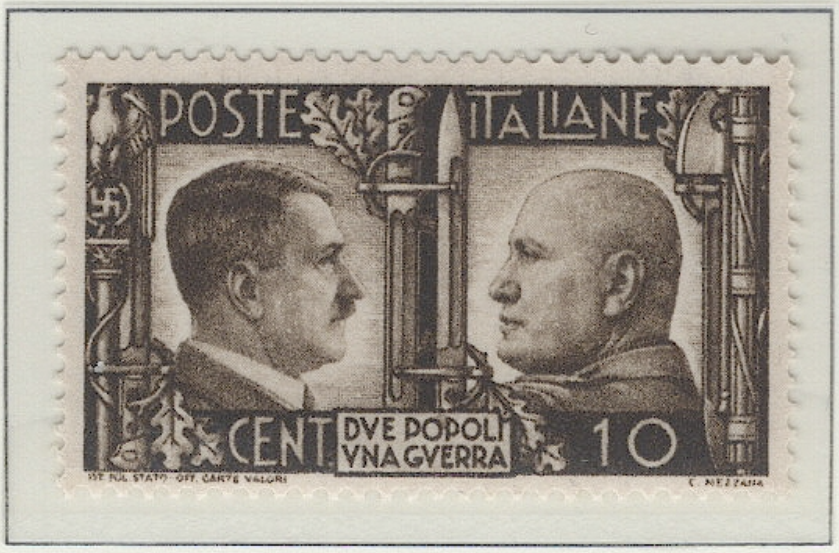
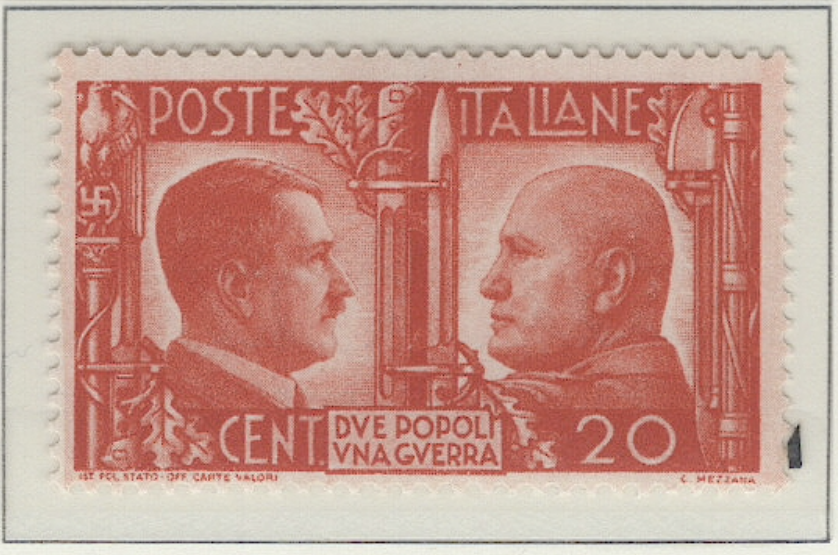
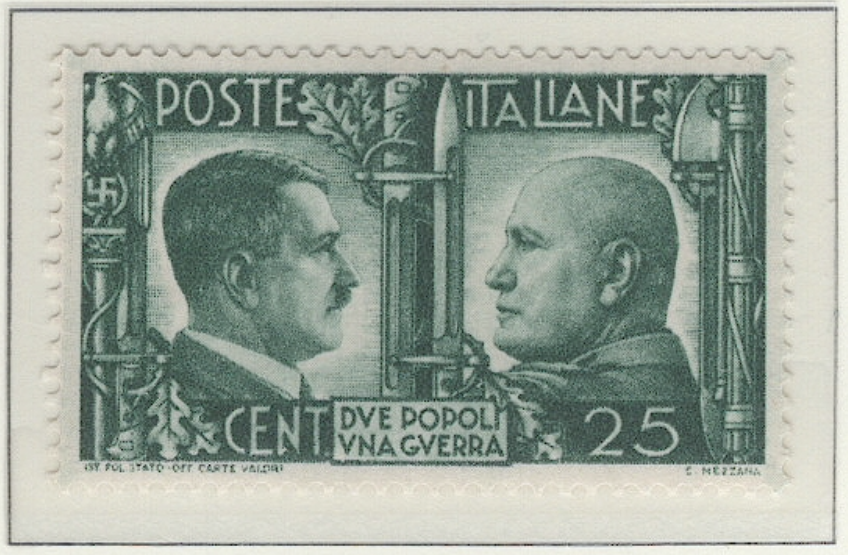
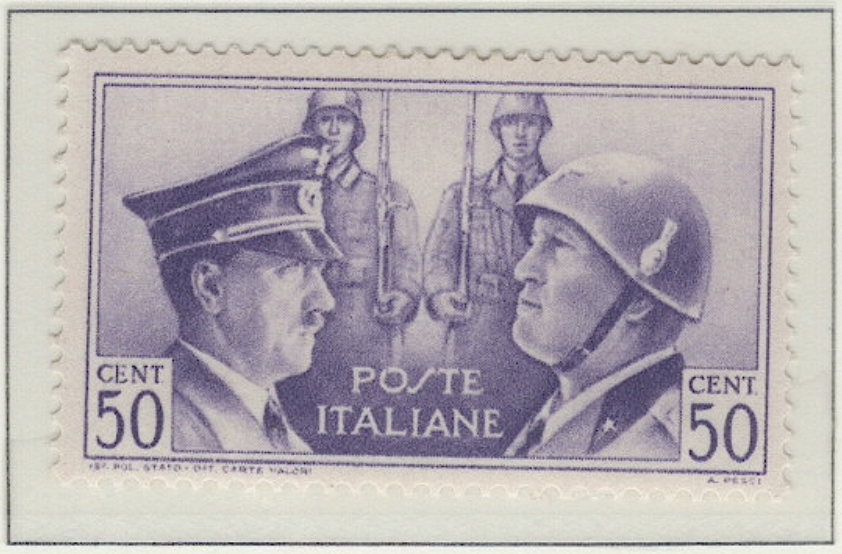
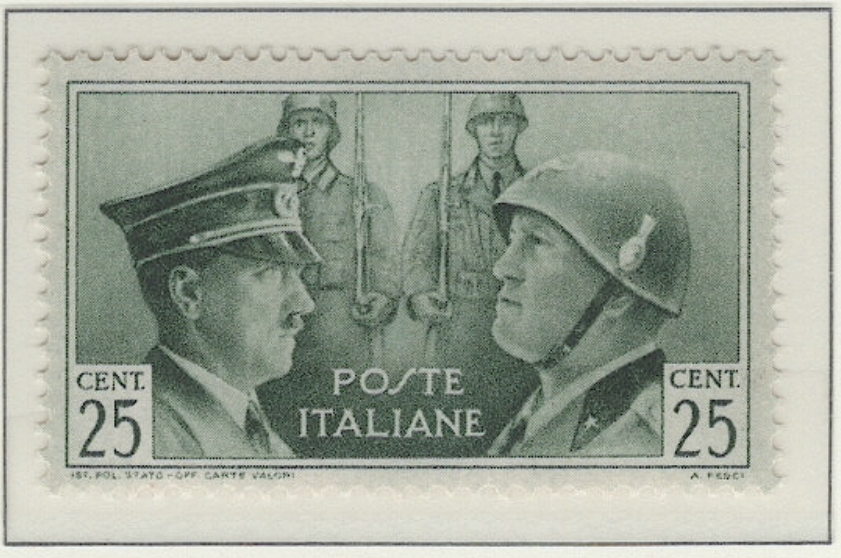
These stamps, though, are so ridiculous and interesting to me. They seem to celebrate the bromance between Mussolini and Hiter. I’m not sure why Hitler is on the left and Mussolini is on the right. Since they’re Italian stamps, Mussolini should be first. But maybe he had a blemish or scar on his right cheek and didn’t want to publicize it.
Railroads Centenial
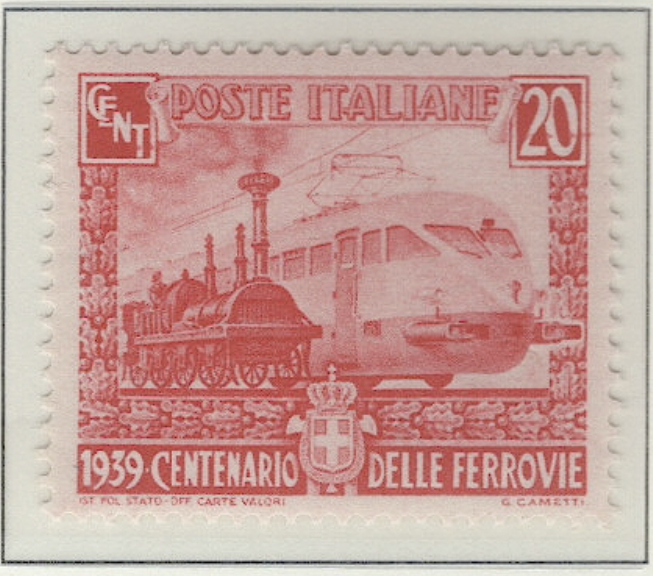
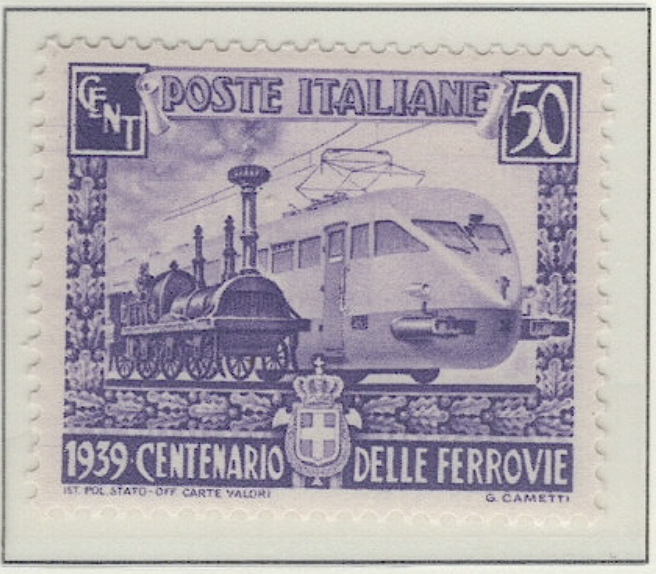
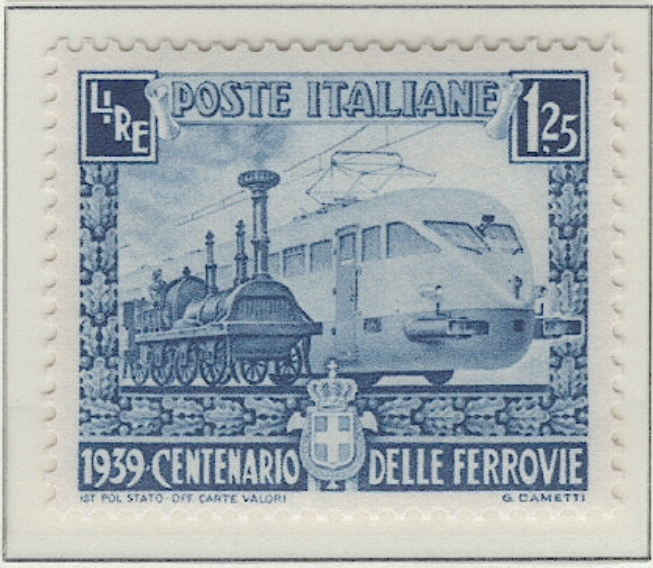
The set of stamps on the first row of this album page commorate the first hundred years of railroads. Each design is the same, with a steam engine driven train on the left and a large modern electric engine on the right. Most countries of Europe built their first railroads in the 1830s and 1840s. Given that these centenial stamps were issued in 1939, I assume the Italian system of railroads was inaugerated in 1839.
More significant than this centenial, though, is that Italy had become one of the first countries to develop an extensive network of electric driven engines. This was motivated because of the start of World War II and the fact that Italy didn’t have any coal mines to fuel steam engines. With the war, they needed to be as indendent as they could be.
Note
As someone from the U.S. who grew up hearing men telling stories of their times during World War II in Europe and the Pacific, I’m a little fascinated about various instrumental persons from the war and leading to the war. These stamps depicting Benito Mussolini and Adolf Hitler are surprising and interesting to me. So I’m glad to have completed this page.
Contains 12 spots: own 12 – 12 unused, 0 used.
Page is finished.
Album or Web Page Last changed Oct 28, 2022
Stamp Details
The table below lists information about the stamps shown on this page of Lighthouse’s stamp album. For more details about a particular stamp, click on its description. That will take you to the related web page of Colnect.
spot |
own |
catalog |
subject |
description |
comment |
Italian Railways
✓ |
449 |
20c (dec 1939) |
|||
✓ |
450 |
50c (dec 1939) |
|||
✓ |
451 |
1.25₤ (dec 1939) |
Mussolini & Hitler
✓ |
452 |
Mussolini & Hitler |
10c (apr 1941) |
||
✓ |
453 |
Mussolini & Hitler |
20c (apr 1941) |
||
✓ |
454 |
Mussolini & Hitler |
25c (apr 1941) |
||
✓ |
455 |
50c (jan 1941) |
|||
✓ |
456 |
75c (jan 1941) |
|||
✓ |
457 |
1.25₤ (jan 1941) |
|||
✓ |
457A |
10c (jan 1941) |
|||
✓ |
457B |
20c (jan 1941) |
|||
✓ |
457C |
25c (jan 1941) |
Footnotes
Spot refers to the postion of the stamp on the album page (e.g., 3.2 indicates row 3, position 2).
Amt. is an abbreviation for the face amount of the stamp.
Own indicates the stamp status: ✓ for unused; ✗ for used or canceled; ⭑ signifies I ordered one; ; ✨ indicates it was bought recently; ✠ means an auction bid is pending; and ◎ is used, and it costs too much for unused.
To search by catalog number, go to the search box and enter it in the catalog number box. However, it’s a bit broken; I need to fix it.











