Independence
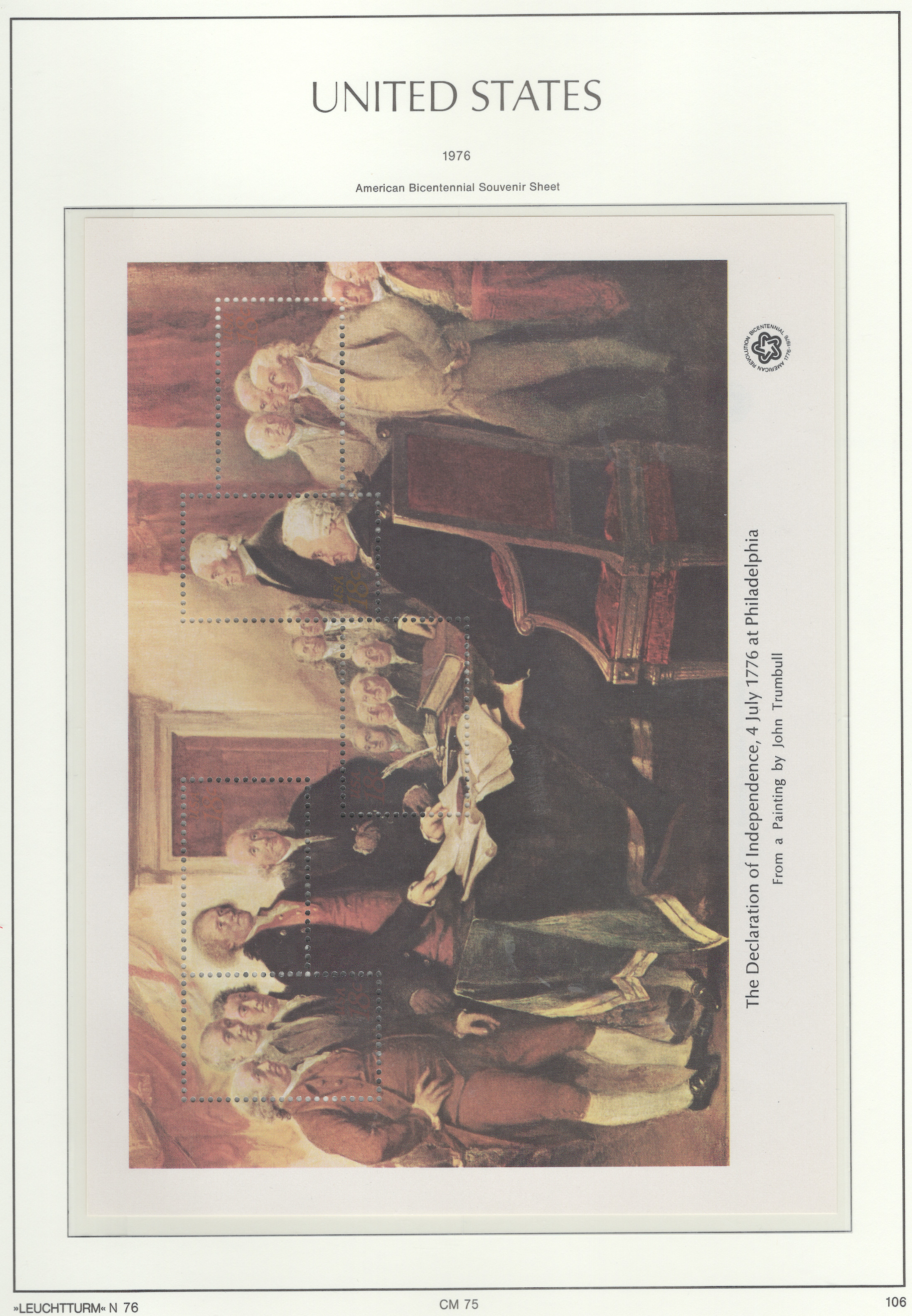
The Declaration of Independence was written and approved by a congress of delegates from thirteen of the British colonies in North America in June and July 1776. After having tried to resolve problems with England, with its King and Parliament, a delegation of representatives from thirteen of the eighteen colonies declared a break from England. They wanted to form their own country, but would need the support of other countries, such as France. However, other countries wouldn’t want to get involved in an internal dispute. So they declared their independence and asked the countries of Europe to recognize their independence and assist them and support them financially, militarily, politically, and morally.
Introduction
The document started with an introduction saying that they, the thirteen colonies listed later, have decided it’s necessary for them to make this declaration. Here’s the actual text:
The unanimous Declaration of the thirteen united States of America, When in the Course of human events, it becomes necessary for one people to dissolve the political bands which have connected them with another, and to assume among the powers of the earth, the separate and equal station to which the Laws of Nature and of Nature’s God entitle them, a decent respect to the opinions of mankind requires that they should declare the causes which impel them to the separation.
They’re saying, if a relationship with a government, with their king, with whomever is not working, they have to do something about it, they have to say something about how they’re being treated.
Preamble
From there they identify the need for self-governence, to be independent. Here’s the start of the preamble:
We hold these truths to be self-evident, that all men are created equal, that they are endowed by their Creator with certain unalienable Rights, that among these are Life, Liberty and the pursuit of Happiness.
There’s more to this preamble, but this is the significant part. Basically, it says that they have a right as humans to be alive, to be free, and to try to be happy. And if a government or someone is denying those basic rights, it’s not unreasonable to complain, and if their concerns are not respected, to end the relationship with the other party.
Indictment
In this section, they summarize all of their complaints against the King and Parliament, and how they have tried to reason with them. They mention how Parliament has taxed them indiscriminantly, more than even British subjects in England were taxed. They complain that he won’t let them elect members of Parliament to at least be able to vote for or against taxes, to be able to voice their opinion and concerns.
They mention that when they’ve complained, the King stationed troops in the colonies, even though there was no pending war, to intimidate them. He also employed foreign mercenaries from Germany to squelch disstent because they would be less likely to be sympathetic to the English colonists.
They complain that many of those who have protested against unfair acts of Parliament have been arrested and convicted without due process. And the King has manipulated and controled judges in the colonies to rule in his favor.
Conclusions
They go on to say they tried to warn the King and Parliament that if they continue to treat them badly will cause a break in their relation, but their pleas were ignored and their attempts to prevent the inevitable failed. Therefore, they end with this:
We, therefore, the Representatives of the united States of America, in General Congress, Assembled, appealing to the Supreme Judge of the world for the rectitude of our intentions, do, in the Name, and by Authority of the good People of these Colonies, solemnly publish and declare, That these united Colonies are, and of Right ought to be Free and Independent States; that they are Absolved from all Allegiance to the British Crown, and that all political connection between them and the State of Great Britain, is and ought to be totally dissolved; and that as Free and Independent States, they have full Power to levy War, conclude Peace, contract Alliances, establish Commerce, and to do all other Acts and Things which Independent States may of right do. And for the support of this Declaration, with a firm reliance on the protection of divine Providence, we mutually pledge to each other our Lives, our Fortunes and our sacred Honor.
They’re saying that based on their rights as humans, given the abuses they’ve experienced, and after having tried to resolve the situation, they declare that the relationship is over and that they are now an independent state and they will conduct themselves as one.
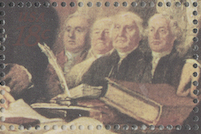
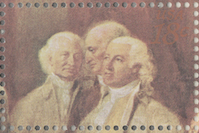
Then all of the delegates signed. John Hancock as president of the Continental Congress signed first and largest. After that, each delegate signed. It took a few days since not all of them were there at the same time – despite how it may appear in the John Trumbull painting.
Note
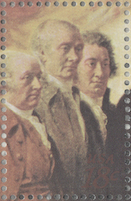
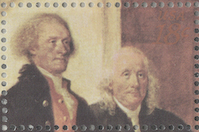
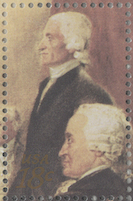
This souvenir sheet shows a painting by John Trumbull from 1820 showing the signing of the Declaration of Independence. However, it’s been cropped. You can see more of the painting in a set of four stamps on this album page: Declaration. I like those stamps much better than this souvenir sheet. The quality of printing is better and those stamps are usable, while this souvenir sheet have too much selvage.
Contains 5 spots: own 5 – 5 unused, 0 used.
Page is finished.
Album or Web Page Last changed May 6, 2025
Stamp Details
The table below lists information about the stamps shown on this page of Lighthouse’s stamp album. For more details about a particular stamp, click on its description. That will take you to the related web page of Colnect.
spot |
own |
catalog |
subject |
description |
comment |
Constitution & Decl. of Independence
✓ |
1687a |
18c (may 1976) |
|||
✓ |
1687b |
18c (may 1976) |
|||
✓ |
1687d |
18c (may 1976) |
|||
✓ |
1687c |
18c (may 1976) |
|||
✓ |
1687e |
18c (may 1976) |
Footnotes
Spot refers to the postion of the stamp on the album page (e.g., 3.2 indicates row 3, position 2).
Amt. is an abbreviation for the face amount of the stamp.
Own indicates the stamp status: ✓ for unused; ✗ for used or canceled; ⭑ signifies I ordered one; ; ✨ indicates it was bought recently; ✠ means an auction bid is pending; and ◎ is used, and it costs too much for unused.
To search by catalog number, go to the search box and enter it in the catalog number box. However, it’s a bit broken; I need to fix it.




