Rodi - Garibaldi
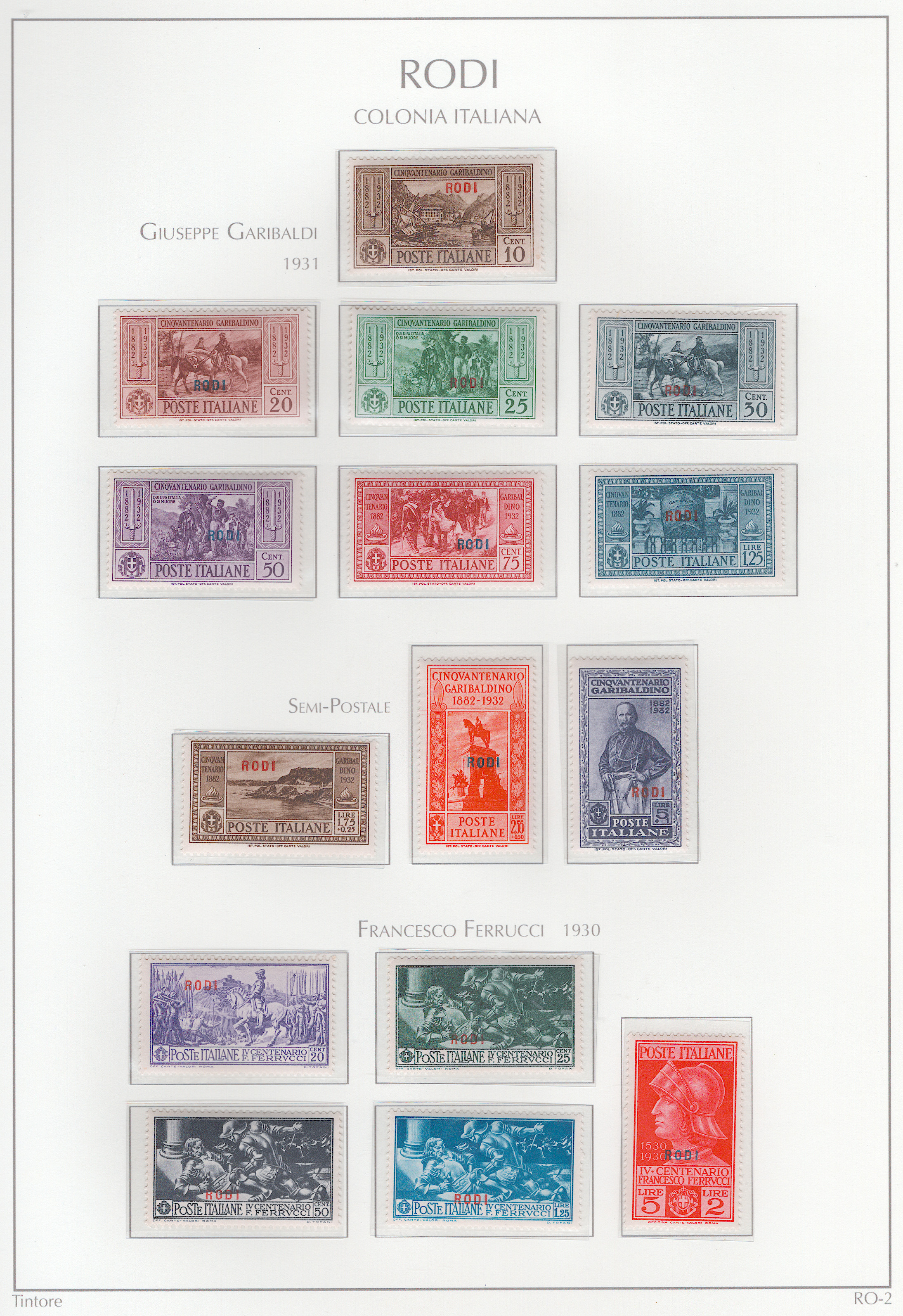
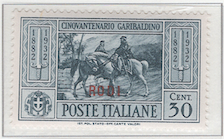
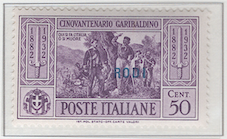
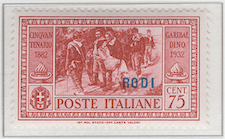
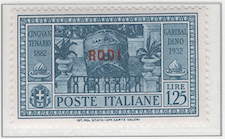
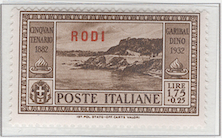
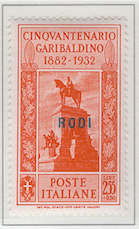
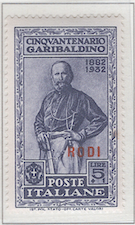
The hero of the wars that led to the unification of Italy was Giuseppe Garibaldi. In every city of substance in Italy, you’ll probably find a statue of him – maybe more than one, or a statue, a plaque, and a bust of him – as well as a street or other landmark named after him; perhaps a school even. In fact, there’s a statue of him in Washington Square in New York. He lived in NY for four years.
Garibaldi was the commander of the troops that started from Piemonte (i.e., Piedmont), sailed to Sicily and began conquering the many duchies, republics, city states and so forth until he had conquered all of them. When he was finished, he had created the nation of Italy and gave it to Vittorio Emanuele II for him to be its monarch.
Ferrucci
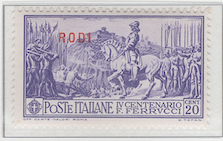
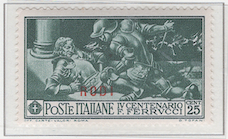
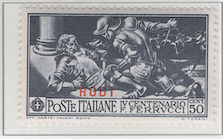
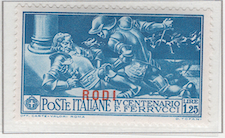
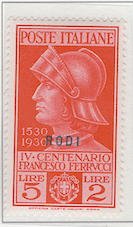
Francesco Ferruccio, born in the late 15th century, was a soldier for the Medici family in Florence. He was an irreverant and audacious leader who successfully led attacks on Florence and Venice, as well as threatened the Papal States. Over the centuries, he became a legend and was revered by the Fascists in the 1930s. Even his death, resulting from being wounded in battle, was celebrated.
The five stamps in the second set that commemorate Ferruccio depict the Siege of Volterra, and his death when he was killed by Fabrizio Maramaldo. The three air mail stamps on the bottom row are of a statue of Ferruccio.
Note
In addition to the seven commemorative stamps on the first three rows, the three stamps on the third row are semi-postal stamps. They’re called semi-post because part of the money for the cost of the stamp is used for the mailing of the letter. Whereas the other part of the cost is for a charity or some fund raising cause. That’s why you see two face amounts on those three stamps: for example, 5 + 1₤ for the last one, which means five lira goes to postage and one lira to the charity.
For these stamps, the extra money went to the National Federation of Garibaldi’s volunteers. I’m not sure if that was for retired and aging veterans or for active special forces soldiers.
Contains 15 spots: own 15 – 15 unused, 0 used.
Page is finished.
Album or Web Page Last changed Apr 6, 2024
Stamp Details
The table below lists information about the stamps shown on this page of Lighthouse’s stamp album. For more details about a particular stamp, click on its description. That will take you to the related web page of Colnect.
spot |
own |
catalog |
subject |
description |
comment |
Giuseppe Garibaldi
✓ |
20 |
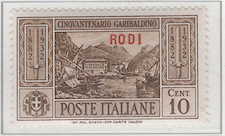
10c (aug 1932) |
|||
✓ |
21 |
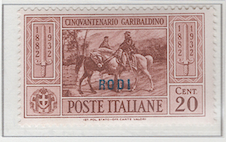
20c (aug 1932) |
|||
✓ |
22 |
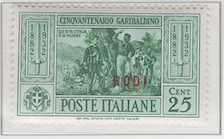
Garibaldi & Nino Bixio |
25c (aug 1932) |
||
✓ |
23 |
Garibaldi & Vittorio Emanuele II |
30c (aug 1932) |
||
✓ |
24 |
Garibaldi & Nino Bixio |
50c (aug 1932) |
||
✓ |
25 |
75c (aug 1932) |
|||
✓ |
26 |
1.25₤ (aug 1932) |
Garibaldi - Semi-Postal
✓ |
27 |
1.75+0.25₤ (aug 1932) |
|||
✓ |
28 |
2.55+0.50₤ (aug 1932) |
|||
✓ |
29 |
5+1₤ (aug 1932) |
Francesco Ferruccio
✓ |
15 |
20c (oct 1930) |
|||
✓ |
16 |
25c (oct 1930) |
|||
✓ |
17 |
50c (oct 1930) |
|||
✓ |
18 |
1.25₤ (oct 1930) |
|||
✓ |
19 |
5+2₤ (oct 1930) |
Footnotes
Spot refers to the postion of the stamp on the album page (e.g., 3.2 indicates row 3, position 2).
Amt. is an abbreviation for the face amount of the stamp.
Own indicates the stamp status: ✓ for unused; ✗ for used or canceled; ⭑ signifies I ordered one; ; ✨ indicates it was bought recently; ✠ means an auction bid is pending; and ◎ is used, and it costs too much for unused.
To search by catalog number, go to the search box and enter it in the catalog number box. However, it’s a bit broken; I need to fix it.














