Twin Transports
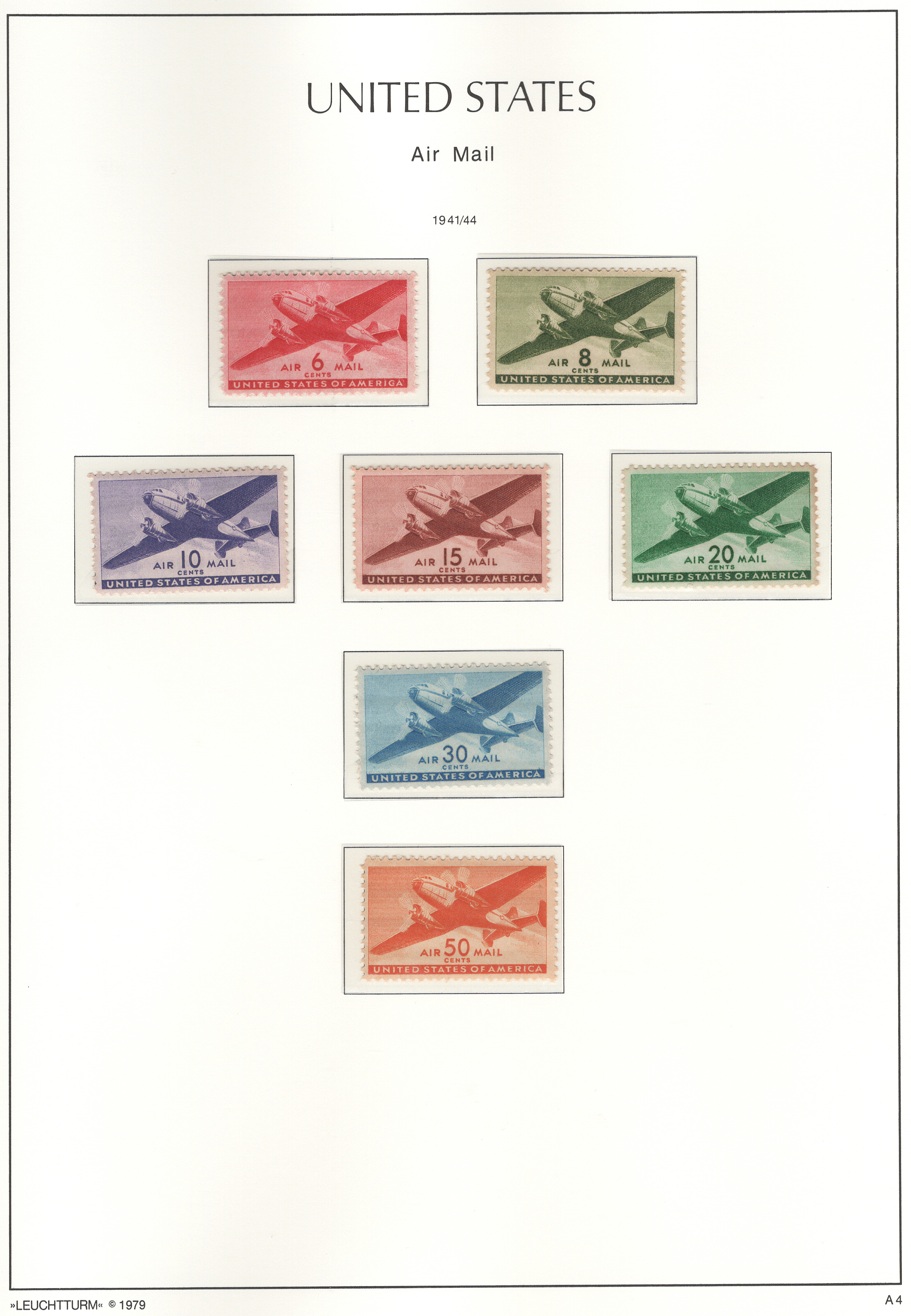
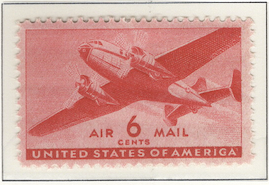
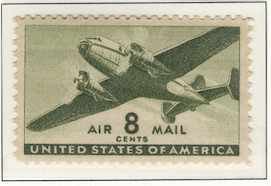
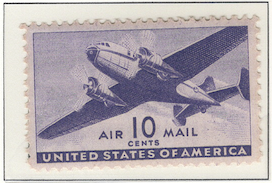
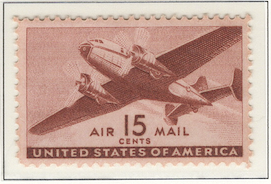
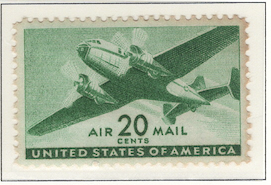
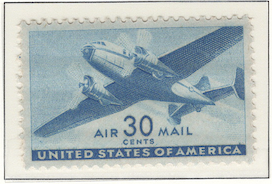
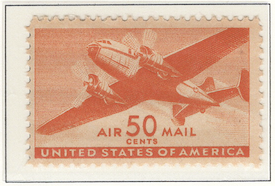
The image on these stamps is that of a twin-engine airplane. Although it seems realistic, I don’t think it’s a drawing of a particular plane – at least not an accurate one. Instead, it looks like it might be based on the Douglas DC-2 (produced from 1934 to 1939), or its successor, the Douglas DC-3 (produced from 1936 to 1942), with a few deviations.
A significant difference from the DC-2 and DC-3 is the tail. It looks like the tail of a Lockheed Electra Model 10. Or the tail might be based on the Beechcraft Model 18.
Basically, the stamp seems to have been made from an artist’s drawing of the types of planes that were in use at the time to transport mail. Maybe he drew it from photos to looking at these planes. Or he might have done it from memory – his imagination. It’s strange that they wouldn’t use an accurate drawing of just one plane.
Note
This page is finished. It’s not always so easy to complete air mail or other back-of-the-book pages in a stamp album. Those stamps are usually scarcer and more expensive. So I’m glad to have this one done.
Contains 7 spots: own 7 – 7 unused, 0 used.
Page is finished.
Album or Web Page Last changed Mar 14, 2025
Stamp Details
The table below lists information about the stamps shown on this page of Lighthouse’s stamp album. For more details about a particular stamp, click on its description. That will take you to the related web page of Colnect.
spot |
own |
catalog |
subject |
description |
comment |
|---|---|---|---|---|---|
✓ |
C25 |
6c (jun 1941) |
|||
✓ |
C26 |
8c (mar 1944) |
|||
✓ |
C27 |
10c (aug 1941) |
|||
✓ |
C28 |
15c (aug 1941) |
|||
✓ |
C29 |
20c (aug 1941) |
|||
✓ |
C30 |
30c (sep 1941) |
|||
✓ |
C31 |
50c (oct 1941) |
Footnotes
Spot refers to the postion of the stamp on the album page (e.g., 3.2 indicates row 3, position 2).
Amt. is an abbreviation for the face amount of the stamp.
Own indicates the stamp status: ✓ for unused; ✗ for used or canceled; ⭑ signifies I ordered one; ; ✨ indicates it was bought recently; ✠ means an auction bid is pending; and ◎ is used, and it costs too much for unused.
To search by catalog number, go to the search box and enter it in the catalog number box. However, it’s a bit broken; I need to fix it.






