Northwest People
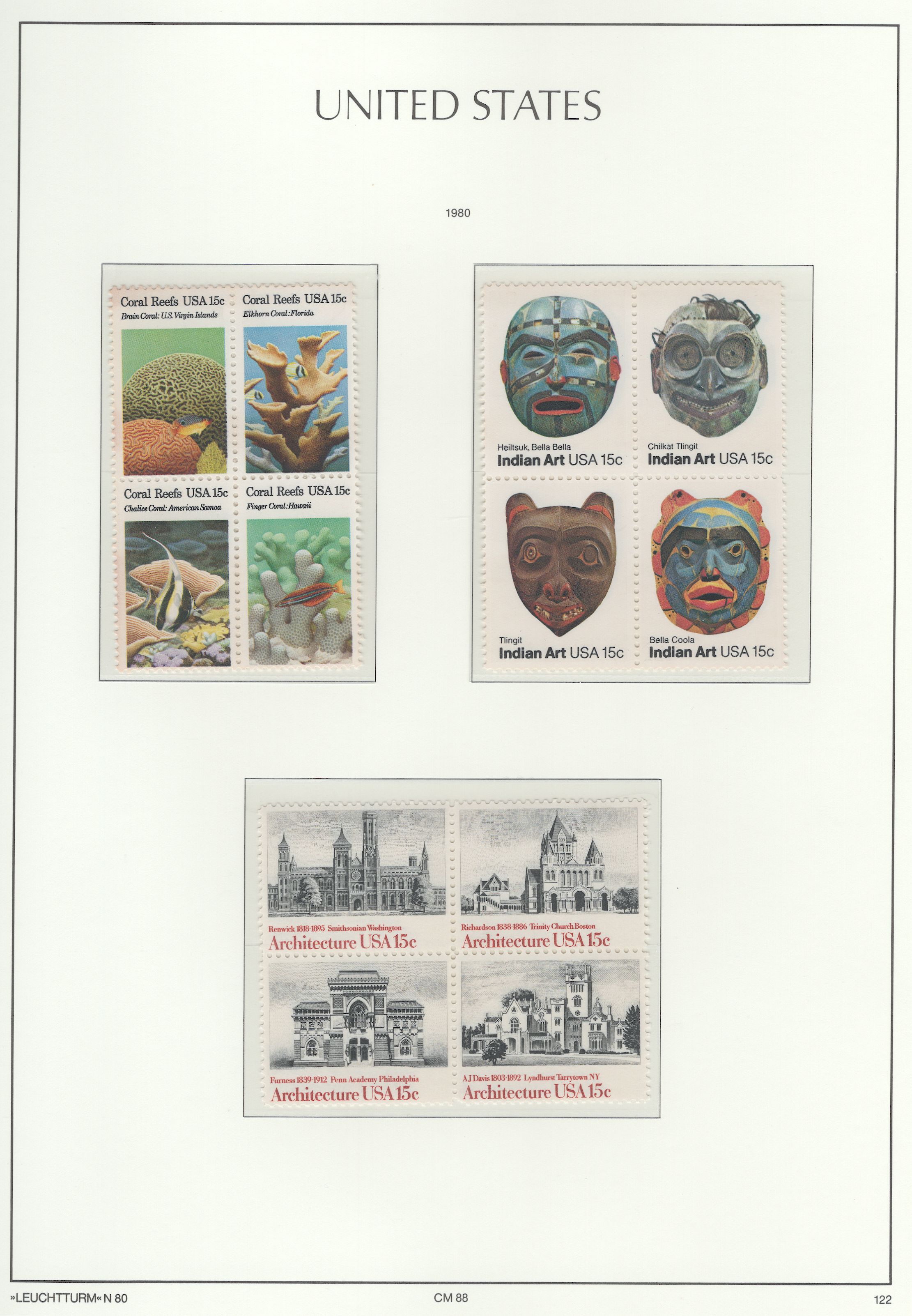
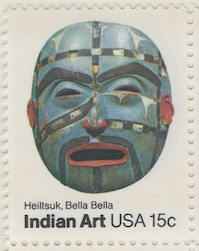
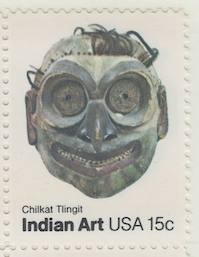
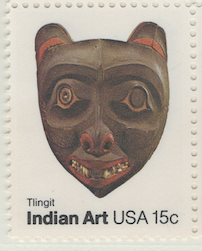
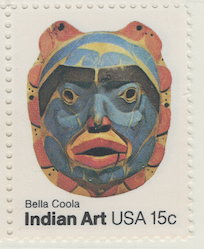
The Pacific Northwest people were located in what’s now Northern California, Oregon, Washington, British Columbia, and Alaska – originally, primarily Wasington and British Columbia. There are several nations, but they’re culturally alike. They have similar ways of hunting, fishing, gathering and growing food. They share traditions and skills for making clothing, boats, and homes. They also have linguistic similarities, and the salmon is a significant part of their spirituality. And they have similar art work. The set of four stamps here are of wood carved and decorated masks used in ceremonies.
The first stamp shows a mask made by the Heiltsuk people. In particular, it’s from the Bella Bella community. The Heiltsuk are located in central British Columbia, including Vancouver Island. They were known for their rituals, carpentry and wood carving, which included making canoes, boats, homes, furniture, etc. – all well decorated. There are a little less than two-thousand of the Heiltsuk remaining; they live primarily in British Columbia.
The first stamp on the second row shows a mask made by the Tlingit. They’re from the southern end of Alaska along the coast, and a little inland into Canada. Their name means, people of the tides. They were a hunter-gather people. They are also known for wood carving and boat building, in particular for totem poles with eagle or other bird heads at the top. There are still over twenty-two thousand of them living in Alaska, and another two thousand in British Columbia.
The second stamp of the set has a mask made by the Chilkat people. They’re sometimes listed as a part of the Tlingit, but they’re a distinct people. The last of the Chilkat are located in Klukwan, Alaska. There are less than one-hundred of them. The original people developed Chilkat weaving. That skill was shared with the other indigenous people of the Pacific Northwest. They made blankets, clothing, hats, wall decorations, and rugs.
The last stamp in the set is a mask made by the Bella Coola people, the Nuxalk nation. They’re located in the Bella Coola Valley in British Columbia. Having existed for thousands of years, with about thirty thousand people in the 1800s, there are now a little less than two-thousand of them.
Note
The stamps with art of the indigenous people are labeled Indian Art. They were printed in 1980, before a more culturally aware public. To their credit, the post office was actually trying to make the public aware of native cultures and other cultures of the country. We can see in this developing trend of stamp themes, a more inclusive agenda. This is leading into the album I’ve labeled King Days, which are stamps reflecting the diversity of the people of the U.S.
Contains 12 spots: own 12 – 12 unused, 0 used.
Page is finished.
Album or Web Page Last changed May 11, 2025
Stamp Details
The table below lists information about the stamps shown on this page of Lighthouse’s stamp album. For more details about a particular stamp, click on its description. That will take you to the related web page of Colnect.
spot |
own |
catalog |
subject |
description |
comment |
Sea Shells, Coral & Coral Reefs
✓ |
1827 |
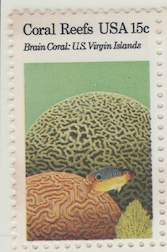
Grooved Brain Coral |
15c (aug 1980) |
||
✓ |
1828 |
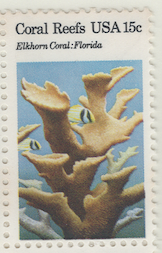
Elkhorn Coral |
15c (aug 1980) |
||
✓ |
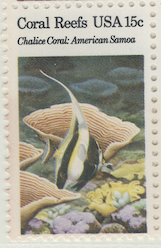
1829 |
15c (aug 1980) |
|||
✓ |
1830 |
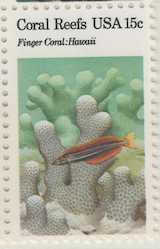
Finger Coral |
15c (aug 1980) |
Native American Art
✓ |
1834 |
15c (sep 1980) |
|||
✓ |
1835 |
15c (sep 1980) |
|||
✓ |
1836 |
15c (sep 1980) |
|||
✓ |
1837 |
15c (sep 1980) |
Architects & Architecture
✓ |
1838 |
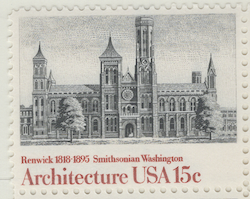
Smithsonian Institution |
15c (oct 1980) |
||
✓ |
1839 |
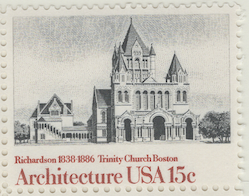
Trinity Church |
15c (oct 1980) |
||
✓ |
1840 |
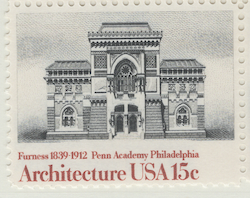
Pennsylvania Academy of Fine Arts |
15c (oct 1980) |
||
✓ |
1841 |
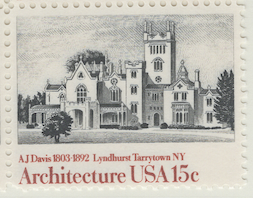
Lyndhurst - Tarrytown |
15c (oct 1980) |
Footnotes
Spot refers to the postion of the stamp on the album page (e.g., 3.2 indicates row 3, position 2).
Amt. is an abbreviation for the face amount of the stamp.
Own indicates the stamp status: ✓ for unused; ✗ for used or canceled; ⭑ signifies I ordered one; ; ✨ indicates it was bought recently; ✠ means an auction bid is pending; and ◎ is used, and it costs too much for unused.
To search by catalog number, go to the search box and enter it in the catalog number box. However, it’s a bit broken; I need to fix it.











