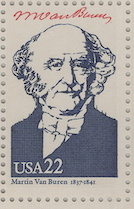
Martin Van Buren
After the War of 1812 against Britain, there was a strong call for national unity and an end to political parties – i.e., the Federalists and the Democratic-Republican parties. Many saw parties as inherently divisive – a sentiment championed by President James Monroe. As a result, both dominating parties of the time dissolved. As a result, there were no national parties from 1816 to 1828, a time that came to be known as the Era of Good Feelings.
In 1821, Martin Van Buren was elected U.S. Senator for New York. He quickly became a power broker in politics. In 1828, he was elected Governor of New York, but resigned shortly afterwards to be Secretary of State when Andrew Jackson became president. As Secretary of State, he negotiated treaties with England, Russia, France, and the Ottoman Empire for better trade relations.
In 1828, Van Buren and President Jackson formed the Democratic Party – the same Democratic Party of today. In 1832, the first Democratic National Convention was held, at which Van Buren nominated for Vice-President for Jackson’s second term. In 1833, in response to the dominance of the Democrats, the Whig Party was formed. Despited a somewhat organized opposition, in 1836, Van Buren won the presidential election as the Democratic candidate. His time as president wasn’t very historical: the country suffered an economic crisis; he rejected the Republic of Texas’ request for annexation for fear of angering Spain and not wanting to add more slaveholder-state representatives to Congress; and he dealt with border disputes with Canada and their internal conflicts. As a result, Van Buren lasted only one term as President.
Note
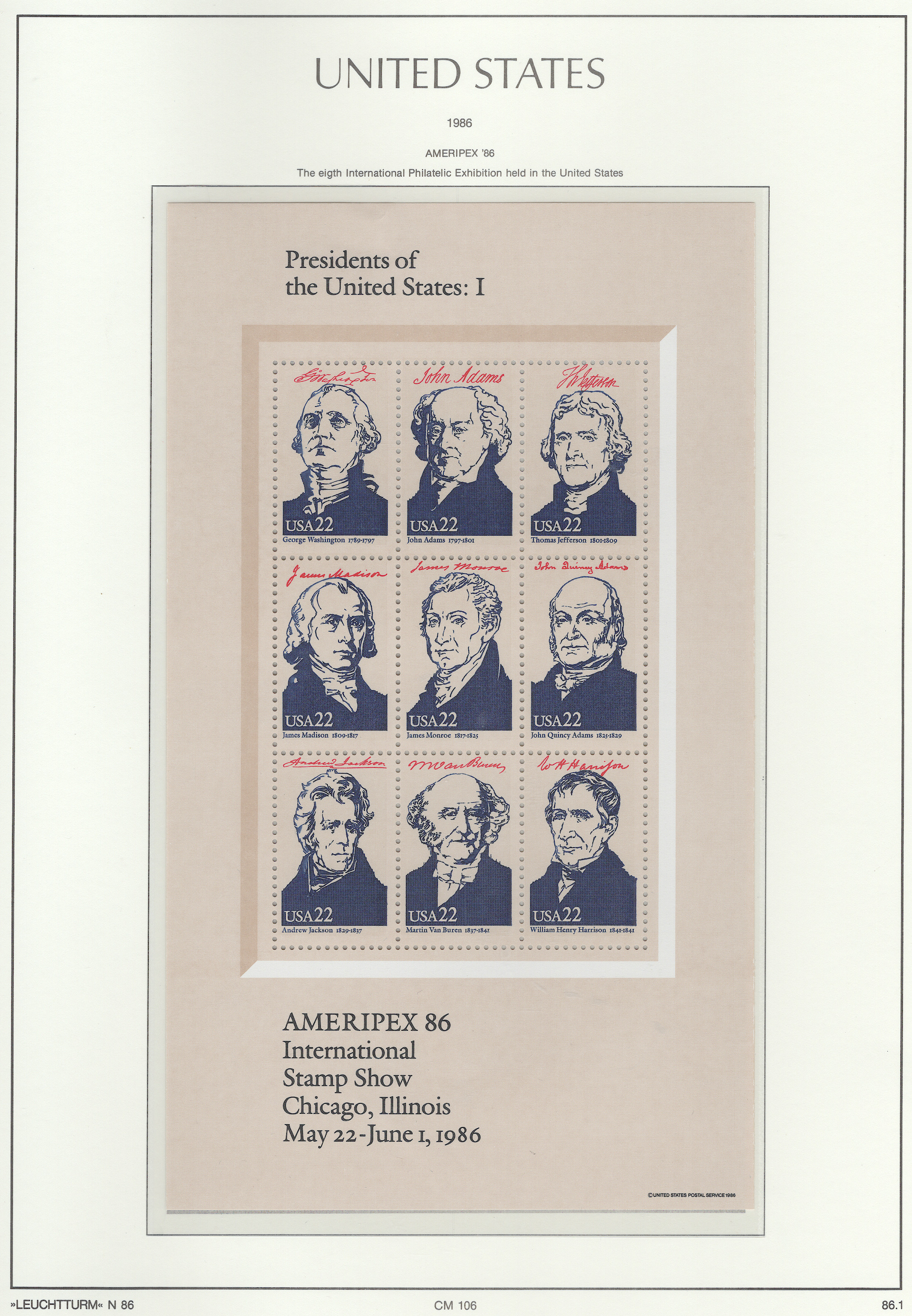
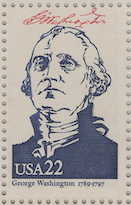
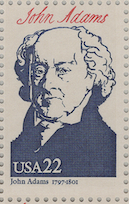
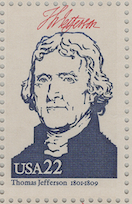
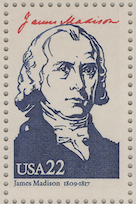
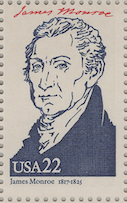
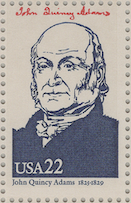
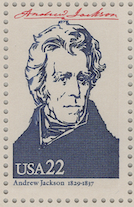
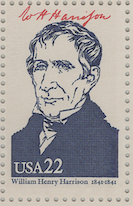
These stamps depict the first nine presidents of the U.S., all of which have interesting stories about their lives in general and about their times as presidents. I cover most of them on the album pages for the early years of this U.S. collection. For this page, I focused on one about which I know very little, Martin Van Buren. Incidentally, he was the first president whose first language wasn’t English. Having been raised in a Dutch part of New York – it was originally a Dutchh colony – he spoke Dutch before learning English.
Contains 9 spots: own 9 – 9 unused, 0 used.
Page is finished.
Album or Web Page Last changed May 24, 2025
Stamp Details
The table below lists information about the stamps shown on this page of Lighthouse’s stamp album. For more details about a particular stamp, click on its description. That will take you to the related web page of Colnect.
spot |
own |
catalog |
subject |
description |
comment |
U.S. Presidents
✓ |
2216a |
22c (may 1986) |
|||
✓ |
2216b |
22c (may 1986) |
|||
✓ |
2216c |
22c (may 1986) |
|||
✓ |
2216d |
22c (may 1986) |
|||
✓ |
2216e |
22c (may 1986) |
|||
✓ |
2216f |
22c (may 1986) |
|||
✓ |
2216g |
22c (may 1986) |
|||
✓ |
2216h |
22c (may 1986) |
|||
✓ |
2216i |
22c (may 1986) |
Footnotes
Spot refers to the postion of the stamp on the album page (e.g., 3.2 indicates row 3, position 2).
Amt. is an abbreviation for the face amount of the stamp.
Own indicates the stamp status: ✓ for unused; ✗ for used or canceled; ⭑ signifies I ordered one; ; ✨ indicates it was bought recently; ✠ means an auction bid is pending; and ◎ is used, and it costs too much for unused.
To search by catalog number, go to the search box and enter it in the catalog number box. However, it’s a bit broken; I need to fix it.








