Vittorio Emanuele III
In the Summer of 1900, an Italian-American shot Umberto I four times, killing him in the city of Monza, south of Milan. He was buried in the Pantheon in Rome: I saw this tomb. Umberto I was succeeded by his son, Vittorio Emanuele III.
Vittorio Emanuele III would reign for forty-six years and lead his country, often successfully, in wars – including both world wars. In fact, their success at the Battle of Vittorio Veneto against Austria led to the end of World War I. As a result, the king ws sometimes called Il Re Soldato (i.e., the Soldier King). He was also called, Sciaboletta (i.e., Little Saber) due to his height: he was 153 centimeters high (i.e., 5 feet).
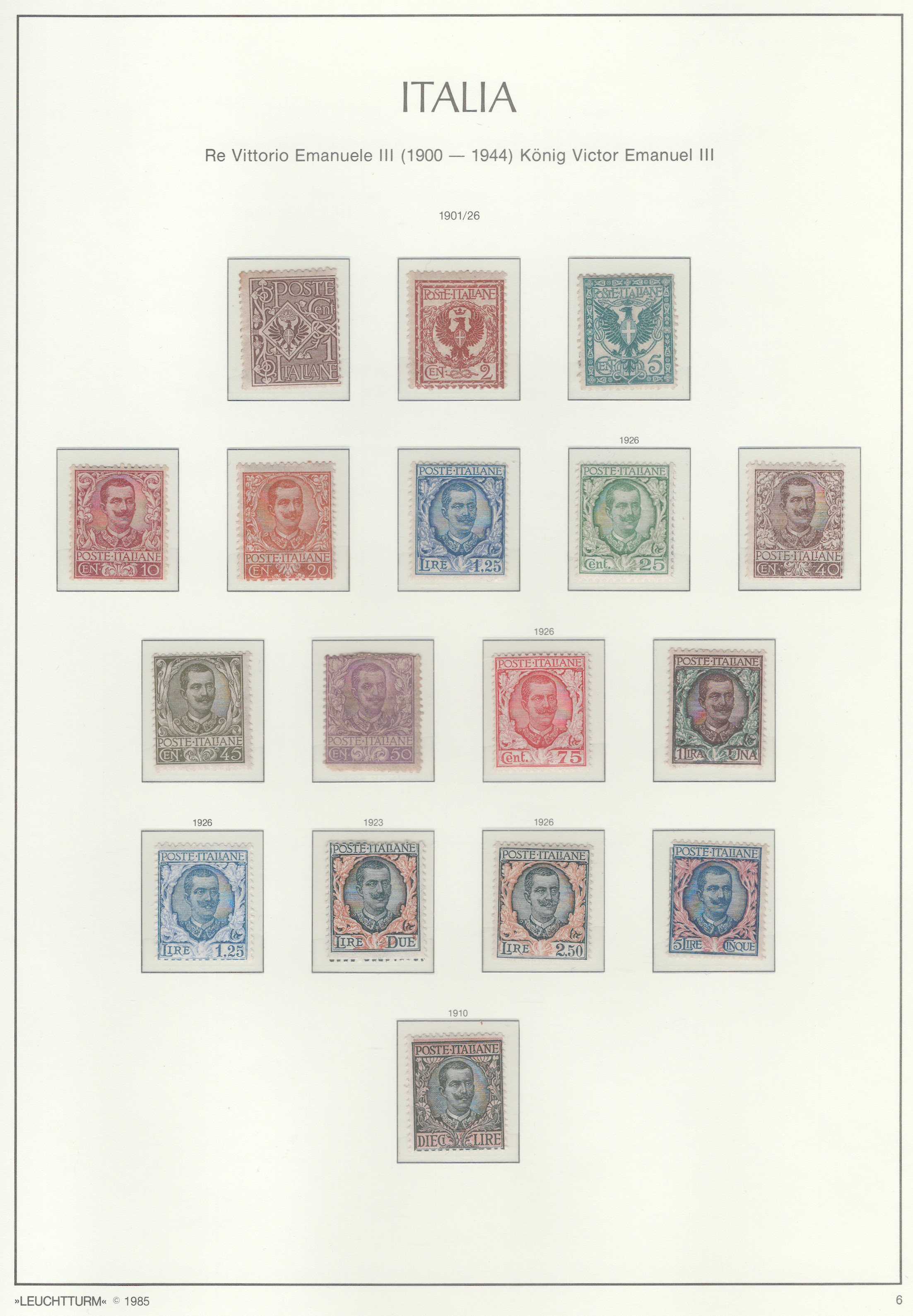
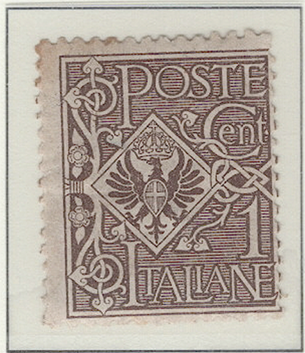
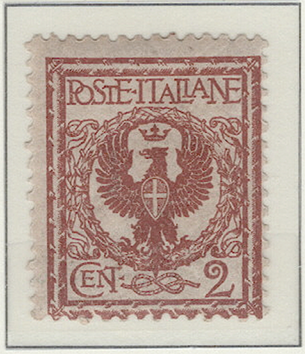
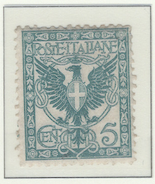
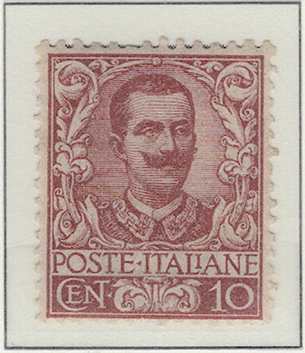
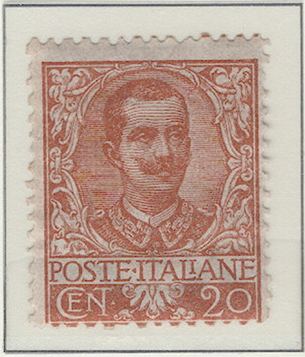
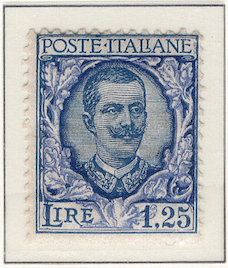
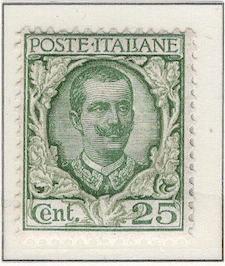
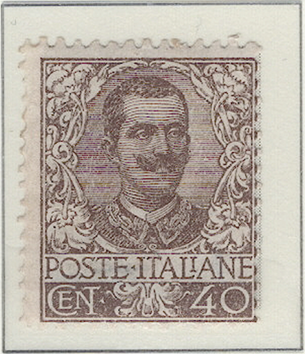
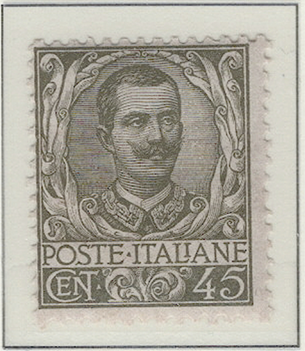
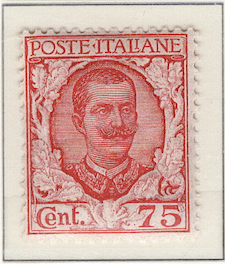
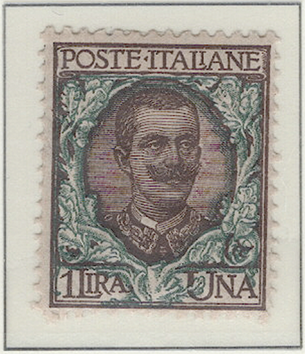
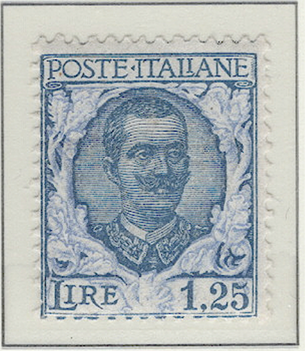
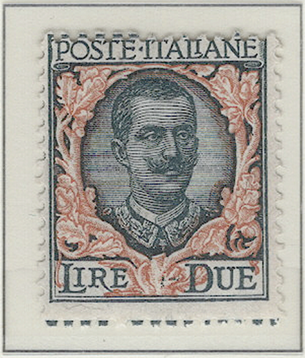
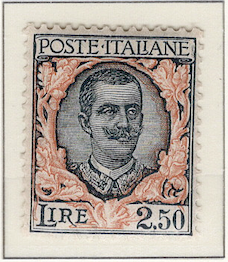
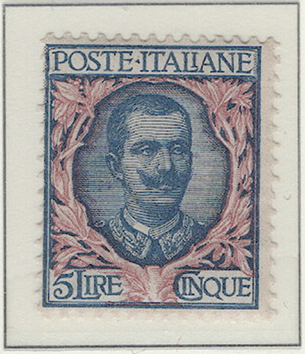
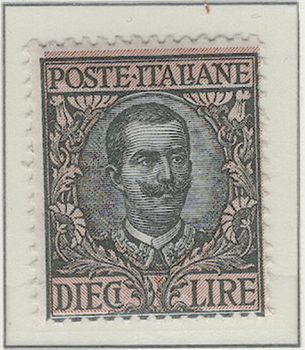
Most of these definitive stamps have the image of the new king. They were designed by the artist, Gaetano Cellini. The image of the king is surrounded by laurels, referred to as laureated or floral design.
Note
As you can see, I have all of these stamps, although some have been canceled. With the busy style of this new design, the stamps look messy and are difficult to see and appreciate – especially the ones that have been canceled: they look a little dirty. I’m working on replacing them, but it’s slow going.
These stamps are a little scarce around where I live and each costs a good bit – you can see the prices of the remaining ones in the comment column. The prices, though, are understandable: I’m looking for stamps that someone bought a hundred years ago and never used them, and then passed them on to their great-grandkids or to several others before coming to me to put on this page. It’s quite a journey and the costs for these are surely worth it.
Contains 17 spots: own 17 – 17 unused, 0 used.
Page is finished.
Album or Web Page Last changed Oct 28, 2022
Stamp Details
The table below lists information about the stamps shown on this page of Lighthouse’s stamp album. For more details about a particular stamp, click on its description. That will take you to the related web page of Colnect.
spot |
own |
catalog |
subject |
description |
comment |
Savoy Emblem
✓ |
68 |
1c (jul 1901) |
|||
✓ |
69 |
2c (jul 1901) |
|||
✓ |
70 |
5c (jul 1901) |
Cellini Design
✓ |
71 |
10c (jul 1901) |
|||
✓ |
72 |
20c (jul 1901) |
|||
✓ |
73 |
25c (jul 1901) |
|||
✓ |
200 |
25c (jun 1926) |
|||
✓ |
74 |
40c (oct 1901) |
|||
✓ |
75 |
45c (oct 1901) |
|||
✓ |
76 |
50c (oct 1901) |
|||
✓ |
201 |
75c (mar 1926) |
|||
✓ |
77 |
1₤ (oct 1901) |
|||
✓ |
202 |
1.25₤ (mar 1926) |
|||
✓ |
150 |
2₤ (nov 1923) |
|||
✓ |
203 |
2.50₤ (nov 1926) |
|||
✓ |
78 |
5₤ (oct 1901) |
|||
✓ |
91 |
10₤ (nov 1910) |
Footnotes
Spot refers to the postion of the stamp on the album page (e.g., 3.2 indicates row 3, position 2).
Amt. is an abbreviation for the face amount of the stamp.
Own indicates the stamp status: ✓ for unused; ✗ for used or canceled; ⭑ signifies I ordered one; ; ✨ indicates it was bought recently; ✠ means an auction bid is pending; and ◎ is used, and it costs too much for unused.
To search by catalog number, go to the search box and enter it in the catalog number box. However, it’s a bit broken; I need to fix it.
















