First Anniversary
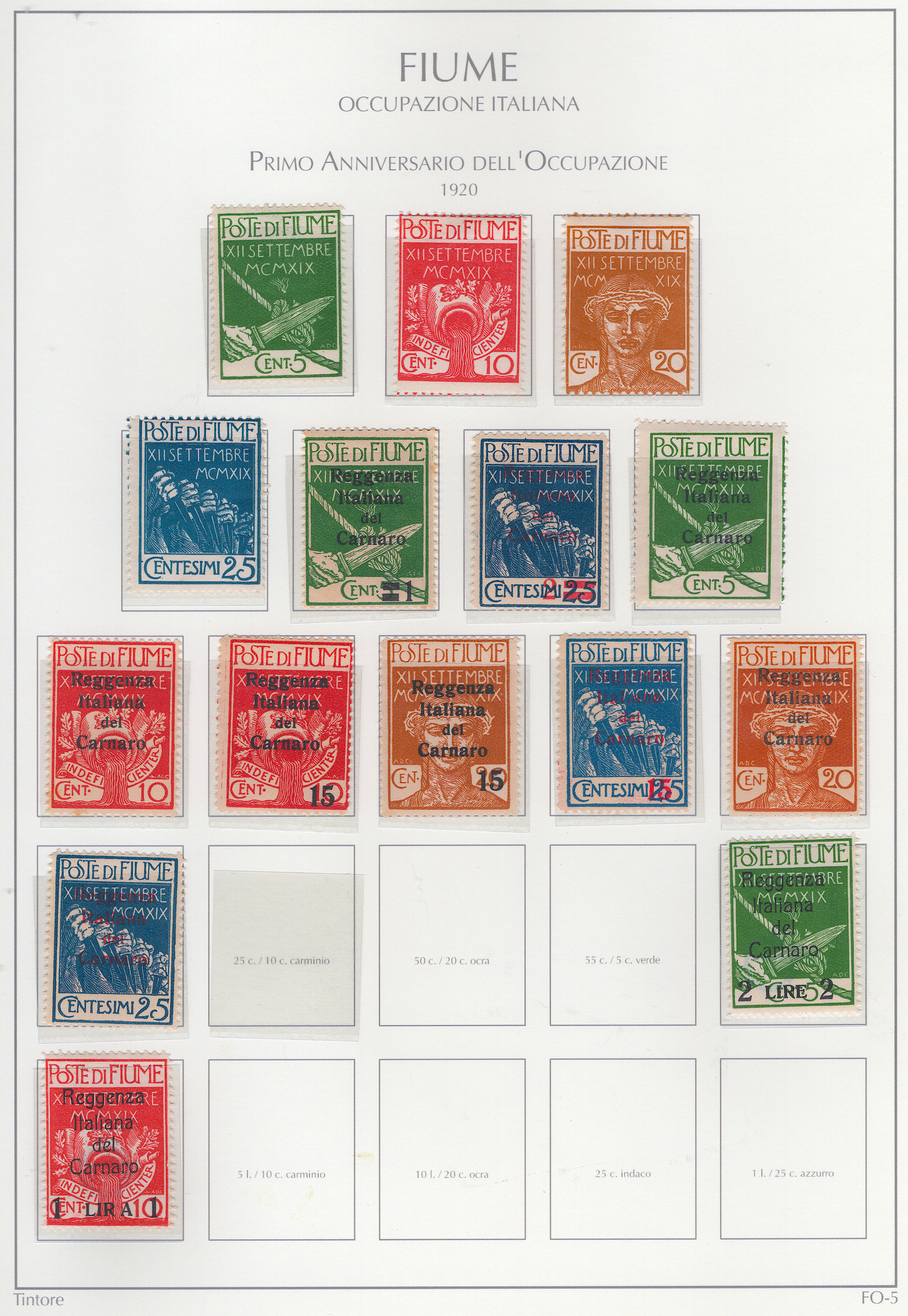
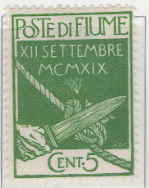
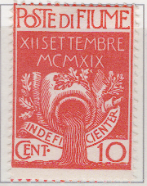
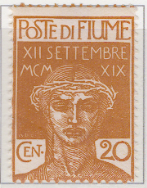
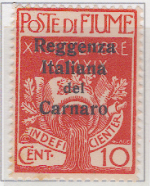
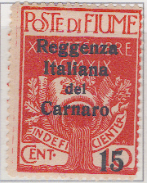
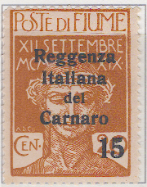
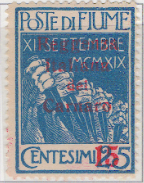
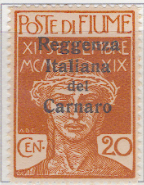
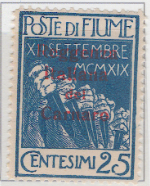
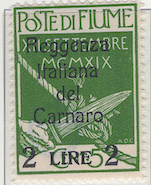
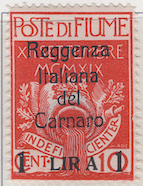
These stamps were issued to celebrate the first anniversary of the Fiume occupation of Italy, of Fiume being officially part of Italy. There are a few images depicted on these stamps: the head of Fiume; the emblem of Fiume; hands with daggars; and the cutting of the Gordian knot.
Gordian Knot
The cutting of the Gordian knot is a legend from the Fourth Century B.C.E. A farmer named Gordias who drove an ox cart was said to have become king of Phrygia, which was located in what’s now Turkey near Istanbul. As part of the legend and his backstory, he tied his ox cart to a post in the royal court with a set of knots that were so intertwined that it was believed impossible to untie. An oracle foretold that whoever could do so would be king of Asia.
As the legend goes, when Alexander the Great entered the town in the midst his military campaign. He was challenged to unwravel the knot. Instead, he used his sword and cut the knot demonstrating his different approach to solving problems, building his empire by brute force.
I’m not sure what this has to do with Fiume, other than Fiume is an ancient city and Alexander the Great may have passed through there at one time – making him a local hero.
Note
I managed to acquire these stamps from a dealer at a stamp show in Verona. I probably should have held off until I could find a complete set for sale. But I had not seen them elsewhere and these weren’t expensive. So I took them, took what I could so I wouldn’t have a blank page here.
Contains 22 spots: own 15 – 15 unused, 0 used.
Album or Web Page Last changed Dec 3, 2024
Stamp Details
The table below lists information about the stamps shown on this page of Lighthouse’s stamp album. For more details about a particular stamp, click on its description. That will take you to the related web page of Colnect.
spot |
own |
catalog |
subject |
description |
comment |
Stamps for Military Use
✓ |
127 |
5c (sep 1920) |
|||
✓ |
128 |
10c (sep 1920) |
|||
✓ |
129 |
20c (sep 1920) |
|||
✓ |
130 |
25c (sep 1920) |
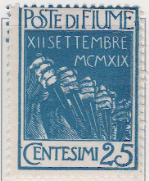
Reggenza Italiana del Carnaro Overprint
✓ |
131 |
1c (nov 1920) |
|||
✓ |
132 |
2c (nov 1920) |
|||
✓ |
133 |
5c (nov 1920) |
|||
✓ |
134 |
10c (nov 1920) |
|||
✓ |
135 |
15c (nov 1920) |
|||
✓ |
136 |
15c (nov 1920) |
|||
✓ |
137 |
15c (nov 1920) |
|||
✓ |
138 |
20c (nov 1920) |
|||
✓ |
139 |
25c (nov 1920) |
|||
140 |
25c (nov 1920) |
||||
141 |
25c (nov 1920) |
||||
142 |
50c (nov 1920) |
||||
✓ |
143 |
55c (nov 1920) |
|||
✓ |
144 |
1₤ (nov 1920) |
|||
145 |
1₤ (nov 1920) |
||||
146 |
2₤ (nov 1920) |
||||
147 |
5₤ (nov 1920) |
||||
148 |
10₤ (nov 1920) |
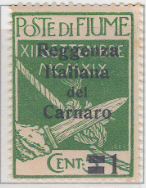
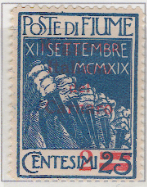
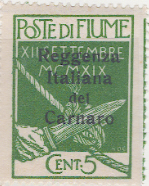
Footnotes
Spot refers to the postion of the stamp on the album page (e.g., 3.2 indicates row 3, position 2).
Amt. is an abbreviation for the face amount of the stamp.
Own indicates the stamp status: ✓ for unused; ✗ for used or canceled; ⭑ signifies I ordered one; ; ✨ indicates it was bought recently; ✠ means an auction bid is pending; and ◎ is used, and it costs too much for unused.
To search by catalog number, go to the search box and enter it in the catalog number box. However, it’s a bit broken; I need to fix it.





















